Some links on this Website are affiliate links, meaning we may earn a commission if you make a purchase, at no additional cost to you. Please read our full Affiliate Disclosure for more details.
If you have been wondering how to make your jade plant grow faster, you are not alone. Jade plants are beloved houseplants known for their thick, glossy leaves and their long lifespan, but they can sometimes seem stuck in a rut, barely putting out new leaves for months at a time. The good news? With a few simple adjustments to how you care for your plant, you can wake it right up.
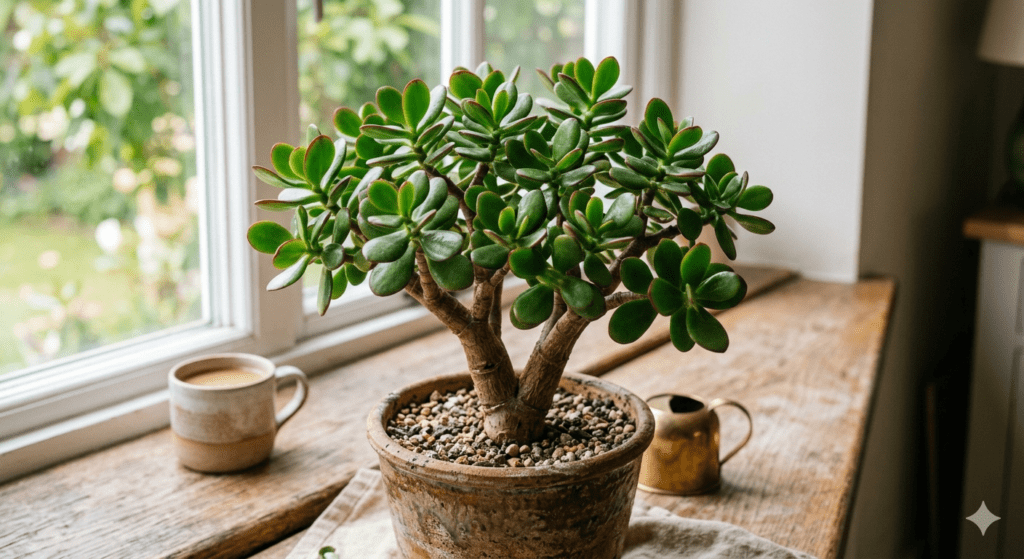
Jade plants (Crassula ovata) are succulents, which means they store water in their leaves and are built for survival rather than speed. But that does not mean they have to be slow. When you give them the right conditions, jade plants can produce vibrant new growth consistently throughout the growing season. Here are four proven ways to do exactly that.
How to Care for a Proton Plant
How to Grow Your Jade Plant Faster
1. Prune Your Jade Plant to Stimulate New Branches
One of the fastest and most effective ways to encourage jade plant new growth is to prune it. This might feel counterintuitive at first since you are cutting the plant back rather than letting it grow. But jade plants, like many woody succulents, respond to pruning by pushing out new shoots from just below the cut.
How to Prune a Jade Plant the Right Way
Use a clean, sharp pair of pruning shears or scissors. Always cut just above a leaf node, which is the small bump where a leaf attaches to the stem. This is where new growth will emerge. Remove any dead, damaged, or leggy stems first, then shape the plant as desired.
The best time to prune is in late winter or early spring, just before the growing season kicks in. This gives your jade plant time to redirect its energy into producing new branches and leaves. Avoid heavy pruning in winter when the plant is naturally slower.
7 Easy Tips For Growing Plants Indoors
2. Adjust Your Watering Schedule for Healthier Growth
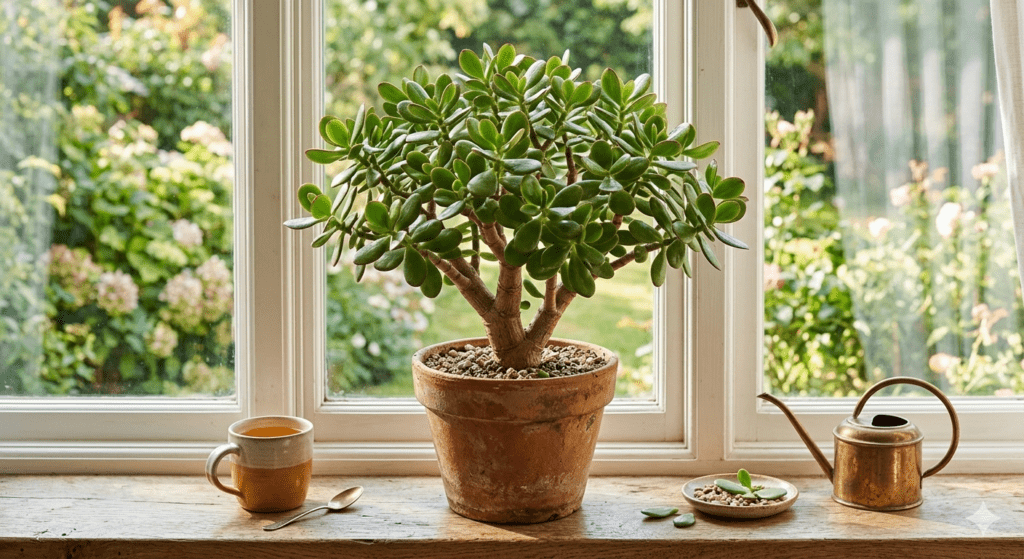
Watering is one of the most common areas where jade plant owners go wrong. Overwatering is the number one killer of jade plants, but underwatering can also stall growth significantly. Getting the balance right is key to stimulating healthy jade plant growth.
Jade plants prefer a thorough watering followed by a period of drying out. During spring and summer, water your jade plant every one to two weeks, allowing the top inch or two of soil to dry out completely between waterings. In fall and winter, pull back to watering once a month or even less.
A good rule of thumb is to check the leaves. Healthy jade leaves are firm and plump. If the leaves start to look slightly wrinkled or feel soft, that is your plant telling you it is thirsty. On the flip side, yellowing leaves that drop easily are often a sign of too much water.
Always use a pot with drainage holes and a well-draining succulent or cactus mix. These two things alone can make a huge difference in how fast your jade plant puts out new leaves.
3. Give Your Jade Plant More Sunlight
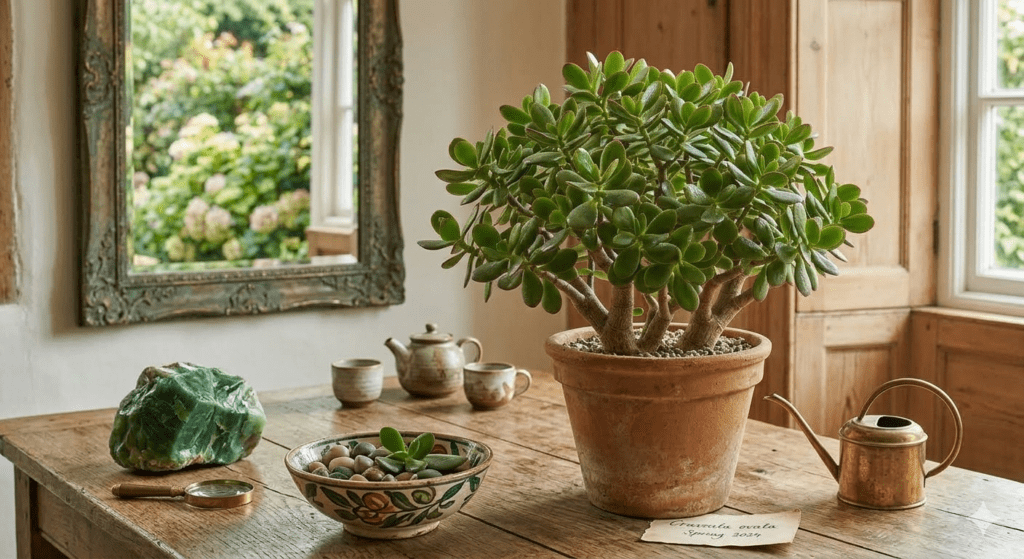
Light is one of the biggest factors in jade plant growth, and most indoor plants simply do not get enough of it. If you are asking why your jade plant is not growing new leaves, a lack of sunlight is often the culprit.
Jade plants thrive in bright, indirect light for most of the day, with some direct morning sunlight being ideal. A south or east-facing window is usually the best spot indoors. Aim for at least four to six hours of bright light per day.
Signs Your Jade Plant Needs More Light
- Stems are long and spindly with wide gaps between leaves (etiolation)
- Leaves are smaller than usual or pale green
- The plant leans heavily toward the light source
- Very little to no new growth over several months
If your jade plant is not getting enough natural light, consider supplementing with a grow light placed about six to twelve inches above the plant for eight to ten hours a day. You will likely notice new growth within a few weeks of improving its light conditions.
4. Feed Your Jade Plant with the Right Fertilizer
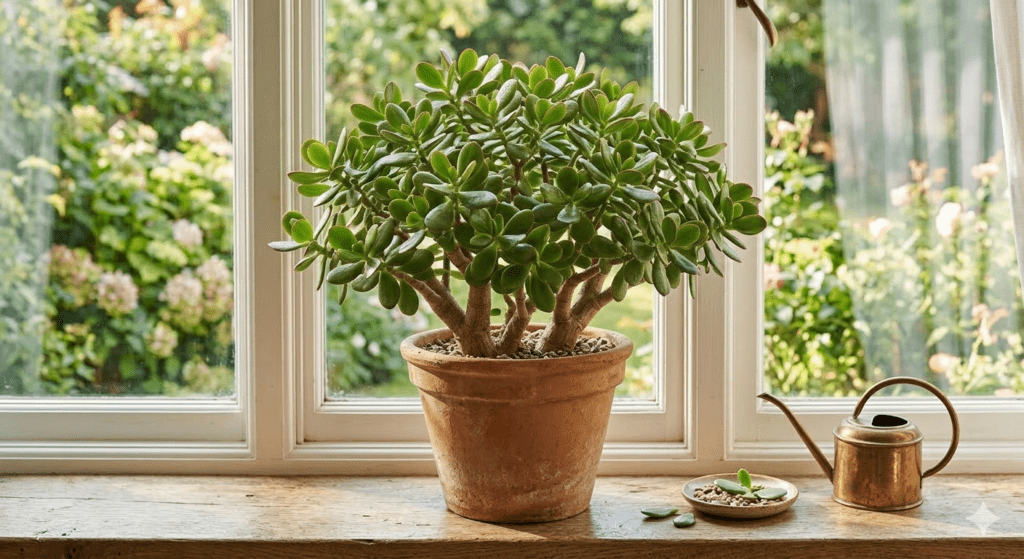
The best fertilizer for jade plant growth is a balanced, diluted liquid fertilizer applied during the active growing season. Jade plants do not need heavy feeding, but giving them a nutrient boost in spring and summer can really accelerate new leaf production.
Look for a balanced fertilizer with an NPK ratio such as 10-10-10 or 20-20-20, diluted to half or quarter strength. Fertilize once a month from spring through early fall, and stop completely in winter when the plant is resting.
Avoid over-fertilizing, which can actually burn the roots and slow growth rather than speed it up. Less is more with jade plants. A light, consistent feeding schedule will do far more than occasional heavy doses.
You can also use a slow-release succulent fertilizer pellet worked into the top layer of soil at the start of the growing season. This gives your plant a steady, low-level supply of nutrients over several months without the risk of overfeeding.
7 Proven Ways to Make Your Monstera Bushier and More Vibrant
Bonus Tips to Keep Your Jade Plant Thriving
Beyond the four main strategies above, here are a few additional jade succulent growth tips that can make a meaningful difference:
- Repot every two to three years: A root-bound jade plant can slow down dramatically. Moving it to a pot that is one size larger gives the roots room to expand and supports new top growth.
- Keep temperatures consistent: Jade plants prefer temperatures between 65 and 75 degrees Fahrenheit during the day. Avoid placing them near drafty windows or heating vents.
- Wipe the leaves: Dust on the leaves can block light absorption. Wipe them gently with a damp cloth every few weeks to keep them clean and photosynthesizing efficiently.
How To Propagate Succulents From Leaves And Stem Cuttings.
Frequently Asked Questions
Why is my jade plant not growing new leaves?
The most common reasons are insufficient light, overwatering, or being root-bound in a pot that is too small. Start by moving your plant to a brighter spot and reviewing your watering habits. If the plant has not been repotted in a few years, consider giving it a fresh, larger container.
How often should I water my jade plant to promote growth?
During the growing season (spring and summer), water every one to two weeks, allowing the soil to dry out between waterings. In fall and winter, reduce to once a month. Consistent but infrequent watering mimics their natural environment and promotes healthy growth.
Does a jade plant need direct sunlight to grow?
Jade plants do well with bright, indirect light and can tolerate some direct morning sun. Harsh afternoon sun can scorch the leaves. A south or east-facing window indoors is ideal. If your home does not get much natural light, a grow light can effectively fill the gap.
What is the best fertilizer for jade plant growth?
A balanced liquid fertilizer (such as 10-10-10 or 20-20-20) diluted to half strength works well. Feed once a month during spring and summer only. Avoid fertilizing in fall and winter when the plant is in a rest phase.
How do I make my jade plant fuller and bushier?
Regular pruning is the best way to encourage a fuller, bushier shape. Cut stems just above a leaf node in early spring, and the plant will branch out from that point. Combine pruning with adequate light and a balanced fertilizer for the best results.