Some links on this Website are affiliate links, meaning we may earn a commission if you make a purchase, at no additional cost to you. Please read our full Affiliate Disclosure for more details.
If you’ve ever lost a beloved houseplant to root rot — or watched it crisp up from underwatering despite your best efforts — you already know the struggle. The truth is, the finger-dip test only tells you what’s happening at the soil surface, not deep in the root zone where it actually matters. That’s exactly why a moisture meter for houseplants is one of the most game-changing tools you can add to your plant care routine.
Whether you’re nursing a fussy fiddle-leaf fig, a drought-loving cactus, or a collection of tropical monsteras, a good soil moisture meter takes the guesswork completely out of watering. You’ll know — instantly — whether your plant is thirsty, perfectly happy, or sitting in soggy soil that’s inviting root rot.
In this guide, we’ve rounded up the 7 best moisture meters for houseplants, covering everything from budget-friendly analog options to feature-packed digital and smart meters. No matter your experience level or budget, there’s a perfect pick on this list for you.
Bottom Watering Plants: The Complete Guide
Quick Comparison Table
| Product | Best For | Price Range | Rating |
|---|---|---|---|
| XLUX Soil Moisture Meter | Best Overall | ~$8–$13 | ⭐ 4.5/5 |
| Gouevn Soil Moisture Meter | Best Budget Pick | ~$7–$10 | ⭐ 4.4/5 |
| XLUX Long Probe Moisture Meter | Best for Deep/Tall Pots | ~$12–$16 | ⭐ 4.5/5 |
| SONKIR MS02 3-in-1 Soil Meter | Best 3-in-1 Value | ~$10–$14 | ⭐ 4.3/5 |
| Sustee Aquameter | Best Leave-In Sensor | ~$12–$18 (2-pack) | ⭐ 4.6/5 |
| YAMRON 4-in-1 Digital Soil Meter | Best Digital Multi-Function | ~$18–$25 | ⭐ 4.4/5 |
| RAINPOINT WiFi Smart Sensor | Best Smart/Tech Option | ~$30–$45 | ⭐ 4.3/5 |
7 Best Moisture Meters for Houseplants
1. XLUX Soil Moisture Meter — Best Overall
Overview
The XLUX Soil Moisture Meter is the go-to recommendation you’ll find across gardening blogs, tested reviews, and Amazon bestseller charts — and for good reason. It’s the kind of simple, reliable tool that just works, right out of the box, with zero setup and zero batteries required. For anyone starting out with plant care or wanting a fuss-free daily watering check, this is the one to grab.
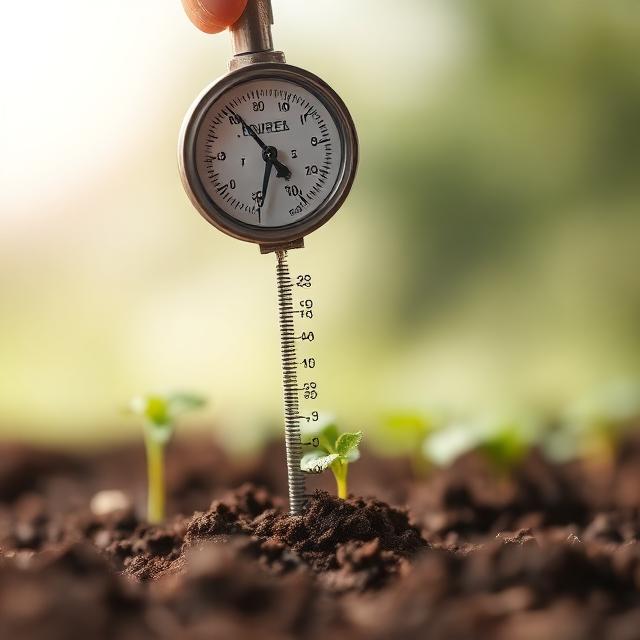
The 7-inch stainless steel probe slides easily into potting soil, and the large analog dial immediately displays a reading on a 1–10 color-coded scale: red for dry (1–3), green for moist (4–7), and blue for wet (8–10). The single-probe design also causes minimal root disturbance compared to dual-probe alternatives.
Key Features
- Battery-free operation — no charging, no batteries, always ready
- Instant readings — result in approximately 1 second
- Color-coded 1–10 dial — three clear zones (Dry / Moist / Wet)
- Single probe design — less root damage than multi-probe models
- 7-inch probe — ideal for standard houseplant pots
- Lightweight and compact — easy to store with your plant care tools
Pros
- ✅ Extremely easy to use — beginners love it
- ✅ Accurate enough for everyday houseplant care
- ✅ No batteries or charging ever needed
- ✅ Durable build that holds up well to regular use
- ✅ Very affordable — great value for the price
- ✅ Works on a wide range of houseplants and soil types
Cons
- ❌ Probe can bend in very hard or rocky soil — use in soft potting mix only
- ❌ Moisture-only reading — no pH, light, or temperature data
- ❌ Should not be left in soil for more than 5 minutes (probe tip can corrode)
- ❌ Not ideal for very small pots (under 4 inches)
🛒 Check the XLUX Soil Moisture Meter on Amazon →
2. Gouevn Soil Moisture Meter — Best Budget Pick
Overview
If you want the most meter for the least money, the Gouevn Soil Moisture Meter is your answer. At around $7–$10, it’s one of the most affordable options on Amazon — and yet it performs surprisingly well. Reviewers have been consistently impressed by its large, easy-to-read display and accurate moisture detection across multiple soil types.
Like the XLUX, the Gouevn uses a battery-free analog design with a color-coded 1–10 scale. What sets it apart slightly is the packaging: the back of the box includes a handy watering guide for over 200 indoor and outdoor plants, giving beginners a quick reference for ideal moisture levels by plant type. The 7.7-inch probe is also slightly longer than some competitors, giving it a little extra reach into deeper pots.
How To Identify Root Rot In Succulents
Key Features
- Battery-free analog design with instant readings
- 7.7-inch probe — slightly longer for better root-zone reach
- Color-coded 1–10 moisture scale
- Includes watering guide for 200+ plant varieties on the packaging
- Available in black or green display housing
Pros
- ✅ Extremely budget-friendly — great for plant parents on a budget
- ✅ Accurate and responsive readings
- ✅ Large, clearly readable dial
- ✅ Bonus plant watering guide included
- ✅ Durable and well-constructed for the price
- ✅ Works well across a range of houseplant soil mixes
Cons
- ❌ Probe is thinner and more susceptible to bending in compacted soil
- ❌ Moisture-only — no multi-function readings
- ❌ Should be removed from soil after each reading (not a leave-in sensor)
- ❌ May be slightly less precise than higher-end digital options
🛒 Check the Gouevn Soil Moisture Meter on Amazon →
3. XLUX Long Probe Soil Moisture Meter — Best for Deep & Tall Pots
Overview
Got a tall floor plant like a fiddle-leaf fig, a bird of paradise, or a large monstera in a deep pot? The standard 7-inch probe just won’t cut it. That’s where the XLUX Long Probe Soil Moisture Meter steps in. With a probe measuring just over 12 inches, it can reach deep into large pots to reveal what’s actually happening at the root zone.
This is a common and frustrating problem: the top few inches of soil look bone dry, so you water — but the bottom of the pot is still waterlogged. This cycle is one of the leading causes of root rot in houseplants. The long-probe XLUX solves this immediately.
5 Best Gardening light meter For Plant Care
Key Features
- 12+ inch probe — reaches the bottom of large, deep pots
- Same color-coded 1–10 analog dial as the standard XLUX
- Battery-free instant readings
- Ideal for large indoor plants — fiddle-leaf figs, bird of paradise, palms, large monsteras
- Also available as a 2-pack — great if you have multiple large plants
Pros
- ✅ Solves the ‘surface dry, roots wet’ problem that causes root rot
- ✅ Same trusted XLUX accuracy, just with deeper reach
- ✅ Battery-free and always ready to use
- ✅ Easy-to-read dial — same simple color coding
- ✅ Available in a 2-pack for multi-plant households
Cons
- ❌ Too long for small or medium-sized pots (better suited for 10″+ pots)
- ❌ Longer probe is slightly more susceptible to bending if forced into hard soil
- ❌ Moisture-only reading — no additional functions
- ❌ Same 5-minute time limit in soil to prevent corrosion
🛒 Check the XLUX Long Probe Moisture Meter on Amazon →
4. SONKIR MS02 3-in-1 Soil Meter — Best 3-in-1 Value
Overview
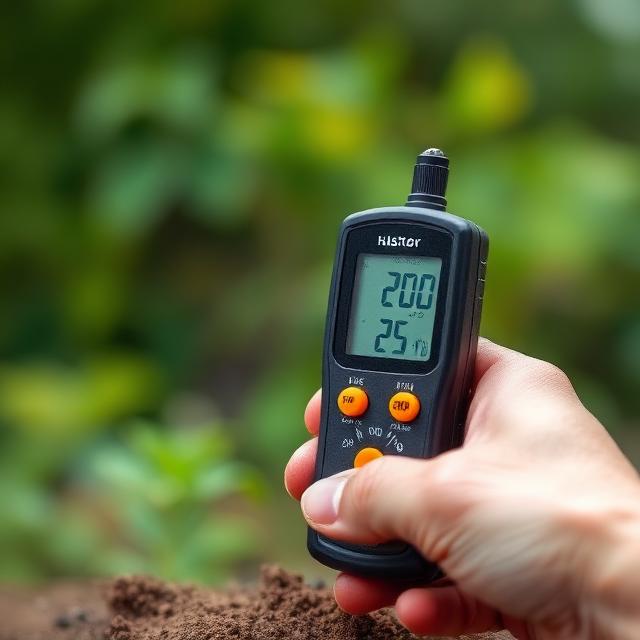
Want more data from a single tool? The SONKIR MS02 is one of the best-selling 3-in-1 soil meters on Amazon, consistently ranked among the top choices for plant parents who want to monitor not just moisture, but also soil pH and light intensity — all without batteries.
The dual-probe design connects to a display box with a simple toggle switch to cycle between the three reading modes: moisture (1–10 scale), pH (3.5–8 range), and light (0–2000 lux). It’s not laboratory-grade precision, but for everyday houseplant care it gives you a genuinely useful snapshot of your plant’s full environment.
Key Features
- 3 measurement modes — Moisture, pH, and Light Intensity
- Battery-free operation — toggle switch activates each mode
- Dual 7.9-inch probes — good depth for most standard pots
- Color-coded display scales for all three readings
- Compact design — easy to store and use in indoor spaces
Pros
- ✅ Excellent value — three tools in one at a very affordable price
- ✅ No batteries required for any mode
- ✅ Helps diagnose plant issues beyond just watering
- ✅ Easy to use with a simple mode switch
- ✅ Very popular with consistently strong Amazon reviews
- ✅ Great for beginners who want to learn more about their soil
Cons
- ❌ pH readings are approximate — not as precise as a dedicated pH meter
- ❌ Dual probes can cause slightly more root disturbance
- ❌ Light readings are ambient, not direct — best used as a rough guide
- ❌ Probes require thorough wiping between modes for most accurate results
🛒 Check the SONKIR MS02 3-in-1 Soil Meter on Amazon →
5. Sustee Aquameter — Best Leave-In Sensor
Overview
The Sustee Aquameter is genuinely unlike anything else on this list — and if aesthetics matter to you as much as function, it might just be your favorite plant tool. Designed in Japan and developed in collaboration with the Tokyo University of Agriculture, the Sustee is a slim, minimalist leave-in moisture sensor that stays in your pot and changes color to tell you when it’s time to water.
The concept is beautifully simple: the inner core turns blue when the soil is sufficiently moist, and white when it’s time to water. No probing, no removing, no reading numbers — just a quick visual glance. The core is also refillable (replacement cores last 6–9 months), making it an eco-friendly, long-term solution.
Key Features
- Leave-in design — stays in the pot for continuous, passive monitoring
- Color-changing indicator — blue (moist) to white (time to water)
- No batteries required — fully passive, maintenance-free operation
- Available in 3 sizes — Small, Medium, and Large for different pot sizes
- Refillable core — each core lasts ~6–9 months before replacement
- Award-winning Japanese design — Red Dot Award, Good Design Award
- Works with most soil types including potting mix, coco coir, bark, and peat
Pros
- ✅ Absolutely the easiest moisture monitoring solution — just glance at it
- ✅ Beautiful, unobtrusive design that suits any aesthetic
- ✅ Leave-in convenience — no pulling it out and reinserting
- ✅ Works at root level for truly accurate moisture sensing
- ✅ Eco-friendly and refillable — minimal waste
- ✅ Excellent choice for forgetful plant parents
Cons
- ❌ Higher per-unit cost than basic analog meters
- ❌ Core replacement adds an ongoing (though small) cost every 6–9 months
- ❌ Binary reading only (wet vs. dry) — no numerical scale
- ❌ Works less effectively in fast-draining soils like pure perlite or leca
- ❌ One sensor per pot needed — can get expensive for large collections
🛒 Check the Sustee Aquameter on Amazon →
6. YAMRON 4-in-1 Digital Soil Meter — Best Digital Multi-Function
Overview
If you love data and want the most complete picture of your soil’s health, the YAMRON 4-in-1 Digital Soil Meter is a standout choice. This battery-powered digital meter measures four key parameters in one device: soil moisture, soil pH, soil temperature, and sunlight intensity — all displayed on a backlit LCD screen that’s easy to read even in low-light conditions.
Unlike the analog meters on this list, the YAMRON uses capacitive sensor technology that delivers readings in digital format, which many plant parents find easier to interpret precisely. The temperature sensor is particularly useful for diagnosing cold drafts or heat stress.
Key Features
- 4-in-1 readings — Moisture, pH, Temperature, and Sunlight Intensity
- Backlit LCD display — easy to read in any lighting condition
- Digital precision — numerical readouts for each measurement
- Single 8-inch probe — easy insertion into most houseplant pots
- Low battery alert — no surprise dead batteries mid-check
- Battery-powered (AAA batteries included)
Pros
- ✅ The most data in one compact tool — great for curious plant enthusiasts
- ✅ Backlit screen makes readings easy in dim indoor spaces
- ✅ Temperature data helps identify cold drafts or heat stress
- ✅ More precise numerical readings than analog color-zone meters
- ✅ Compact and well-built for the price range
- ✅ Great for tracking seasonal changes in soil conditions
Cons
- ❌ Requires batteries (included, but replacement needed over time)
- ❌ pH readings are approximate — not suitable for precision agriculture
- ❌ Slightly higher cost than basic analog options
- ❌ Probe should not be left in soil (battery-powered units can corrode faster)
- ❌ Slight learning curve for interpreting all four readings
🛒 Check the YAMRON 4-in-1 Digital Soil Meter on Amazon →
7. RAINPOINT WiFi Smart Soil Sensor — Best Smart/Tech Option
Overview
For the tech-savvy plant parent who wants remote monitoring and smartphone alerts, the RAINPOINT WiFi Smart Soil Sensor takes moisture tracking to a whole new level. This wireless sensor stays in your pot and continuously monitors soil moisture, air temperature, and light intensity in real time — sending live data directly to your phone via the RAINPOINT Home app.
You can set custom high/low moisture alerts for each plant, so you’ll get a push notification the moment the soil dips below (or rises above) your desired threshold. It also pairs with RAINPOINT’s compatible WiFi water timers to create a fully automated smart watering system.
Important note: This sensor cannot be used standalone — it requires a compatible RAINPOINT WiFi hub (sold separately) and a 2.4GHz WiFi network.
Key Features
- Real-time WiFi monitoring via the RAINPOINT Home app
- 3-in-1 sensor — Moisture, Air Temperature, and Light Intensity
- Custom moisture alerts — push notifications and email alerts
- IP66 waterproof design — suitable for indoor and outdoor use
- Corrosion-resistant probe for long-term leave-in use
- Compatible with RAINPOINT auto-watering timers for full automation
- 2.4GHz WiFi connectivity (hub required, sold separately)
Pros
- ✅ Remote monitoring from anywhere via smartphone
- ✅ Custom alerts mean you never forget to water again
- ✅ Excellent for frequent travelers or busy households
- ✅ Can integrate into a fully automated smart watering system
- ✅ Durable, waterproof build for long-term reliability
- ✅ Great for monitoring multiple plants from one app
Cons
- ❌ Requires separate hub purchase — higher total setup cost
- ❌ Depends on WiFi connection — not ideal for unreliable networks
- ❌ More complex setup than plug-and-read analog meters
- ❌ Overkill (and over-budget) for beginners with a small plant collection
- ❌ App connectivity may require some troubleshooting on setup
🛒 Check the RAINPOINT WiFi Smart Sensor on Amazon →
Buying Guide: What to Look for in a Moisture Meter for Houseplants
Before you pick the first moisture meter you see, it’s worth taking a moment to think about what you actually need. Here’s a breakdown of the key factors that separate a great moisture meter from a frustrating one:
Probe Length
For most standard houseplant pots (6–8 inches), a 7–8 inch probe is ideal. For large floor plants or deep nursery containers, look for a probe of 10–12 inches or more. Using a probe that’s too short means you’re only reading the surface moisture — which can completely mislead you about what’s happening in the root zone.
Analog vs. Digital
Analog meters (like the XLUX and Gouevn) are battery-free, durable, and simple to use — making them excellent for beginners. Digital meters (like the YAMRON) offer more precise numerical readings and often include additional sensors, but require battery management.
Single-Function vs. Multi-Function
If you only care about moisture — and for most plant parents, that’s all you need — a basic single-function meter is the most affordable and reliable choice. If you want to monitor pH, light, or temperature as well, a 3-in-1 or 4-in-1 meter offers great value in a single tool.
Leave-In vs. Insert-and-Remove
Most budget meters are insert-and-remove tools — you stick them in, read, and pull them out. Leave-in sensors like the Sustee Aquameter stay in the pot for continuous passive monitoring. Leave-in options are more convenient but typically cost more per plant.
Battery Requirements
No-battery meters are zero-maintenance and never fail at an inconvenient moment. If you opt for a digital meter, look for one with a low-battery indicator and make sure replacement batteries are easy to source.
Conclusion
A good moisture meter for houseplants is one of those tools that, once you start using it, you’ll wonder how you ever managed without it. Whether you’re a beginner who wants to stop killing plants or an experienced collector fine-tuning your care routine, there’s a perfect option on this list.
For most plant parents, the XLUX Soil Moisture Meter is the best place to start — reliable, affordable, and simple enough to use every single day. If you have deep pots, upgrade to the long-probe version. If you want multi-function data without breaking the bank, the SONKIR 3-in-1 is hard to beat. And if you’re ready to go fully hands-off, the Sustee Aquameter or RAINPOINT Smart Sensor will change your plant care game entirely.
Why Is My Indoor Plant Dripping Water?