Some links on this Website are affiliate links, meaning we may earn a commission if you make a purchase, at no additional cost to you. Please read our full Affiliate Disclosure for more details.
Forgetting to water your plants is one of the most common reasons indoor plants die. Whether you travel frequently, keep a busy schedule, or simply lose track of watering days, a self-watering planter solves the problem without any guesswork. These planters use a bottom reservoir and a wicking or sub-irrigation system that lets soil pull up moisture as needed, keeping roots consistently hydrated without the risk of overwatering.
The difference between a good self-watering planter and a mediocre one comes down to a few things: how well the reservoir design prevents root rot, whether it includes a water-level indicator, and how easy it is to refill. Below are five of the best options available, covering different budgets, plant types, and home decor styles.
Quick Comparison Table
| Product | Best For | Price Range | Rating | Our Pick |
|---|---|---|---|---|
| HBServices USA | Most houseplants | $13–$30 | 4.6 / 5 | Best Overall |
| Bloem Ariana | Herbs & compact plants | $10–$25 | 4.5 / 5 | Best Budget |
| Lechuza Classico Color | Foliage & blooming plants | $35–$70+ | 4.7 / 5 | Best Premium |
| GARDENIX DECOR 3-Pack | Small plants & herbs | $18–$28 | 4.5 / 5 | Best for Small Plants |
| DECOPOTS 3-Pack | Modern decor plants | $22–$35 | 4.4 / 5 | Best for Modern Decor |
* Ratings based on Amazon customer reviews. Prices vary by size and may change over time.
1. HBServices USA Self-Watering Self-Aerating Plant Pot (Best Overall)
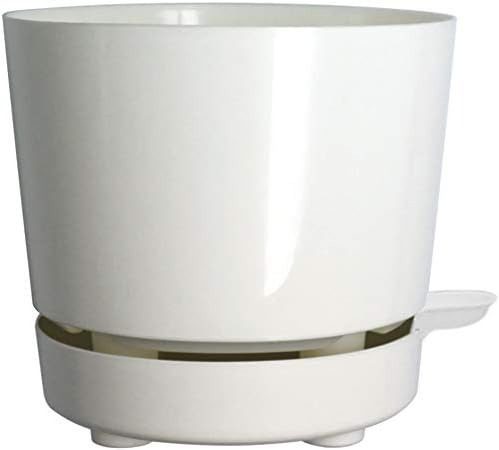
This is the standout choice for most indoor plant owners. The HBServices USA pot uses hollow legs that reach down into the base reservoir, letting the soil draw moisture upward by capillary action rather than sitting in standing water. That distinction matters because it prevents the constant flooding that causes root rot in cheaper designs. On a single fill, the reservoir supports plants for two weeks or more.
Beyond the self-watering function, the pot is also self-aerating. Open slats on the bottom allow air to circulate through the soil, which keeps roots healthy and reduces the risk of mold. A clip-on watering attachment makes filling the reservoir easy without pouring through the soil. The 12-inch version even includes caster wheels for easy repositioning. Available in 6″, 8″, 10″, and 12″ sizes in multiple colors including white, black, green, blue, and plum.
The one drawback is the absence of a built-in water level indicator on smaller sizes, so you need to lift the saucer to check the reservoir. That minor inconvenience aside, the combination of sub-irrigation, aeration, and floor protection (the saucer sits on raised studs to prevent water rings) makes this the most thoughtfully engineered pot in its price range.
Best for: Pothos, philodendrons, ferns, peace lilies, and most moisture-loving houseplants.
2. Bloem Ariana Self-Watering Planter (Best Budget Pick)
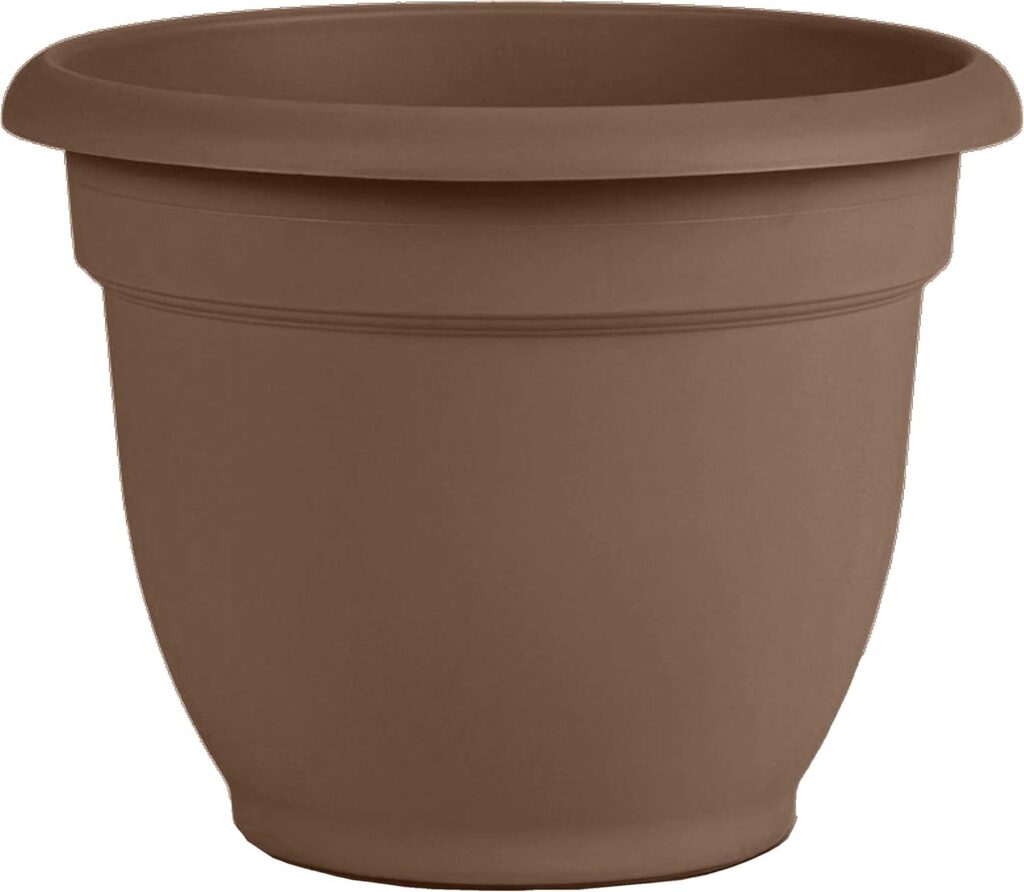
If you want a no-fuss, affordable self-watering planter that actually works, the Bloem Ariana is the one to get. Made in the USA from UV-stabilized plastic resin, it includes a self-watering disk insert at the base that holds water and releases it through capillary action as the soil dries. The potting mix sits above the water line, maintaining the air pockets roots need while drawing moisture up through the disk.
The sealed bottom prevents leakage indoors, and optional knock-out drainage holes let you convert it for outdoor use. It comes in a wide range of colors including terra cotta, misty blue, merlot, charcoal, and pebble stone, making it easy to match any room. Sizes range from 6″ to 20″, so you can find the right fit whether you are growing a small herb or a larger leafy plant.
Best for: Herbs, African violets, begonias, and any plant that prefers consistent moisture without waterlogged roots.
3. Lechuza Classico Color Self-Watering Planter (Best Premium Option)
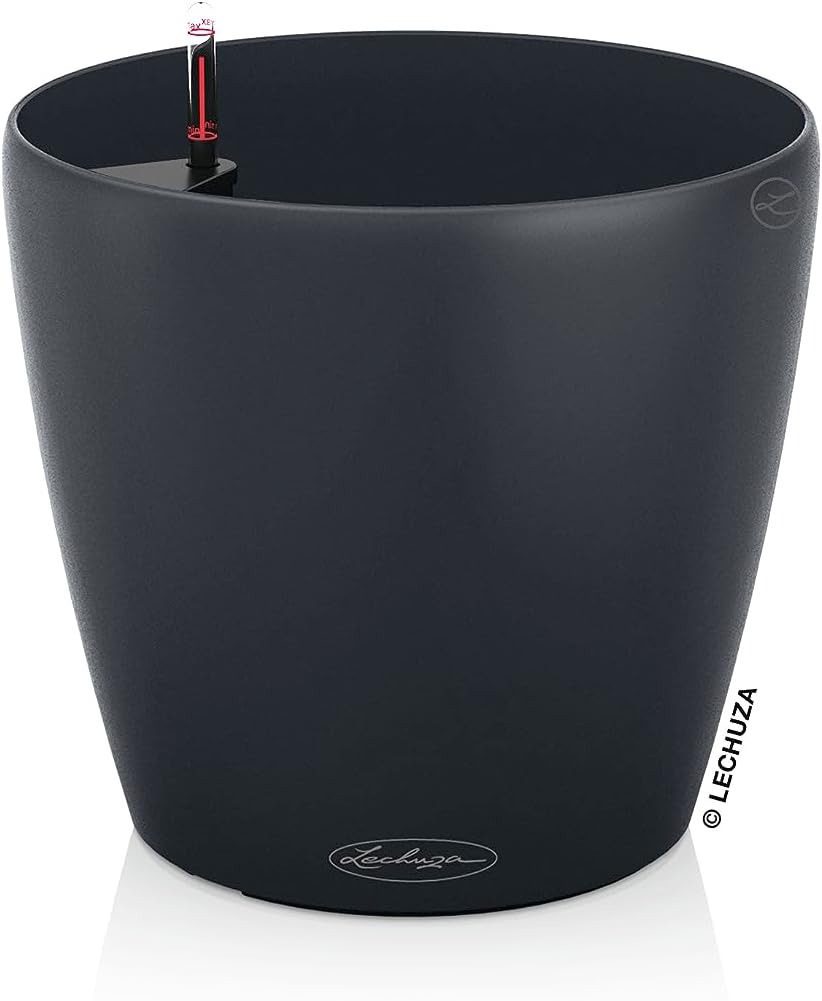
Lechuza is a German brand that has built its reputation on high-quality self-watering planters since 2000, and the Classico Color is its most versatile model. The planter uses a sub-irrigation system with a visible water-level indicator, so you always know exactly when to refill. The reservoir supplies water to the plant on demand, meaning the roots stay optimally hydrated without any manual intervention between refills.
Each Lechuza Classico comes with Lechuza-PON, a specially formulated mineral substrate that separates potting soil from the water reservoir. It aerates roots, provides nutrients, and regulates moisture delivery. The planter also has a drainage plug that can be removed for outdoor use to let excess rainwater escape. The removable plant liner makes repotting and cleaning simple.
It sits at a higher price point than the others on this list, but the build quality justifies the cost. Made from durable, shatterproof, UV-resistant polypropylene, it looks like a ceramic planter without the weight or fragility. Available in matte and glossy finishes in multiple colors and sizes from 8″ to 16″.
Best for: Peace lilies, blooming plants, foliage plants, and anyone who wants a planter that looks as good as it functions.
How To Care For African Violets Indoors
4. GARDENIX DECOR Self-Watering Pots 3-Pack (Best for Small Plants and Herbs)
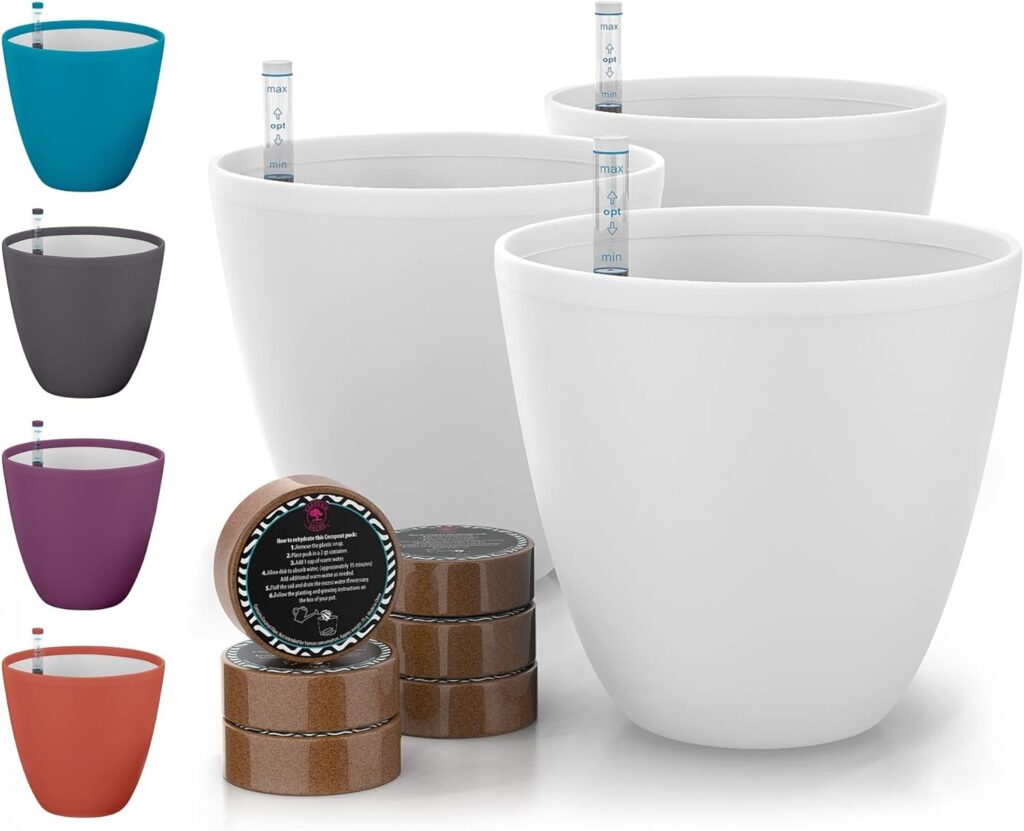
For smaller houseplants, herbs, or a windowsill garden, this three-pack from GARDENIX DECOR gives you real value. The pots use a two-part nested design where an inner pot with legs sits inside an outer pot, creating a water reservoir at the base. The plant draws moisture up through the legs as needed rather than sitting in stagnant water. Each pot also includes a water-level indicator so you know exactly when the reservoir needs refilling.
An added bonus is the plant growth tracking dial built into each water indicator valve, which lets you measure how much your plant has grown over time. The pots come with a coco coir pellet in each, a natural coconut fiber substrate that retains moisture well and keeps roots aerated. The high-quality polypropylene construction means they will not crack or leak on your shelves or windowsills.
Available in white, gray, purple, and teal, these pots work well in clusters or individually. The color is injected into the material rather than painted on, so they hold their look over time without fading.
Best for: Basil, chives, parsley, small ferns, African violets, and compact houseplants on a windowsill or shelf.
How Many Lumens do Plants Need?
5. DECOPOTS Self-Watering Planter 3-Pack (Best for Modern Decor)
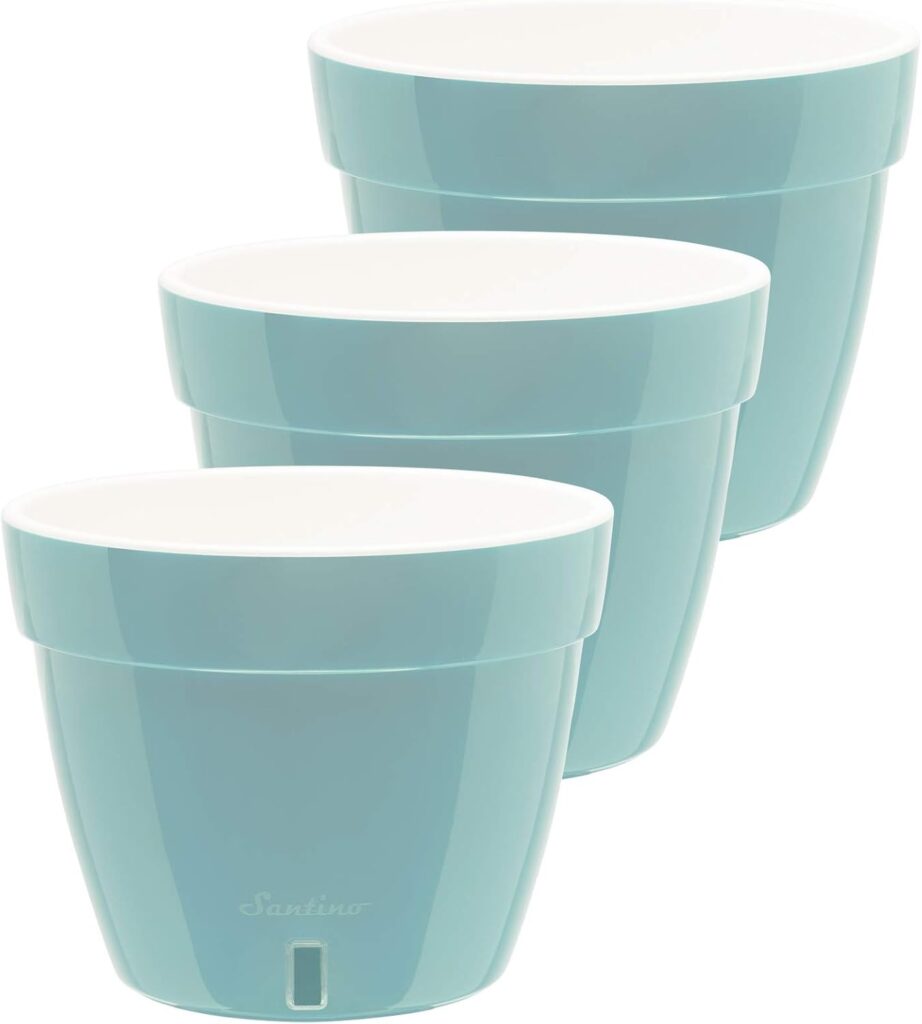
The DECOPOTS self-watering planter is a clean, minimalist option for modern interiors. The reservoir holds enough water to keep plants hydrated for up to four weeks between refills, which is among the longest intervals of any pot in this category. An integrated water-level indicator lets you monitor the reservoir without guessing, and the leak-free design protects floors and surfaces indoors.
The design includes ventilation to promote air circulation around roots, preventing the waterlogged conditions that cause rot. Available in several contemporary color combinations, the planters have a sleek, tapered silhouette that works well in offices, living rooms, and modern kitchens. The set of three gives you flexibility to group plants together or spread them across different rooms.
Best for: Orchids, pothos, snake plants, and any houseplant in a modern or minimalist interior.
What to Look for in a Self-Watering Planter
Not all self-watering planters work the same way, and the design differences matter for your plants’ health. The most important feature is how the reservoir delivers water to the soil. Sub-irrigation systems, where soil or porous legs draw water up from a reservoir below, are generally more effective than simple wick systems because they let plants drink at their own pace without the wick drying out or clogging over time.
A water-level indicator is worth prioritizing. Without one, you are back to guessing when the reservoir is empty. Look for planters that clearly show the current level so you can refill before the plants stress. Air circulation is the other key factor. Self-watering pots that seal completely around the root zone without ventilation can promote mold and root rot over time. A well-designed planter lifts the plant slightly out of the water and allows airflow into the soil.
One important note: self-watering planters are not ideal for cacti, succulents, or any plant that needs the soil to dry out completely between waterings. They work best for moisture-loving plants like ferns, pothos, peace lilies, herbs, philodendrons, and African violets.
Tips to Make a Jade Plant Bloom
Final Thoughts
Self-watering planters are one of the most practical investments you can make for indoor plants. They take the daily pressure off your schedule while keeping your plants healthier than inconsistent manual watering ever could. For the best all-around option, the HBServices USA pot delivers the most thoughtful engineering at a reasonable price. If you want a premium planter that looks stunning in any room, the Lechuza Classico is worth the investment. And for growing herbs or small plants on a windowsill, the GARDENIX DECOR three-pack is the most practical choice.
Any of the five options above will make a real difference in how your indoor plants grow and how much time you spend maintaining them.