Some links on this Website are affiliate links, meaning we may earn a commission if you make a purchase, at no additional cost to you. Please read our full Affiliate Disclosure for more details.
If you have been spending money on store-bought fertilizers every planting season, here is some good news: your kitchen and backyard already contain everything you need to feed your plants. Making DIY fertilizer at home is easier than most people think, and the results can be just as impressive as anything you find in a garden center.
Whether you are growing vegetables, flowers, or houseplants, learning how to create natural fertilizer from everyday ingredients can save you money, reduce household waste, and give your garden a healthy, chemical-free boost.
In this guide, you will find practical, easy-to-follow recipes using items you probably already have at home, along with tips on how to use them effectively.
How To Care For Basil Plant Indoors
Why DIY Fertilizers Are Worth Making
Commercial fertilizers work, but they often come with a price, both financially and environmentally. Many synthetic options contain harsh chemicals that can build up in the soil over time, disrupting the natural ecosystem of your garden. Homemade fertilizers, on the other hand, feed your plants gently and sustainably.
Here are a few reasons more gardeners are switching to homemade plant food:
- Cost-effective: Most ingredients cost nothing since they come from your kitchen or yard.
- Eco-friendly: Repurposing kitchen scraps reduces landfill waste.
- Gentle on soil: Natural fertilizers improve soil structure and encourage beneficial microbes.
- Customizable: You can tailor your fertilizer to exactly what your plants need.
- Safer for kids and pets: No toxic chemicals to worry about.
Understanding What Plants Actually Need
Before diving into the recipes, it helps to understand the three primary nutrients plants depend on: nitrogen (N), phosphorus (P), and potassium (K). You will see these listed as N-P-K on commercial fertilizer bags. Nitrogen promotes leafy green growth, phosphorus supports root development and flowering, and potassium strengthens overall plant health and disease resistance.
The good news is that many everyday ingredients are rich in one or more of these nutrients, making it easy to create a balanced organic fertilizer for your garden without any special knowledge or equipment.
6 DIY Fertilizer Recipes Using Everyday Ingredients
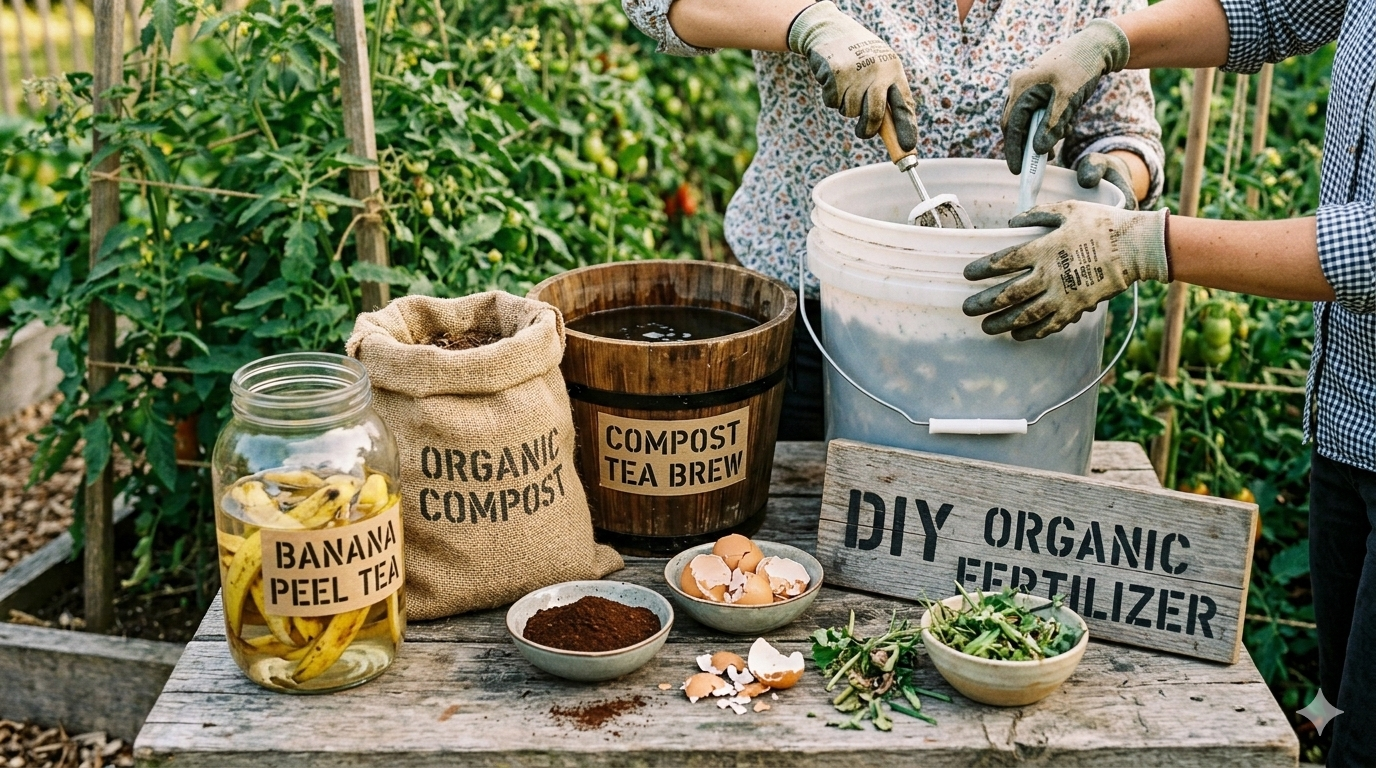
1. Banana Peel Fertilizer (High in Potassium)
Banana peels are one of the most popular ingredients for homemade plant food, and for good reason. They are loaded with potassium, which helps plants build strong stems, resist disease, and produce better fruit and flowers.
How to make it:
- Chop two or three banana peels into small pieces.
- Soak them in a jar of water for 48 hours.
- Strain out the peels and use the liquid to water your plants.
- Alternatively, bury whole peels directly in the soil near plant roots.
This works especially well for tomatoes, roses, and flowering plants.
2. Coffee Grounds Fertilizer (Rich in Nitrogen)
Used coffee grounds are a fantastic source of nitrogen, making them ideal for leafy vegetables, herbs, and acid-loving plants like blueberries, azaleas, and roses. They also improve soil texture and attract earthworms, which naturally aerate and enrich the ground.
How to use them:
- Sprinkle used coffee grounds directly on the soil surface around plants.
- Mix them into your compost pile to speed up decomposition.
- Steep grounds in water overnight and use as a liquid fertilizer.
Use in moderation since overapplication can make soil too acidic for some plants.
3. Eggshell Calcium Booster (Great for Root Vegetables)
Eggshells are made up of roughly 95% calcium carbonate, which is essential for strong cell walls in plants. A calcium deficiency in the garden often causes problems like blossom end rot in tomatoes and peppers. An eggshell fertilizer recipe is one of the easiest and cheapest solutions.
How to make it:
- Rinse and dry eggshells thoroughly.
- Crush them into a fine powder using a mortar and pestle or blender.
- Sprinkle the powder around your plants or mix it into the soil.
- For a faster-acting option, boil the shells in water for a few minutes, let cool, and use the water to irrigate plants.
4. Compost Tea (All-Round Liquid Fertilizer)
If you have a compost pile or bin, you are sitting on liquid gold. Compost tea is made by steeping finished compost in water to create a nutrient-rich liquid that feeds plants quickly and also introduces beneficial microorganisms to the soil.
How to make it:
- Fill a bucket with water and let it sit for 24 hours to allow chlorine to dissipate.
- Add two cups of finished compost.
- Stir the mixture daily and let it steep for 24 to 48 hours.
- Strain out the solids and apply the liquid directly to your soil or as a foliar spray.
This is one of the most well-rounded homemade fertilizers you can make, providing a broad spectrum of nutrients and improving soil health at the same time.
Growing Spider Plant Babies in Water
5. Epsom Salt Solution (Magnesium and Sulfur)
Epsom salt, which is magnesium sulfate, is a popular natural fertilizer for plants that are showing signs of magnesium deficiency, such as yellowing leaves with green veins. It also helps seeds germinate faster and enhances nutrient absorption.
How to use it:
- Dissolve one tablespoon of Epsom salt in one gallon of water.
- Use the solution to water your plants once a month.
- For a foliar spray, use a teaspoon per gallon and mist leaves directly.
Epsom salt works particularly well for tomatoes, peppers, and roses.
6. Grass Clipping Mulch Fertilizer (Free and Nitrogen-Rich)
Fresh grass clippings are high in nitrogen and break down quickly when added to the soil. Using them as a mulch layer around your plants is one of the simplest and most cost-effective ways to fertilize plants without buying anything at all.
Spread a thin layer (no more than one to two inches) of fresh clippings around the base of your plants. Avoid piling them too thickly as this can create a barrier that repels water and may cause rot. Let them dry slightly before applying if possible.
Can I Save A Plant From Root Rot?
Tips for Getting the Best Results From Homemade Fertilizers
- Test your soil first: Knowing whether your soil is acidic or alkaline helps you choose the right fertilizer ingredients.
- Rotate your recipes: Using different types of organic fertilizer prevents nutrient imbalances.
- Do not over-fertilize: More is not always better. Too much nitrogen, for example, encourages leafy growth at the expense of fruit and flowers.
- Apply at the right time: Early morning or late afternoon is best to avoid burning plants in direct sunlight.
- Store liquids properly: Liquid fertilizers like compost tea or banana peel water should be used within a few days and kept in a cool, covered container.
Top 6 Reasons Why Garden Plants Keep Dying
How to Grow and Care for Elephant Ear Plant
Frequently Asked Questions (FAQ)
1. Is DIY fertilizer as effective as store-bought fertilizer?
Yes, in most cases. While commercial fertilizers offer precise N-P-K ratios and can act faster, homemade fertilizers provide a steady, gentle release of nutrients along with added benefits like improved soil structure and microbial activity. For most home gardens, natural fertilizers made from kitchen scraps work extremely well.
2. How often should I apply homemade fertilizer?
It depends on the type. Liquid fertilizers like compost tea or banana peel water can be applied every one to two weeks during the growing season. Solid applications like eggshell powder or coffee grounds can be mixed into soil at the start of the season and refreshed monthly. Always watch your plants for signs of over or under-fertilization.
3. Can I use homemade fertilizer for indoor plants?
Absolutely. Many of these recipes work well for indoor houseplants. Diluted banana peel water, Epsom salt solution, and diluted compost tea are particularly good choices for potted plants. Just be sure to dilute liquid fertilizers more than you would for outdoor plants since container soil can accumulate nutrients more quickly.
4. Are there any kitchen scraps I should avoid using as fertilizer?
Yes. Avoid using meat, fish, dairy products, and oily foods in your garden. These can attract pests, create unpleasant odors, and introduce harmful bacteria into the soil. Stick to fruit and vegetable scraps, coffee grounds, eggshells, and plant-based materials for the safest results.
5. How do I know if my plants need more fertilizer?
Common signs of nutrient deficiency include yellowing leaves, slow or stunted growth, pale coloring, and poor fruit or flower production. However, these symptoms can also indicate overwatering or other issues, so always consider the full picture before adding more fertilizer. A simple soil test kit from a garden store can also help you identify exactly what nutrients your soil is lacking.