Some links on this Website are affiliate links, meaning we may earn a commission if you make a purchase, at no additional cost to you. Please read our full Affiliate Disclosure for more details.
If you’ve ever walked out to your garden only to find your tomatoes riddled with holes or your herbs coated in tiny bugs, you know how frustrating pest problems can be. The good news? You don’t need to reach for a bottle of harsh chemicals to fix it. Natural pesticides for garden use are incredibly effective, easy to make at home, and far safer for your family, pets, and the environment.
In this guide, you’ll learn exactly what natural pesticides are, how to make several proven recipes, and how to use them correctly so you get real results without the toxic side effects.
What Are Natural Pesticides and Why Should You Use Them?
Natural pesticides are pest control solutions derived from plant-based, mineral, or biological sources rather than synthetic chemicals. They work by repelling, disrupting, or killing common garden pests while breaking down quickly in the environment, leaving little to no harmful residue.
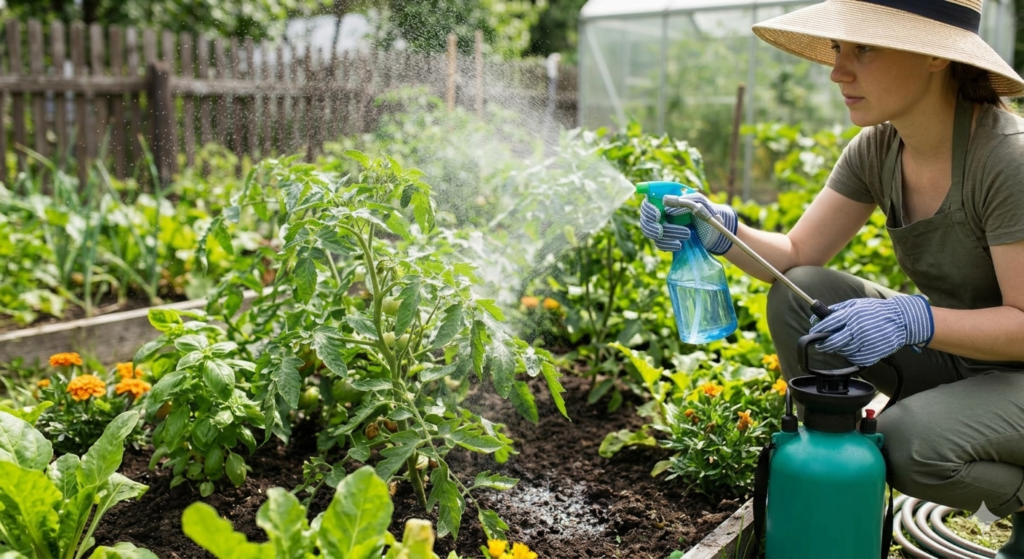
Choosing organic, chemical-free pest control comes with several real benefits. First, they’re safer for children and pets who spend time in the garden. Second, they protect pollinators like bees and butterflies that your garden depends on. Third, they’re affordable, since most homemade pesticide recipes use ingredients you already have in your kitchen. And fourth, they reduce your chemical footprint without sacrificing results.
Common Ingredients Used in Homemade Pesticides
Before jumping into the recipes, it helps to understand which ingredients do the heavy lifting.
Neem oil is one of the most powerful plant-based insecticides available. It comes from the seeds of the neem tree and disrupts the life cycle of insects, making it effective against aphids, whiteflies, spider mites, and more.
Garlic contains sulfur compounds that are naturally repellent to many insects. A garlic spray for plants works well as a deterrent and can also have mild antifungal properties.
Dish soap acts as a surfactant, breaking down the outer coating of soft-bodied insects like aphids and mealybugs. Always use a plain, unscented, biodegradable variety.
Chili peppers contain capsaicin, which is intensely irritating to insects and some animals. A chili pepper spray is a solid option for repelling caterpillars, beetles, and small mammals.
White vinegar has mild acidity that can deter certain pests and is sometimes used as a weed-controlling spray along borders and pathways.
4 Effective Natural Pesticide Recipes You Can Make at Home
1. Neem Oil Spray
This is widely considered the gold standard of homemade organic pesticides.
To make it, mix 2 teaspoons of neem oil, 1 teaspoon of mild liquid soap, and 1 litre of warm water in a spray bottle. Shake well before each use and apply directly to affected plants, making sure to coat both the tops and undersides of leaves.
Use it every 7 to 14 days as a preventative treatment, or every 4 to 7 days when dealing with an active infestation. Neem oil is most effective when applied in the early morning or evening to avoid leaf burn.
2. Garlic and Soap Spray
This is one of the simplest and most effective natural bug sprays for plants.
Blend 10 to 12 garlic cloves with 2 cups of water, then strain the mixture thoroughly. Add 1 teaspoon of liquid soap and dilute with an additional litre of water. Pour into a spray bottle and apply to plants, focusing on areas where pests are active.
This spray works well against aphids, caterpillars, and whiteflies. Reapply every few days or after rain.
3. Chili Pepper Spray
For tougher pests and four-legged garden visitors, chili pepper spray is your friend.
Blend 5 to 6 hot chili peppers with 2 cups of water and strain well. Add a few drops of liquid soap, dilute with another litre of water, and transfer to a spray bottle. Apply generously around the base of plants and on leaves. Always wear gloves when making and applying this one.
4. Soap and Water Spray
For a quick, entry-level solution, mix 2 teaspoons of plain dish soap with 1 litre of water. This simple spray smothers and kills soft-bodied insects on contact. It’s especially useful for sudden aphid outbreaks.
7 Different Types of Garlic To Plant In Your Garden
How to Use Natural Pesticides Effectively
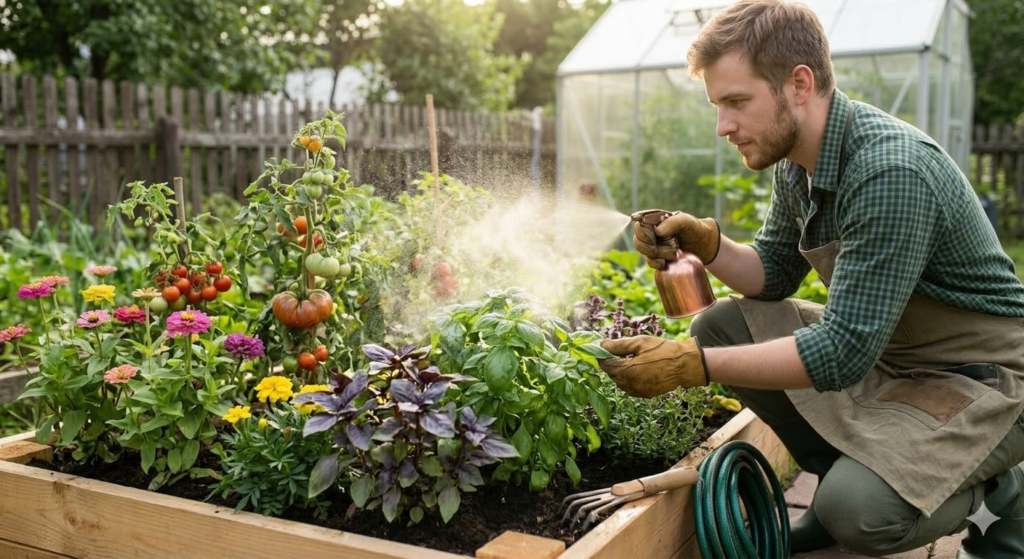
Making the spray is only half the job. How you apply it matters just as much.
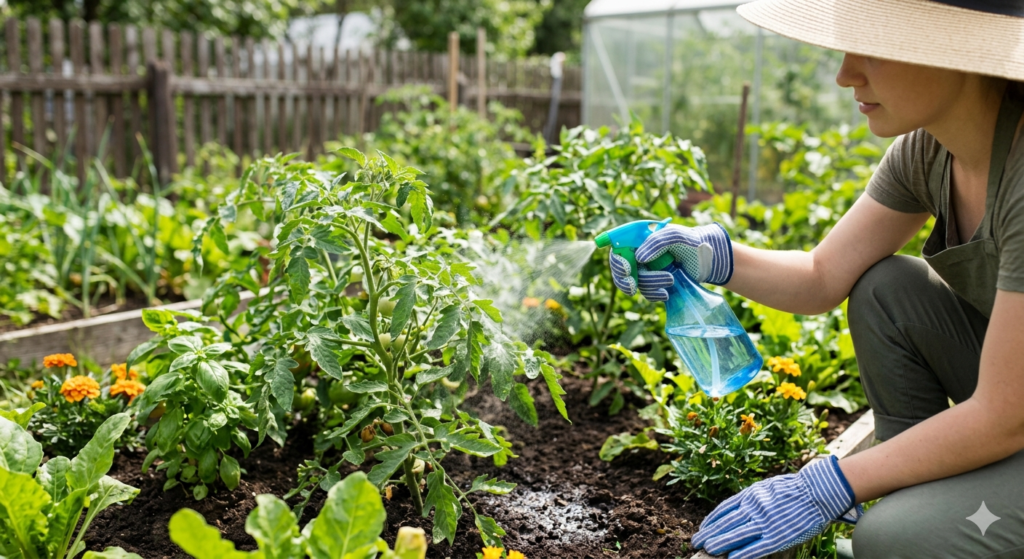
Always test any new spray on a small section of the plant first and wait 24 hours to check for any adverse reaction before applying it widely. Apply sprays in the early morning or late evening when temperatures are cooler and the sun won’t interact with the solution to cause leaf burn.
Make sure to cover the entire plant, including the undersides of leaves where many pests lay their eggs. Reapply after rainfall, as homemade pesticide solutions are water-soluble and wash off easily.
For best results, combine your natural pesticide routine with other eco-friendly practices like companion planting, crop rotation, and removing diseased plant material promptly. Natural pest control works best as part of a broader garden health strategy.
How Often Should You Apply Homemade Pesticides?
As a general rule, apply preventatively every 1 to 2 weeks during the growing season. If you’re dealing with an active pest problem, increase the frequency to every 3 to 4 days until the situation is under control, then scale back to a maintenance schedule.
Are Homemade Organic Pesticides Safe for Kids and Pets?
Generally, yes. Homemade organic pesticides made from natural ingredients are far safer than synthetic alternatives. However, a few precautions are worth keeping in mind. Neem oil and garlic can irritate eyes and mucous membranes, so keep children and pets away from treated areas until the spray has dried completely. Chili pepper spray is particularly irritating and should never come into contact with eyes or skin during application.
As with any garden product, store homemade pesticide solutions safely out of reach of children, and label your containers clearly.
6 Best Gardening Work Trousers
6 Best Gardening Gloves To Protect From Thorns
Frequently Asked Questions
1. What is the most effective natural pesticide for a vegetable garden?
Neem oil is widely regarded as the most effective natural pesticide for vegetable gardens. It controls a wide range of pests including aphids, whiteflies, and caterpillars, and is safe to use on edible plants when applied correctly.
2. How long does a homemade natural pesticide last?
Most homemade pesticide solutions are best used within 24 to 48 hours of preparation. They don’t contain preservatives, so they can break down or lose potency quickly, especially once water is added.
3. Can I use natural pesticides on indoor plants?
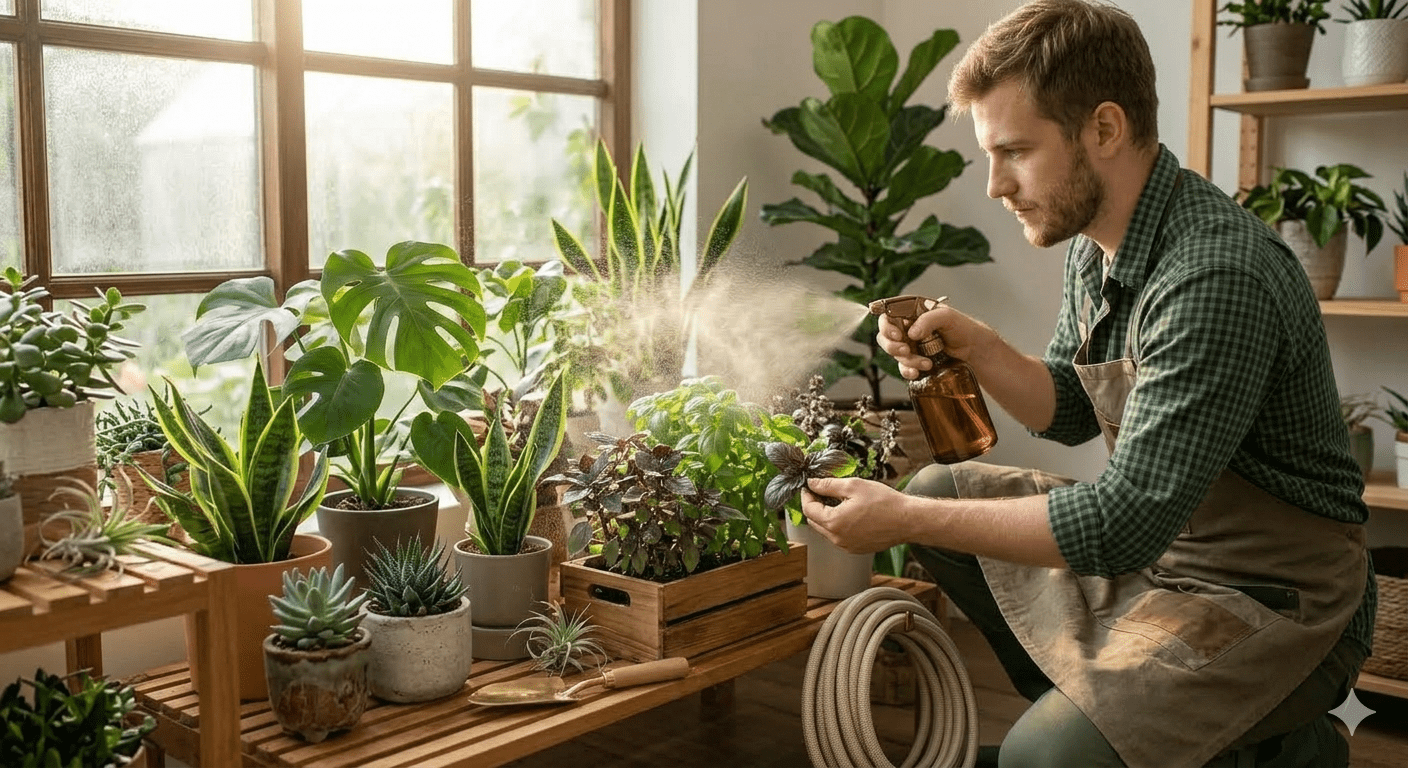
Yes. Neem oil spray is especially popular for indoor plants. Apply it outdoors or in a well-ventilated space to avoid the strong smell, then bring plants back inside once the spray has dried.
4. Will homemade pesticides harm beneficial insects like bees?
Most natural pesticide sprays pose a low risk to beneficial insects when applied correctly. Avoid spraying open flowers where bees are active, and apply during early morning or evening hours when pollinators are less active.
5. How do I know if my natural pesticide is working?
You should notice a reduction in pest activity within 3 to 5 days of consistent application. If pests persist after 2 weeks of regular treatment, try switching to a stronger option like neem oil or combining two methods for better results.