Some links on this Website are affiliate links, meaning we may earn a commission if you make a purchase, at no additional cost to you. Please read our full Affiliate Disclosure for more details.
Seeing your crepe myrtle leaves turning yellow can be worrying, especially if the plant has always been healthy. Crepe myrtles are hardy, reliable, and stunning landscape trees, so any sudden change in leaf color feels like a warning sign.
The truth is that yellowing leaves (known as chlorosis) are usually a sign of stress, but the underlying cause can vary. Sometimes the issue is something simple like improper watering, but other times it may be a sign of pests or disease.
In this guide, you’ll learn the real reasons crepe myrtle leaves turn yellow, how to diagnose the problem correctly, and the best ways to fix it so your plant can bounce back.
What It Really Means When Crepe Myrtle Leaves Turn Yellow
When crepe myrtle leaves begin to change from vibrant green to dull yellow, it’s the plant’s way of signaling that something isn’t right. Yellowing usually indicates that the plant is struggling to carry out normal processes like photosynthesis or nutrient absorption. However, the good thing is that crepe myrtles respond well to proper care, and almost all causes of yellowing can be corrected once identified.
The Major Causes of Crepe Myrtle Leaves Turning Yellow
1. Overwatering
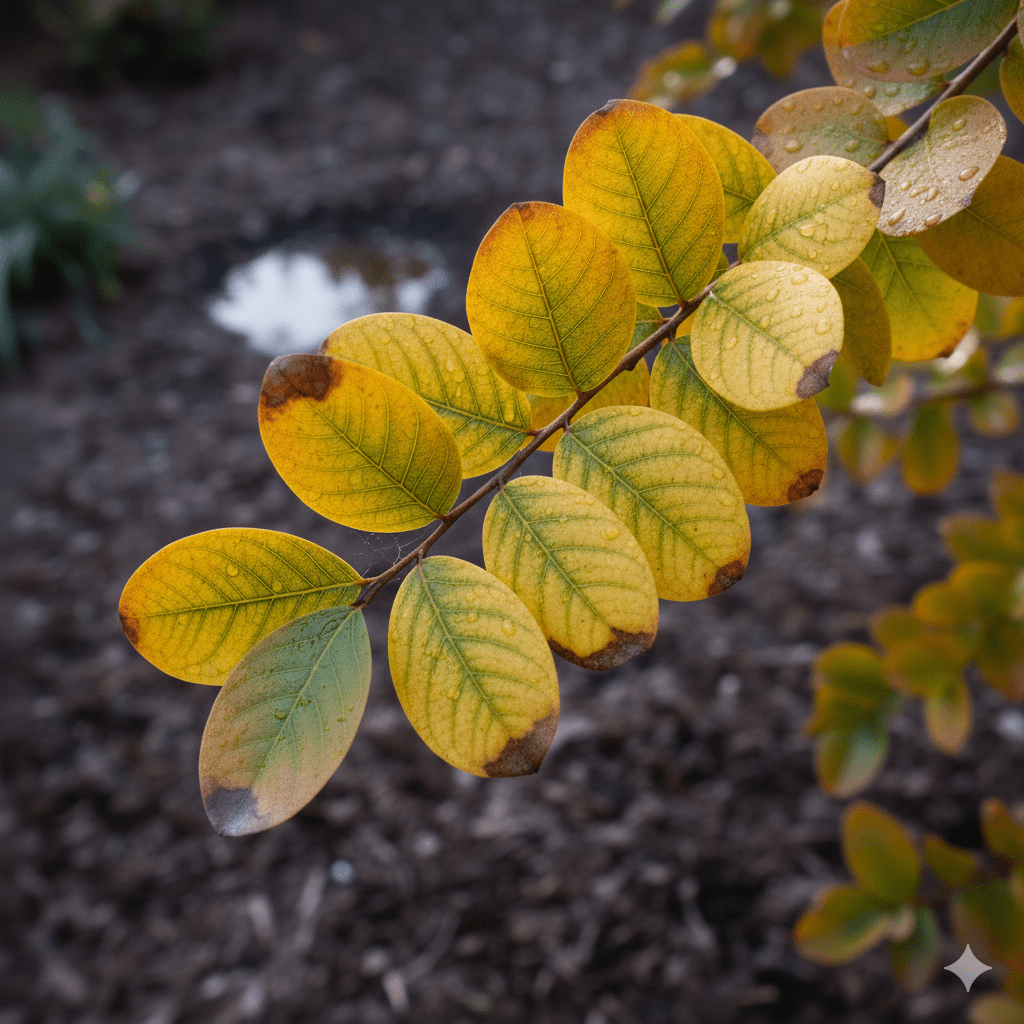
Overwatering is by far the most frequent reason for yellowing crepe myrtle leaves. Crepe myrtles thrive in well-drained soil, and when the soil stays consistently wet, roots become deprived of oxygen. This leads to root stress, which then shows up as yellow leaves.
When a crepe myrtle receives too much water, the roots can’t breathe, making it difficult for the plant to take in nutrients. The stress first affects the lower leaves, which begin turning pale or yellow. Over time, the plant may drop these leaves entirely. Newly planted crepe myrtles are especially vulnerable, as gardeners often mistakenly water them too frequently.
To fix overwatering, the soil must be allowed to dry out between watering sessions. If the area has poor drainage, improving the soil with compost or sand can help water move through more efficiently. Deep watering once the soil dries out is more beneficial than frequent shallow watering.
2. Underwatering
While overwatering is more common, underwatering can also cause yellow leaves. Crepe myrtles are drought-tolerant once established, but they still need consistent moisture, especially during hot or dry seasons. When the soil dries out completely, the plant becomes stressed and leaves begin to yellow, usually starting at the tips.
Underwatered crepe myrtles often have dry, crisp leaves and brittle stems. Unlike overwatered leaves, which feel soft or mushy, dry leaves feel papery. Newly planted crepe myrtles, in particular, need regular deep watering until their root systems develop.
Watering deeply once or twice a week, depending on the heat and soil type, helps the plant absorb enough moisture
. Using mulch around the base also helps retain soil moisture and reduces evaporation.
3. Nutrient Deficiency
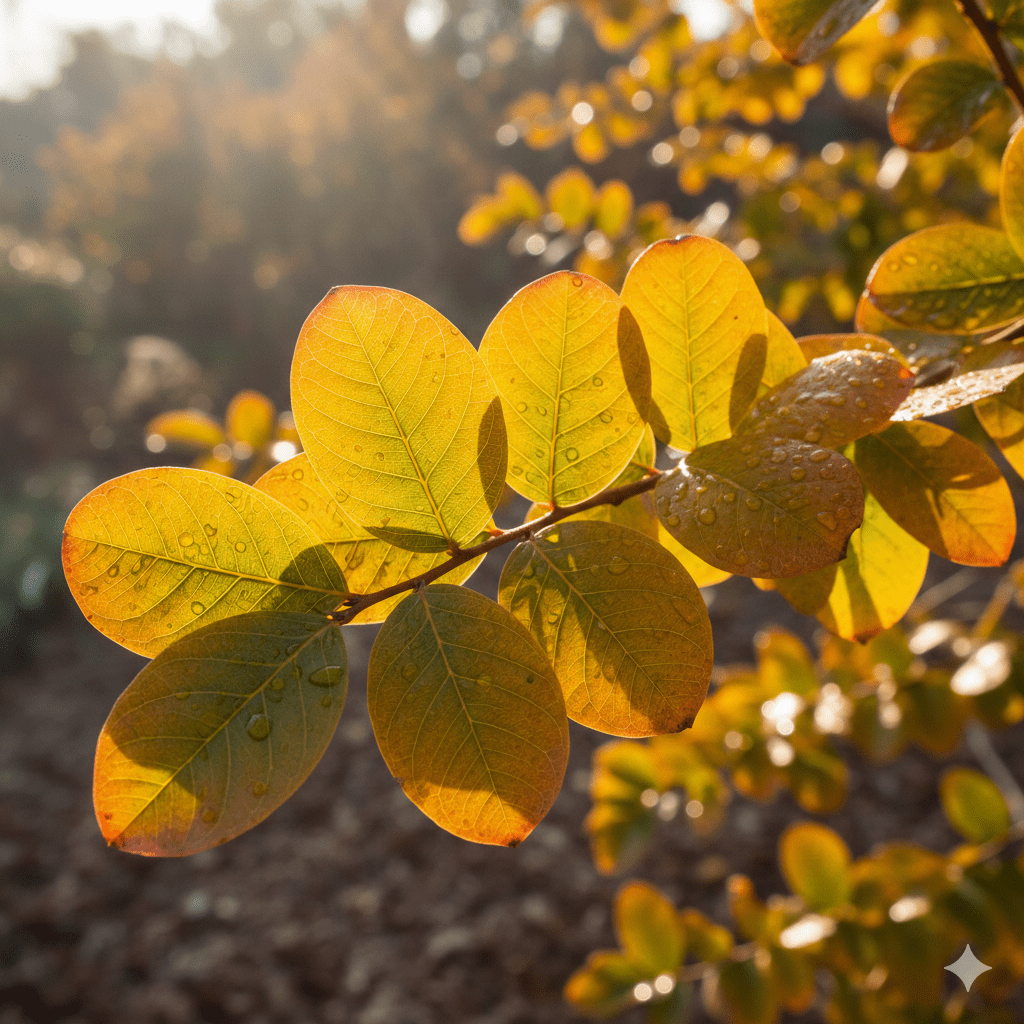
Another major cause of yellow leaves is nutrient deficiency. Crepe myrtles can survive in a variety of soil types, but if the soil lacks essential nutrients, the plant may show signs of stress. Heavy clay soils often block nutrient uptake, while sandy soils may not hold nutrients long enough for the plant to absorb them.
Different nutrient deficiencies show up in different ways. Nitrogen deficiency tends to cause overall yellowing, making the entire leaf pale. Iron deficiency, common in alkaline soils, causes the area between the veins to turn yellow while the veins remain green, a condition called interveinal chlorosis. Magnesium deficiency produces a similar pattern but often starts on older leaves.
Applying a balanced slow-release fertilizer in early spring can help supply the nutrients crepe myrtles need to grow strong and healthy. If iron deficiency is suspected, a chelated iron treatment works faster and helps restore green color to new growth. Long-term, enriching the soil with compost improves nutrient availability and keeps the plant healthier.
4. Pest Infestation
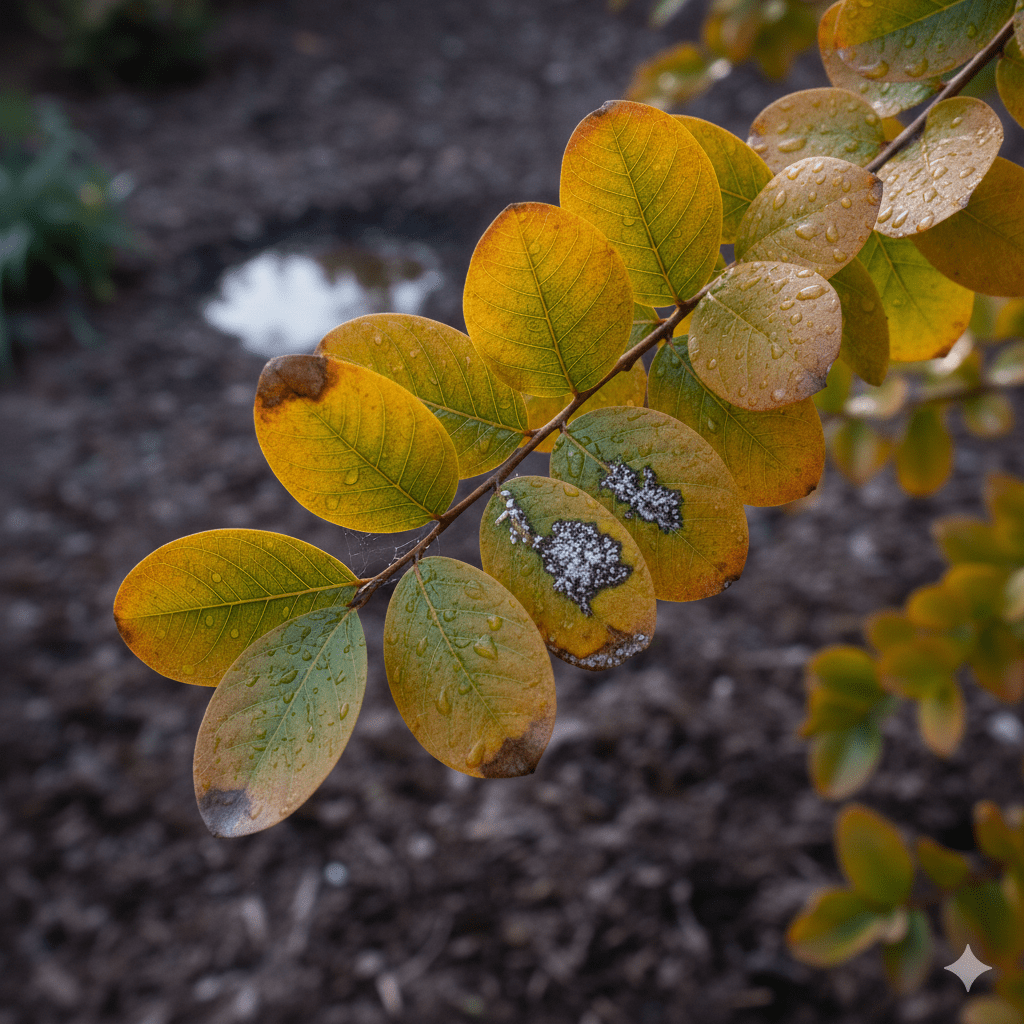
Pests may seem small, but they can create big problems for crepe myrtles. Among all pests, aphids are the most common offenders. These tiny insects feed by sucking sap from the leaves, which weakens the plant and leads to discoloration, yellow leaves, and sometimes curling.
Aphids often leave behind a sticky residue called honeydew, which encourages the growth of sooty mold; a black fungal layer that coats the leaves. Once sooty mold appears, it becomes harder for the plant to breathe and photosynthesize, worsening the yellowing problem.
If you notice small clusters of insects on the undersides of the leaves or a sticky film on the foliage, aphids are likely the cause. Treating them with insecticidal soap or neem oil usually solves the problem quickly. In severe cases, repeated treatments may be necessary. Encouraging natural predators like ladybugs can also help keep aphid populations under control.
5. Fungal Diseases
Fungal diseases are another reason for crepe myrtle yellow leaves, and Cercospora leaf spot is the most common one. This disease typically shows up during warm, humid weather and spreads when moisture lingers on the leaves.
Unlike uniform yellowing caused by watering issues, Cercospora leaf spot creates yellow leaves with visible dark spots. As the disease progresses, the leaves may turn brown at the edges and drop prematurely. If the infection spreads, the tree may lose a significant amount of foliage, especially toward the bottom.
To manage this disease, it’s important to avoid overhead watering, as wet leaves encourage fungal growth. Raking up fallen leaves prevents reinfection, and applying a copper-based fungicide can help if the disease is persistent. Increasing airflow around the plant through proper pruning also helps reduce humidity and fungal spread.
6. Natural Seasonal Leaf Drop
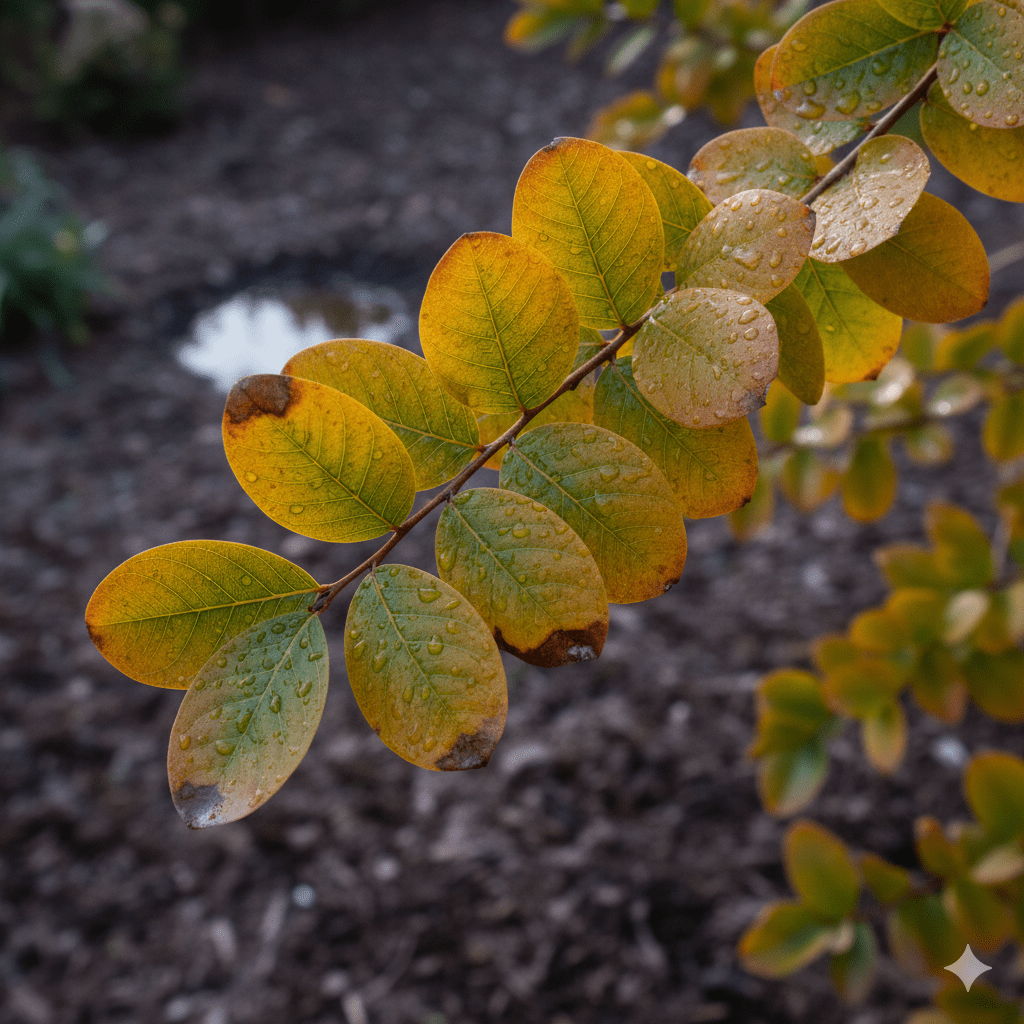
Sometimes, yellowing leaves are simply a natural part of the crepe myrtle’s growth cycle. As summer ends and the plant prepares for dormancy, it is normal for leaves to fade from green to yellow or orange before falling. This type of yellowing is not patchy or irregular, it affects the plant evenly and is not accompanied by spots, insects, or sticky residue.
If your crepe myrtle is yellowing in late summer or fall and the plant otherwise looks healthy, this is likely part of its natural seasonal transition. In this case, no treatment is needed.
How to Prevent Yellow Leaves on Crepe Myrtles
Preventing yellow leaves starts with consistent, proper care. The way you water, fertilize, prune, and manage pests all influence the plant’s health.
Watering correctly is one of the most important steps. Crepe myrtles prefer deep watering that saturates the root zone, rather than frequent light watering. Allowing the top few inches of soil to dry before watering again keeps the roots healthy and prevents overwatering issues.
Fertilization should be thoughtful rather than aggressive. Applying a balanced fertilizer in spring gives the plant the nutrients it needs for healthy leaf growth, but adding too much nitrogen can make the plant overly leafy and susceptible to pests. Improving the soil gradually with compost is a gentler, long-term solution.
Checking for pests regularly helps you catch aphid issues before they spread. Inspecting the undersides of leaves during warm months allows you to take action early. Pruning properly also plays a role, because good airflow helps prevent fungal diseases.
Overall, a combination of proper watering, smart fertilization, good soil care, and early pest detection keeps crepe myrtles healthy and far less likely to develop yellow leaves.
When Should You Worry?
Not all yellow leaves are cause for concern, but certain signs indicate a more serious issue. If the yellowing is accompanied by black or brown spots, sticky leaves, or a musty smell near the soil, the plant may be dealing with pests, fungal infections, or root rot. Yellow leaves that appear early in the growing season or affect only one part of the tree may also indicate a localized problem, such as poor drainage or nutrient imbalance.
In these cases, it’s important to investigate quickly. Early intervention often prevents the issue from spreading and keeps the plant healthier in the long run.
FAQs
1. Why are my crepe myrtle leaves turning yellow in summer?
The most common reasons include overwatering, underwatering, heat stress, and aphids. Inspect the leaves and check soil moisture to determine the exact cause.
2. Should I remove yellow leaves from my crepe myrtle?
You can remove them if they fall off easily, but avoid pulling them forcefully. Focus more on treating the underlying issue so new healthy leaves can grow.
3. How do I know if my crepe myrtle has leaf spot?
Leaf spot appears as yellow leaves with small brown or black dots. The affected leaves often fall early, especially during humid weather.
4. Will yellow leaves turn green again?
No. Once a leaf turns yellow, it won’t revert to green. However, correcting the issue will allow new healthy leaves to grow.
5. How often should I water a crepe myrtle?
Water deeply once or twice per week during the growing season. Adjust based on soil type, weather, and whether the plant is newly planted or established.