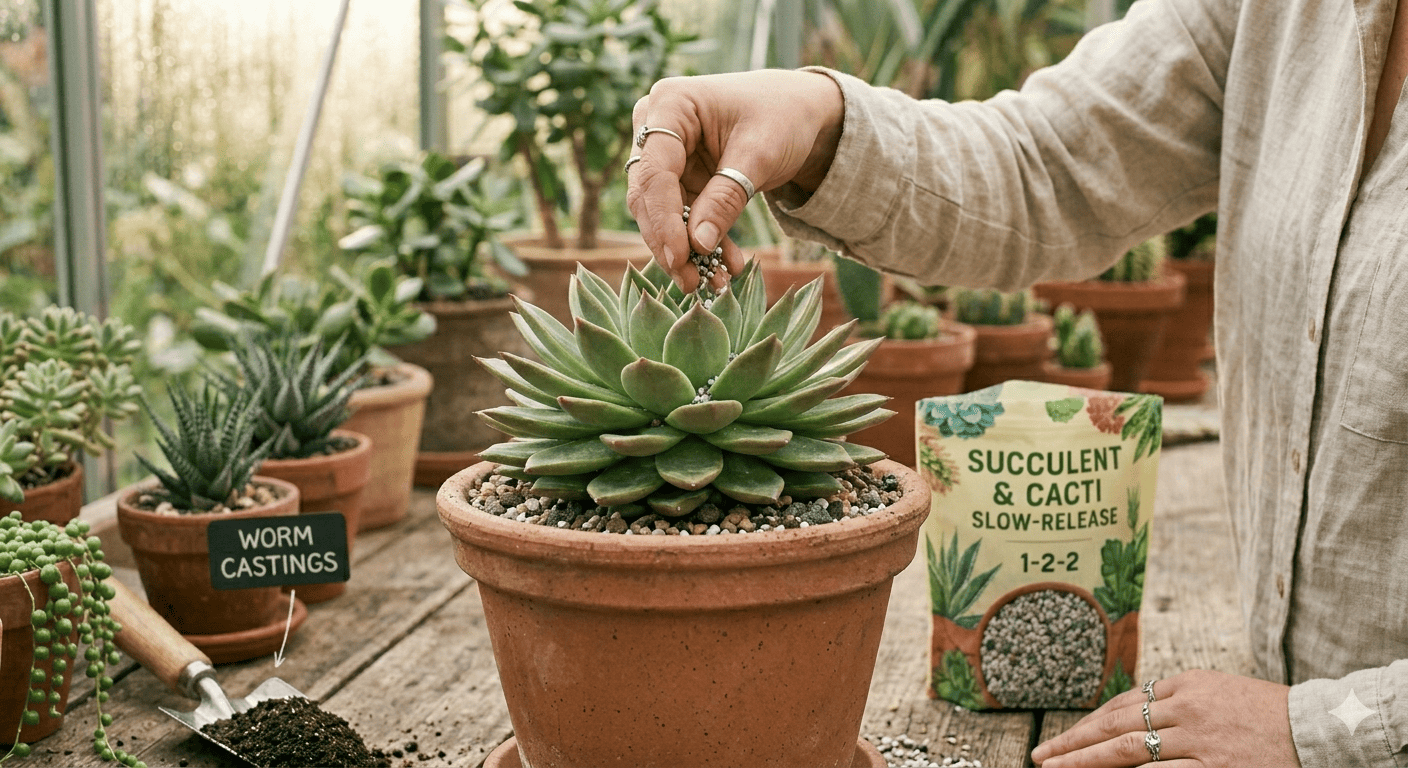
Best Fertilizer for Succulents
If you love succulents, you already know how wonderfully low-maintenance they are. But here is a little secret most plant parents do not discover until their succulents start looking dull, leggy, or just a little sad: the right fertilizer can make a world of difference. Finding the best fertilizer for succulents does not have to be complicated, and with so many great options available, you can have your plants thriving in no time.
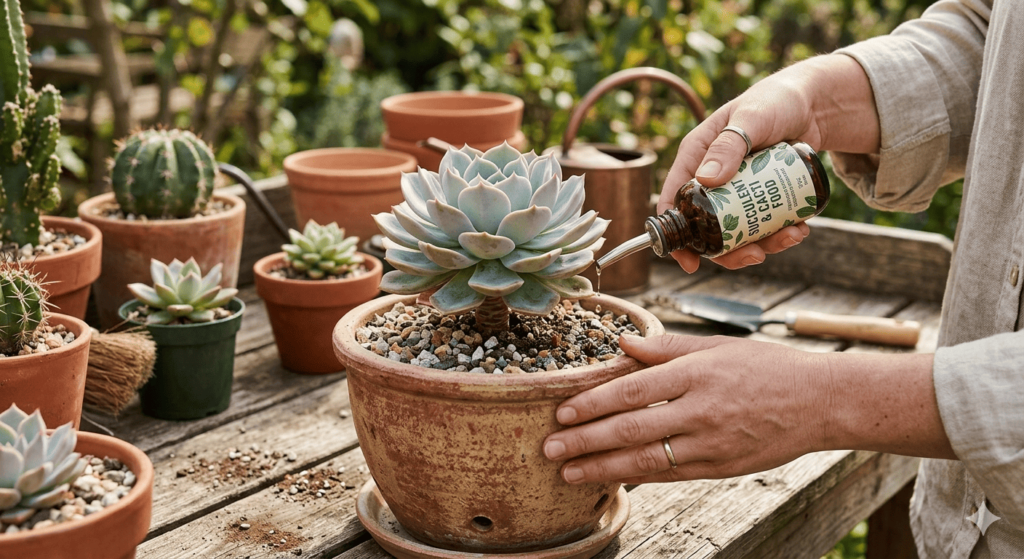
In this guide, we break down everything you need to know about succulent fertilizer, including the best products to buy, when and how to apply them, and common mistakes to avoid. Whether you are growing a collection of echeveria or a sprawling jade plant, this guide has you covered.
5 Best Gardening light meter For Plant Care
Why Do Succulents Need Fertilizer?
Succulents are survivors. They evolved in nutrient-poor, arid environments, which means they do not need nearly as much feeding as your typical houseplant. However, that does not mean they thrive without any nutrition at all, especially when grown in containers.
When succulents live in pots, they rely entirely on you to replenish the nutrients in their soil. Over time, potting mix becomes depleted, and without a little boost, growth slows, colors fade, and plants become more vulnerable to disease. Fertilizing during the active growing season gives your succulents the energy they need to produce vibrant foliage, strong roots, and sometimes even flowers.
What NPK Ratio Is Best for Succulents?
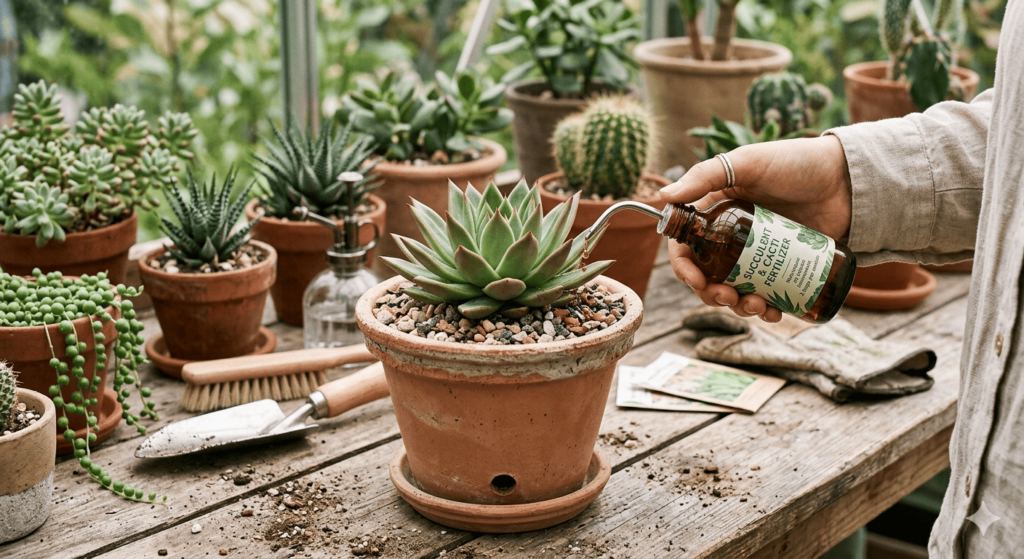
Every fertilizer label shows three numbers known as the NPK ratio. These stand for Nitrogen (N), Phosphorus (P), and Potassium (K). Understanding this ratio is key to choosing the right succulent fertilizer.
- Nitrogen (N) supports leaf and stem growth but should be kept relatively low for succulents to prevent leggy, weak growth.
- Phosphorus (P) promotes strong root development and flowering.
- Potassium (K) boosts overall plant health and disease resistance.
For succulents and cacti, a fertilizer with a ratio around 2-7-7 or a balanced low-number ratio like 3-1-2 tends to work best. Avoid high-nitrogen fertilizers designed for leafy plants, as these can cause succulents to grow too quickly and lose their compact, attractive shape.
Best Fertilizers for Succulents on Amazon (2025)
We have rounded up the top-rated succulent fertilizers available. Each one has been selected based on customer reviews, NPK suitability, ease of use, and overall value for money.
1. Schultz Cactus Plus 2-7-7 Liquid Plant Food (Best Overall)
If there is one fertilizer that consistently tops the charts for succulents and cacti, it is the Schultz Cactus Plus. Its 2-7-7 NPK ratio is perfectly dialed in for desert plants, delivering just enough nitrogen while loading up on phosphorus and potassium for robust root systems and vibrant color.
The dropper bottle makes it incredibly easy to get the dosage right. Just 7 drops per quart of water is all it takes, and you feed your plants every time you water. Customers rave about how their succulents and cacti started blooming and growing more vigorously after just a few weeks of use.
Buy on Amazon: Schultz Cactus Plus 2-7-7 Liquid Plant Food
2. Miracle-Gro Succulent Plant Food (Best for Beginners)
Miracle-Gro is a household name in plant care, and their succulent-specific formula lives up to the brand’s reputation. With a 0.5-1-1 NPK formula, it is gentle enough to use every two weeks without risking fertilizer burn. The pump bottle design makes application completely foolproof, with just one pump for small pots and two pumps for larger ones.
This is a great option if you are new to fertilizing succulents and want something simple, reliable, and widely available. It works well for a range of plants including jade, aloe vera, and all standard cacti varieties.
Buy on Amazon: Miracle-Gro Succulent Plant Food
3. The Grow Co Succulents and Cactus Plant Food (Best Slow-Release)
If you prefer a set-it-and-forget-it approach, The Grow Co’s granular slow-release fertilizer is a fantastic choice. The pellets feed your succulents consistently for up to 9 months, making it one of the most cost-effective options on the market. Simply sprinkle the granules around the base of your plant, water, and let the formula do its work.
It works great for both indoor and outdoor succulents, and its low NPK rate means there is almost no risk of over-fertilizing. Customers love it for terrariums and mixed succulent containers where consistent, gentle nutrition is key.
Buy on Amazon: The Grow Co Succulents and Cactus Plant Food
4. Perfect Plants Succulent and Cactus Fertilizer (Best Granular Option)
Perfect Plants Nursery has been in the garden industry since 1980, and their succulent fertilizer reflects decades of horticultural expertise. This professional-grade granular formula comes in a resealable pouch and works beautifully for a wide range of succulent varieties including echeveria, string of pearls, snake plants, aloe vera, and more.
The balanced micronutrient ratio supports healthy root development, vibrant color, sturdy stem growth, and can even contribute to blooming. Apply during potting or sprinkle on top of established plants and water in. It lasts several months once applied, making it excellent value.
Buy on Amazon: Perfect Plants Succulent and Cactus Fertilizer
When Should You Fertilize Succulents?

Timing matters just as much as the product you choose. Succulents have an active growing season and a dormant period, and fertilizing at the wrong time can actually do more harm than good.
- Spring and Summer: This is prime fertilizing season. Apply your chosen fertilizer once a month during these warmer months when your succulents are actively putting out new growth.
- Fall and Winter: Ease off entirely. Most succulents go semi-dormant in cooler months and cannot efficiently absorb nutrients. Fertilizing during dormancy can lead to root burn or weak, stretched growth.
- After Repotting: Wait at least a month before fertilizing a newly repotted succulent. Fresh potting mix usually contains some nutrients already, and the plant needs time to settle.
7 Common Repotting Mistakes You Must Avoid for Healthy Plants
How to Fertilize Succulents Correctly
Even the best fertilizer for succulents can cause harm if applied incorrectly. Here are some simple tips to get it right every time:
- Always dilute liquid fertilizers to half the recommended strength to prevent nutrient burn.
- Apply to moist soil, not dry soil. Fertilizing dry succulents can shock the roots.
- Avoid getting fertilizer on the leaves or stems directly, as this can cause burns.
- Less is more: succulents are light feeders. Stick to a monthly schedule at most during the growing season.
- If you notice yellowing tips, wilting, or crusty white deposits on the soil, you may be over-fertilizing. Flush the soil with plain water and reduce your feeding frequency.
Organic vs. Synthetic Fertilizer for Succulents
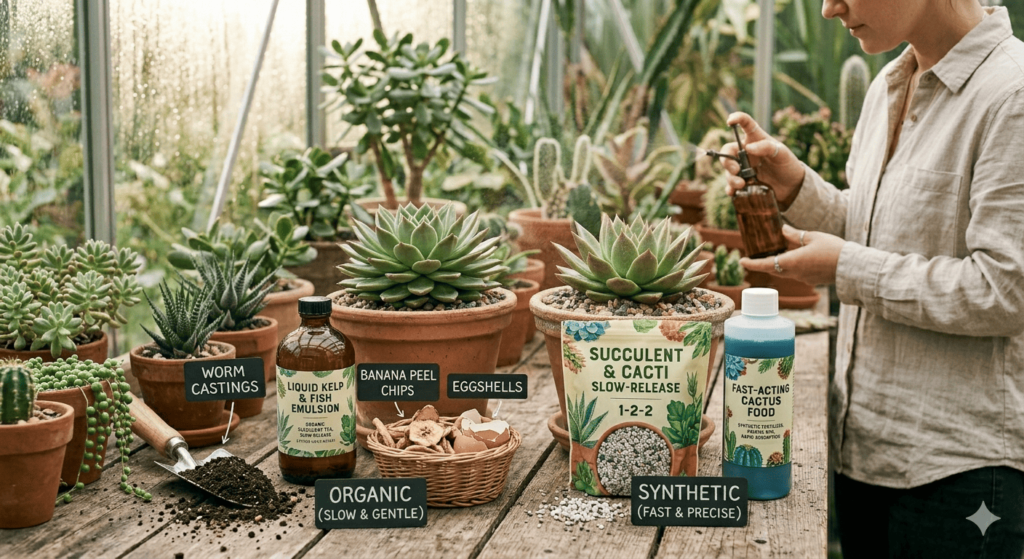
Both organic and synthetic fertilizers can work well for succulents, and choosing between them often comes down to personal preference and gardening philosophy.
Organic fertilizers, such as worm castings, compost tea, or fish emulsion, release nutrients slowly and improve soil health over time. They are gentler on roots and carry a much lower risk of over-fertilization. The tradeoff is that they can have an odor, and results may be slower to show.
Synthetic fertilizers deliver nutrients quickly and in precise amounts, which makes them ideal when you want to see fast results. Products like Schultz and Miracle-Gro fall into this category. The key with synthetic options is to dilute properly and avoid overuse.
For most casual succulent growers, a quality liquid synthetic fertilizer used sparingly is the most convenient and effective choice. If you are passionate about organic gardening, worm castings or EarthPods are excellent slow-release alternatives.
Common Mistakes to Avoid When Fertilizing Succulents
- Using high-nitrogen fertilizers meant for lawns or leafy plants: these cause rapid, weak growth and can ruin the compact look of your succulents.
- Fertilizing in winter when plants are dormant: this leads to wasted product and potential root damage.
- Applying fertilizer at full strength: always dilute to at least half the recommended dose.
- Fertilizing a stressed or sick plant: fix the underlying problem first, then fertilize once the plant is recovering.
- Forgetting to water after applying granular fertilizers: the pellets need water to begin releasing nutrients into the soil.
Best Grow Lights for Succulents
Frequently Asked Questions
How often should I fertilize my succulents?
Once a month during the spring and summer growing season is ideal for most succulents. If you are using a slow-release granular fertilizer, a single application can last several months. Always skip fertilizing in fall and winter when succulents are dormant.
Can I use regular plant fertilizer on succulents?
You can, but it is not ideal. General-purpose fertilizers are often high in nitrogen, which can cause succulents to grow too fast and become leggy. If you have nothing else on hand, dilute a balanced fertilizer (like a 10-10-10) to one-quarter strength. For best results, always choose a fertilizer specifically formulated for succulents and cacti.
What are the signs that my succulent needs fertilizer?
Slow or stalled growth, pale or washed-out leaf color, and smaller-than-normal new leaves can all be signs that your succulent is running low on nutrients. However, always rule out other causes first, such as insufficient light or incorrect watering, before reaching for the fertilizer.
Is liquid or granular fertilizer better for succulents?
Both work well. Liquid fertilizers provide nutrients quickly and are great for immediate results, while granular slow-release fertilizers offer consistent, long-term feeding with less effort. If you tend to forget to fertilize regularly, a slow-release granular option is the smarter pick.
Can I over-fertilize succulents?
Absolutely, and it is actually more common than under-fertilizing. Symptoms of over-fertilization include brown or scorched leaf tips, white crusty deposits on the soil surface, and wilting despite moist soil. If this happens, flush the pot with plain water several times to wash out excess salts, and hold off on fertilizing for at least a month.