10 Signs Of Overwatered Houseplants
If your once thriving houseplant is suddenly looking sad, droopy, or discolored, your first instinct might be to reach for the watering can. But here’s the twist: too much love in the form of water is one of the most common reasons houseplants die. Recognizing the overwatered houseplants signs early can be the difference between a quick recovery and a trip to the compost bin.
In this article, we’ll walk through the ten most telling symptoms of an overwatered plant, explain why they happen, and give you practical, easy to follow fixes so your green companion can bounce back. Whether you’re a first time plant parent or someone who’s been gardening for years, this guide will help you water smarter, not harder.
7 Mistakes to Avoid When Growing English Ivy Indoors
Why Overwatering Happens So Often
Overwatering is one of the most common houseplant care mistakes, and it’s usually not because people are careless. It’s because well meaning plant owners assume more water equals more care. In reality, plant roots need oxygen just as much as they need moisture.
When soil stays soggy for too long, the air pockets in the soil fill with water, roots suffocate, and the plant’s whole system starts to break down. Understanding how to tell if a plant is overwatered starts with knowing what’s happening below the soil line, not just what you see on the leaves.
1. Yellow, Droopy Leaves
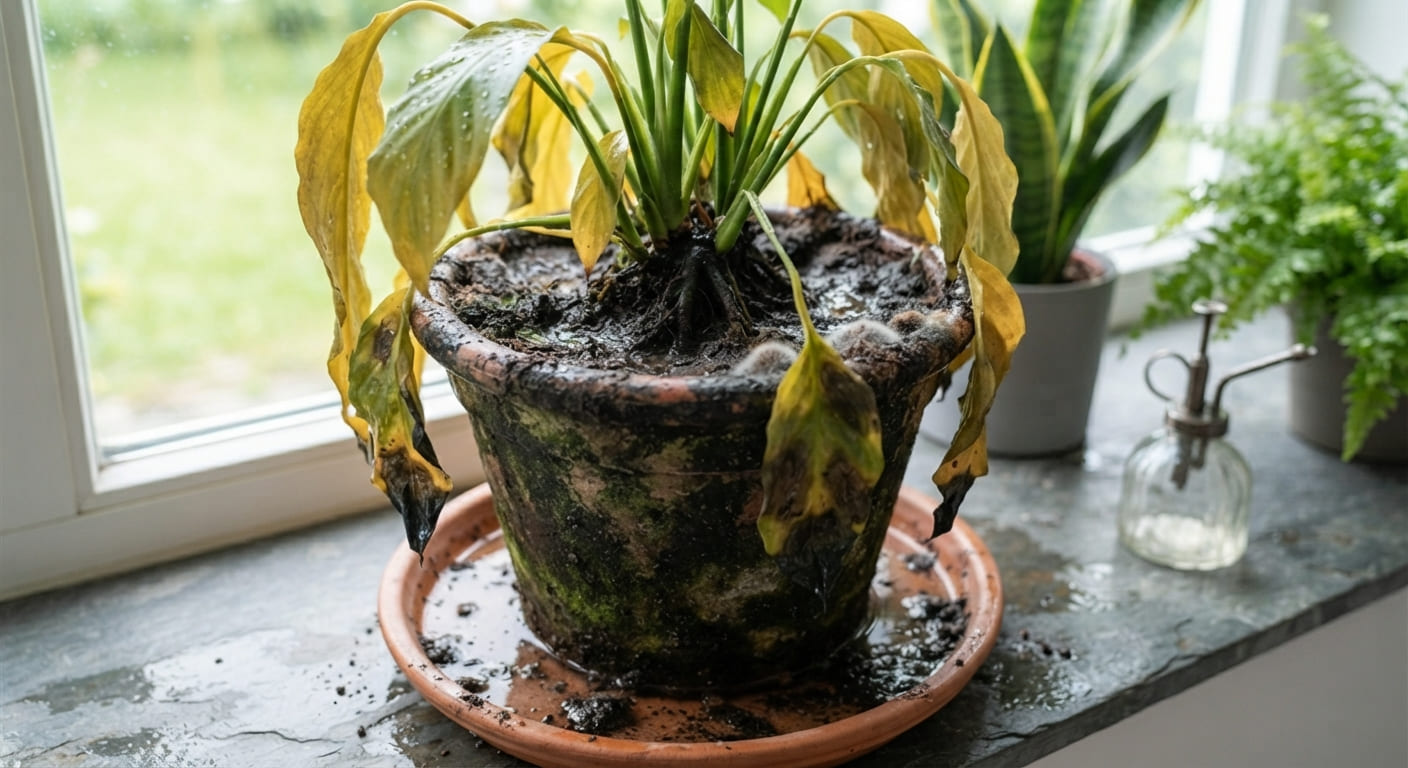
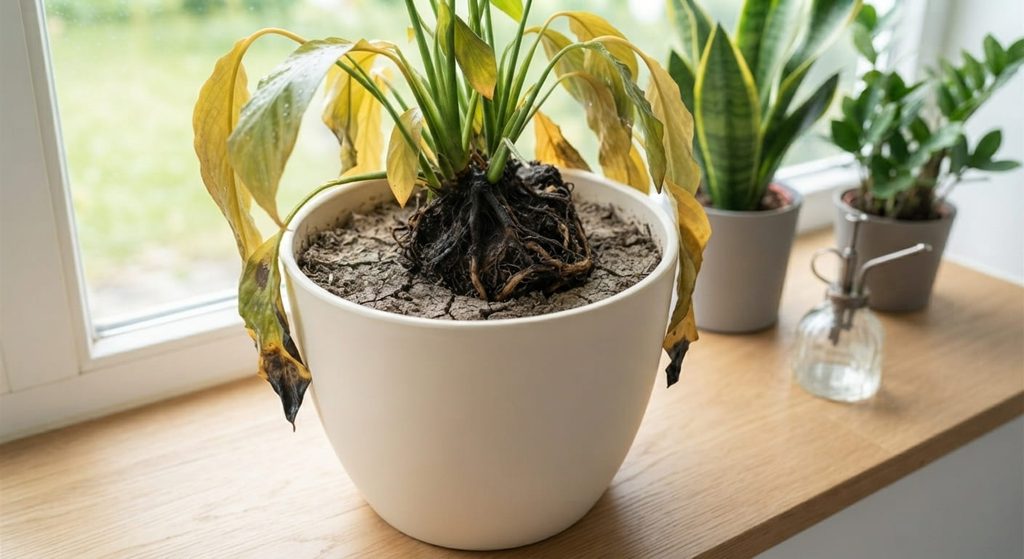
Yellow leaves overwatering is probably the single most recognizable symptom out there. Unlike the crispy, dry yellowing that comes from underwatering, overwatered leaves tend to turn a soft, pale yellow and feel limp or mushy to the touch. If you notice yellowing starting from the lower leaves and working upward, it’s a strong clue that the roots are struggling to function properly.
Fix It:
Let the soil dry out significantly before watering again, and check that your pot has proper drainage.
2. Wilting Despite Moist Soil
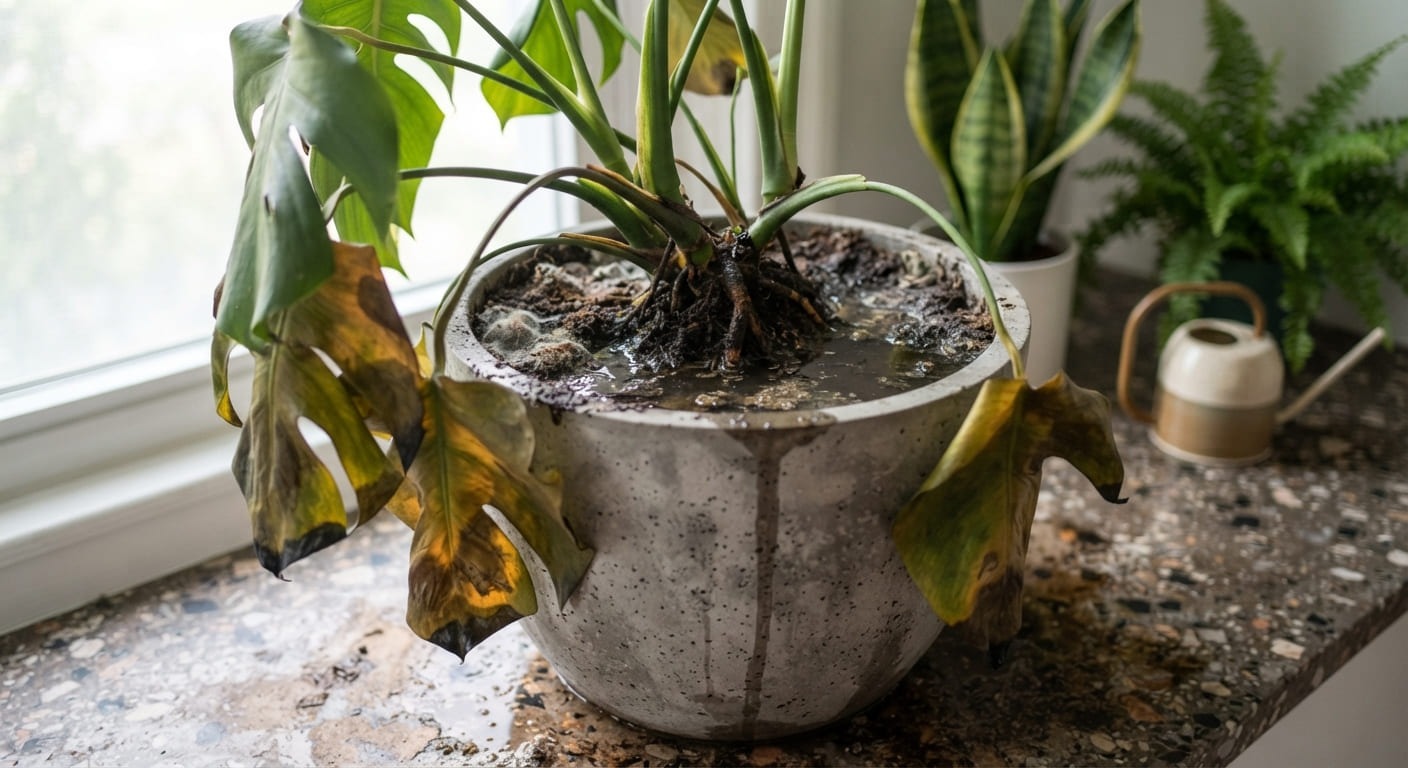
This is one of the most confusing overwatered plant symptoms because wilting usually signals thirst. But when a plant is drooping and the soil is already wet, it’s actually plant drooping too much water related. The roots are damaged and can no longer absorb moisture efficiently, even though there’s plenty of it around.
Fix It:
Stop watering immediately and allow the topsoil to dry before assessing the roots further.
15 Moisture Absorbing Bathroom Plants That Keep Your Space Fresh and Mold-Free
3. Soft, Mushy Stems
Healthy stems should feel firm. If yours feel squishy or soft near the soil line, this is a warning sign that rot has already begun. This is one of the more serious overwatered houseplant signs because it often means the damage has moved past the roots and into the plant’s structure.
Fix It:
Trim away any mushy sections with clean, sharp scissors and repot into fresh, dry soil.
4. A Foul, Swampy Smell From the Soil
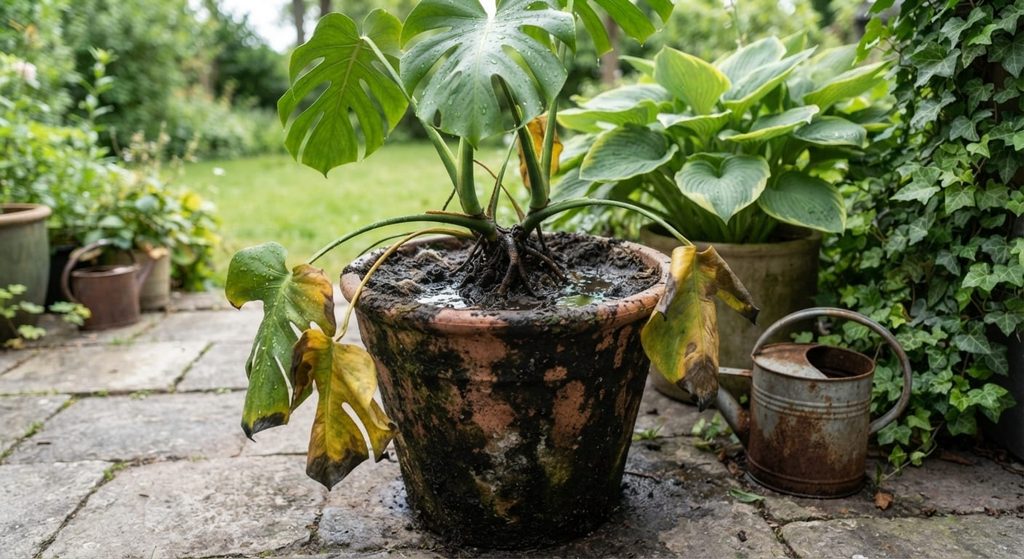
Healthy soil has an earthy, neutral scent. If your pot starts smelling sour, musty, or like standing water, that’s often a sign of anaerobic bacteria building up from excess moisture, a common precursor to root rot.
Fix It:
Remove the plant from its pot and inspect the roots right away.
5. Root Rot Houseplant Symptoms
Root rot houseplant issues are the most serious consequence of overwatering. Healthy roots are firm and typically white or light tan. Rotting roots turn brown or black, feel slimy, and may fall apart when touched.
Fix It:
Cut away all rotted roots with sterilized scissors, then repot the plant in fresh, well draining soil.
6. Mold or Fungus on the Soil Surface
A white, fuzzy growth or small mushrooms popping up in your pot are visual overwatered plant symptoms that shouldn’t be ignored. Fungus thrives in consistently damp environments, and its presence is a clear signal that the soil isn’t drying out between waterings.
Fix It:
Scrape off the top layer of soil, let the pot dry out, and improve airflow around the plant.
7. Leaves Falling Off Suddenly
When a plant drops several leaves at once, seemingly out of nowhere, overwatering is often the culprit. The plant is essentially shedding parts it can no longer support due to root stress.
Fix It:
Check the roots, trim any damage, and adjust your indoor plant watering guide routine going forward.
8. Brown, Soft Spots on Leaves
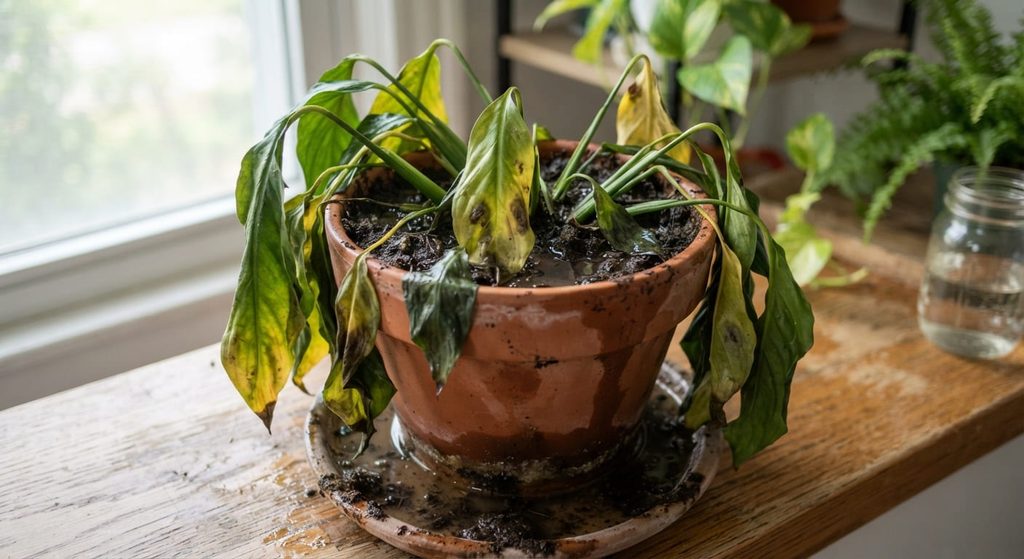
Unlike the crispy brown edges caused by underwatering or low humidity, overwatering tends to create brown spots that feel soft, wet, or almost translucent. These spots can spread quickly if the underlying issue isn’t addressed.
Fix It:
Remove severely affected leaves and reduce watering frequency immediately.
9. Slow or Stunted Growth
If your plant hasn’t produced new leaves in a while, or growth seems unusually slow for the season, overwatering could be limiting its ability to take in nutrients. Waterlogged roots simply can’t do their job properly.
Fix It:
Reassess your watering schedule and consider switching to a chunkier, faster draining soil mix.
10. Standing Water in the Saucer or Pot
Sometimes the sign is as simple as this: water pooling at the bottom of your pot or saucer long after you’ve watered. This is one of the clearest overwatered houseplant signs because it points directly to poor drainage.
Fix It:
Always empty saucers after watering, and make sure your pot has drainage holes.
5 Best Gardening light meter For Plant Care
How to Fix Overwatered Houseplants for Good
Knowing how to fix an overwatered plant isn’t just about reacting to symptoms, it’s about building better long term habits. Start by checking soil moisture with your finger before every watering session, going about two inches deep.
Choose pots with drainage holes without exception, and pair them with a well aerated potting mix that includes perlite or bark. Adjust your watering frequency seasonally, since plants typically need less water during cooler, low light months. Finally, keep an eye on humidity and airflow, since stagnant, damp air around your plant can slow soil drying and encourage the very problems we’ve covered above.
What Causes Brown Tips on Houseplant Leaves?
Frequently Asked Questions
How do I know if I’ve overwatered houseplants?
Look for a combination of symptoms rather than just one. Yellow, limp leaves, soggy soil that stays wet for days, a musty smell, and slow growth are all strong indicators. If the soil feels wet more than a couple inches down several days after watering, you’re likely overdoing it.
What are the signs of overwatering vs underwatering plants?
Overwatered plants tend to have soft, yellow, mushy leaves and wet soil, while underwatered plants show dry, crispy, brown leaf edges and soil that pulls away from the pot. Checking soil moisture directly is the most reliable way to tell the two apart.
How do I save an overwatered plant from dying?
Remove it from its pot, trim away any rotten or mushy roots, and repot it in fresh, dry, well draining soil. Hold off on watering again until the top few inches of soil are completely dry.
What does root rot look like on houseplants?
Root rot houseplant symptoms include roots that are brown or black, feel slimy or mushy, and may have a foul odor. Healthy roots, by contrast, are firm and pale in color.
How often should I water indoor plants to avoid overwatering?
There’s no single answer since it depends on the plant species, pot size, and environment, but a helpful rule of thumb is to check the soil before watering rather than following a fixed schedule. Most houseplants prefer to dry out at least partially between waterings.