Why Are My Tomato Leaves Curling? Causes and Solutions
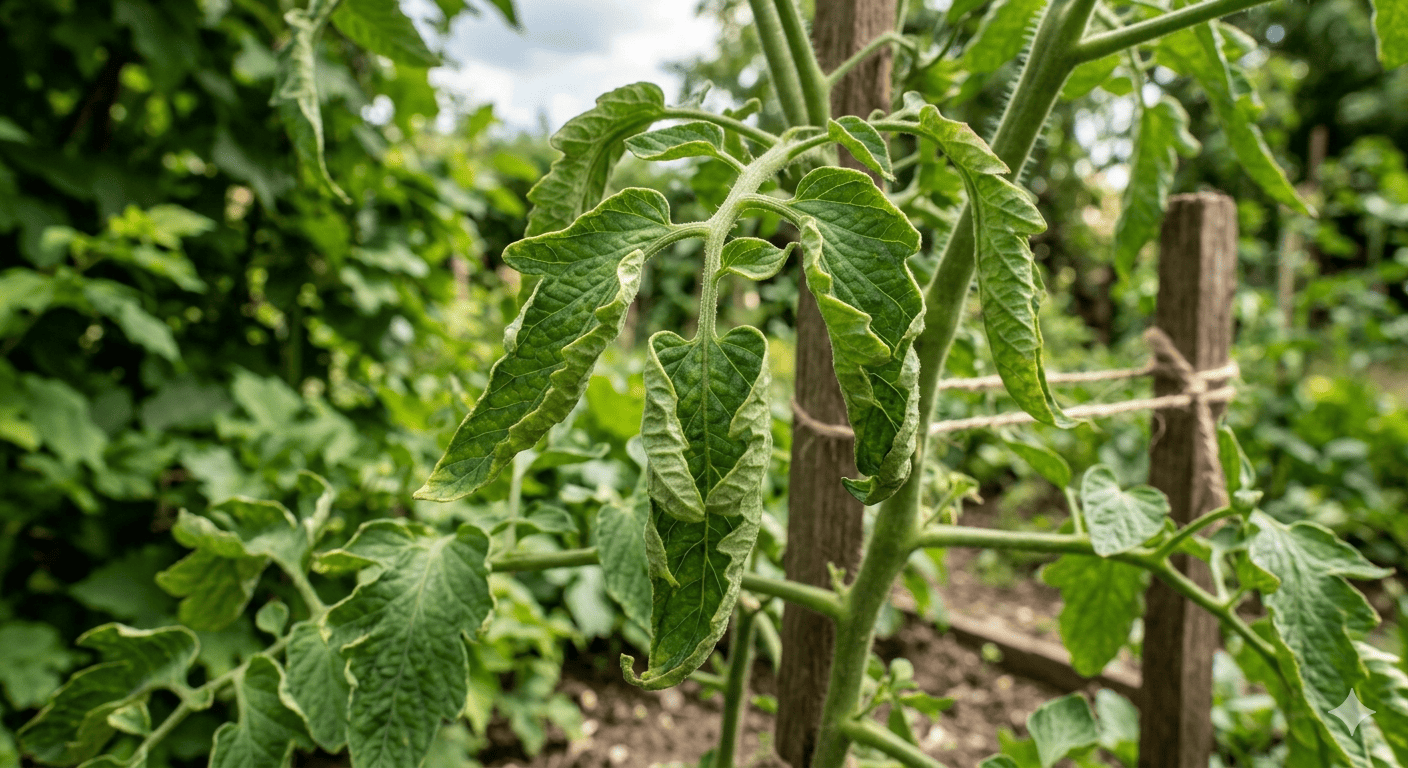
You walk into your garden on a sunny morning, coffee in hand, ready to check on your tomato plants. But something looks off. The leaves are curling inward, rolling up like tiny scrolls, and you have no idea why. Sound familiar? You are not alone. Tomato leaves curling is one of the most common complaints among home gardeners, and the good news is that it is almost always fixable once you know the cause.
In this guide, we will walk you through every major reason your tomato plant leaves might be curling, how to identify what is going on, and exactly what to do about it. Whether you are growing in pots on a balcony or in a sprawling backyard garden, this article has you covered.
Why Are Your Calathea Dottie Leaves Turning Yellow?
What Does Tomato Leaf Curl Actually Look Like?
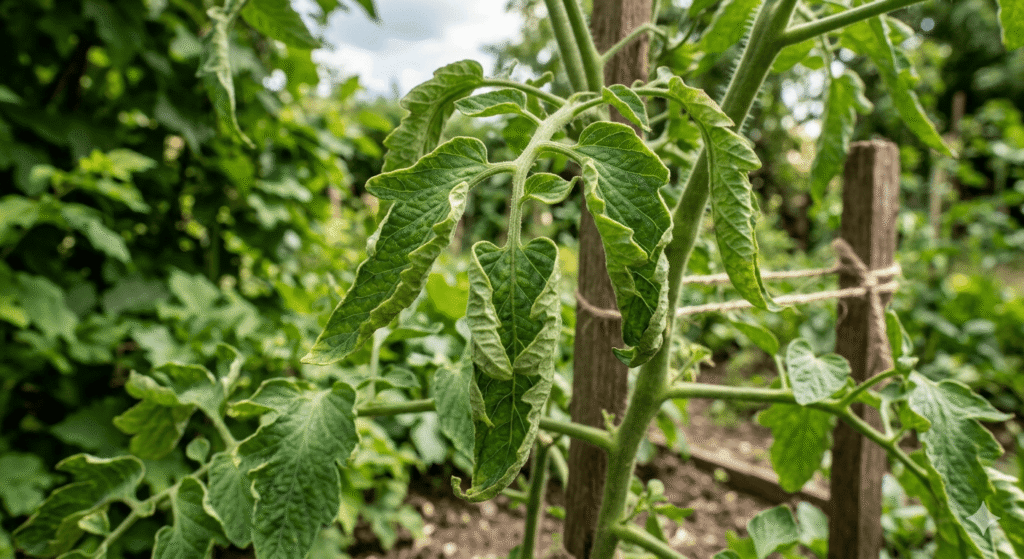
Before jumping into causes, it helps to understand what you are looking at. Tomato leaf curl can show up in a few different ways:
- Leaves rolling upward or inward along their length
- Leaves curling downward or cupping at the edges
- Leaves that feel stiff, leathery, or brittle
- Curling that starts at the bottom of the plant and moves upward
The direction and location of the curl can give you important clues about the underlying cause. So pay close attention the next time you go in for a closer look.
8 Reasons Why Your Umbrella Plant Is Dropping Leaves?
Top Reasons Your Tomato Leaves Are Curling
1. Heat Stress and High Temperatures
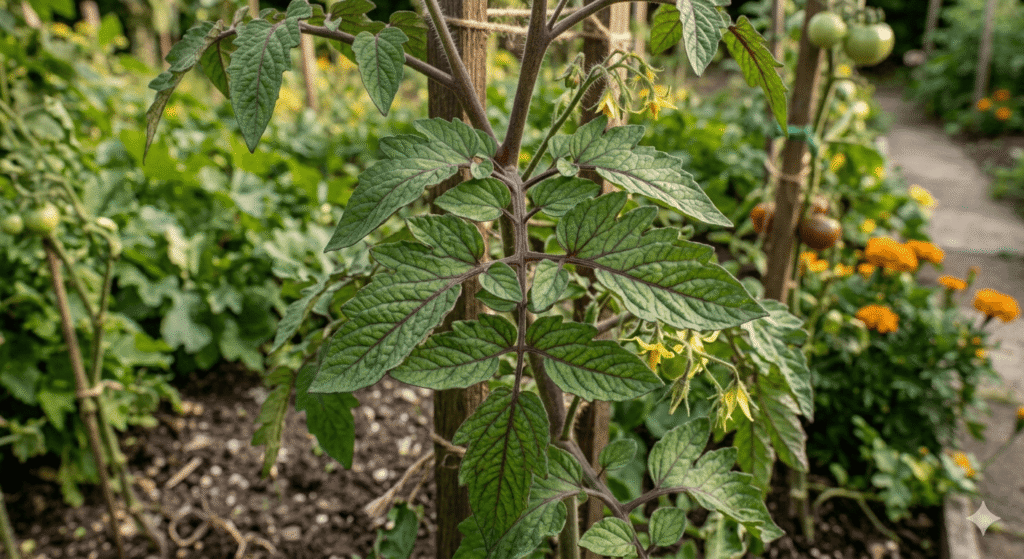
This is probably the most common reason tomato leaves curl, especially during summer. When temperatures soar above 85 degrees Fahrenheit (29 degrees Celsius), tomato plants go into a kind of self-protective mode. They curl their leaves inward to reduce the surface area exposed to the sun, which helps slow moisture loss through a process called transpiration.
Signs of heat stress include leaves that curl upward during the hottest part of the day but partially uncurl in the evening or morning. You might also notice wilting or yellowing alongside the curling.
Fix: Provide shade cloth during peak afternoon heat, water deeply in the early morning, and use mulch around the base to retain soil moisture and keep roots cool.
2. Overwatering or Underwatering
Both too much and too little water can cause tomato leaves to curl, which is why checking your watering routine is always a smart first step.
Overwatering deprives roots of oxygen, making it harder for the plant to absorb nutrients. This often causes leaves to curl downward and may lead to yellowing. Underwatering, on the other hand, causes the plant to conserve water by curling leaves inward and upward.
Fix: Stick your finger about two inches into the soil. If it feels dry, water thoroughly. If it feels soggy, hold off on watering and improve drainage. Tomatoes generally do best with consistent, deep watering once or twice a week depending on your climate.
3. Physiological Leaf Roll (Not a Disease)
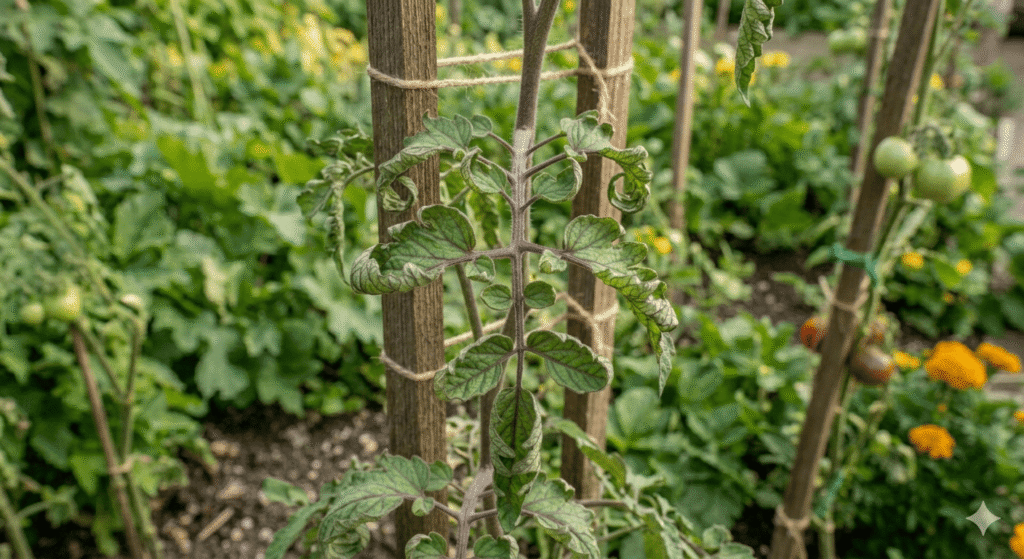
Here is one that surprises a lot of gardeners. Sometimes tomato leaves curling is completely normal and not a sign of any problem at all. This is known as physiological leaf roll and is especially common in indeterminate tomato varieties.
It typically happens after periods of heavy rain followed by heat, or after pruning or staking. The plant is simply adjusting to changes in its environment. The leaves usually curl upward but stay green, firm, and healthy looking.
Fix: None needed. Just monitor the plant. If it continues growing well and producing fruit, you can breathe easy.
4. Viral Diseases: Tomato Mosaic Virus and Tomato Yellow Leaf Curl Virus
If the curling is accompanied by mottled, discolored, or distorted leaves, you might be dealing with a viral infection. Tomato mosaic virus and tomato yellow leaf curl virus are two of the most common culprits.
Tomato yellow leaf curl virus, in particular, causes leaves to curl upward and turn yellow at the edges. It is spread by whiteflies and can spread rapidly through a garden.
Fix: Unfortunately, there is no cure for viral diseases in plants. Remove and destroy infected plants to prevent the virus from spreading. Control whitefly populations using insecticidal soap or neem oil, and consider planting virus-resistant tomato varieties in the future.
Why Are My Succulent Plant Leaves Falling Off?
5. Herbicide Drift or Chemical Exposure
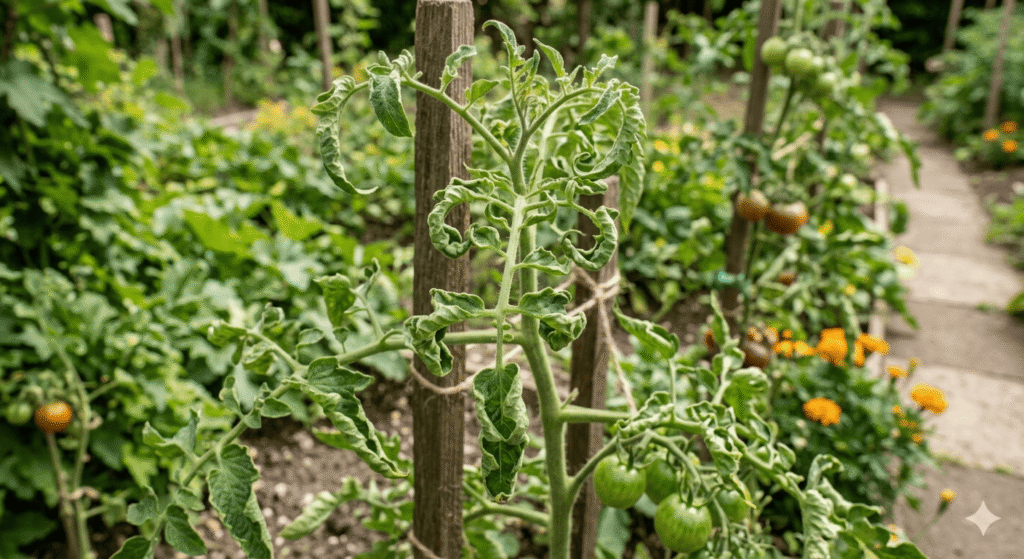
If your tomato plant leaves are curling and you recently applied a weed killer nearby, or if a neighbor did, herbicide drift could be the culprit. Broadleaf herbicides like 2,4-D can cause extreme leaf curling, twisting, and distortion even in very small amounts.
The damage often looks dramatic, with leaves curling and twisting in unusual directions and new growth appearing stunted or malformed.
Fix: If caught early and the exposure was mild, the plant may recover on its own over several weeks. Remove the most affected leaves, water deeply to dilute the chemical, and be patient. Severely affected plants may need to be replaced.
7 Common Repotting Mistakes You Must Avoid for Healthy Plants
6. Broad Mite or Aphid Infestations
Tiny pests like broad mites and aphids can cause serious leaf curl in tomato plants. Broad mites are nearly invisible to the naked eye but cause leaves to curl downward and take on a rough, almost bronze appearance. Aphids cluster on the undersides of leaves and suck out plant sap, which can cause curling, yellowing, and stunted growth.
Fix: Inspect the undersides of leaves regularly. For aphids, a strong blast of water can knock them off. Neem oil or insecticidal soap works well for both aphids and broad mites. Repeat applications every 7 to 10 days until the infestation is gone.
Raised Bed Garden Ideas for Every Yard
How to Diagnose the Problem Quickly
Not sure which cause applies to your situation? Here is a quick checklist to help you narrow it down:
- Curling only on hot days and recovering at night: Heat stress
- Soil is waterlogged or bone dry: Watering issue
- No other symptoms, plant looks healthy: Physiological leaf roll
- Yellow, mottled, or distorted leaves: Viral disease
- Twisted and malformed new growth: Herbicide drift
- Visible bugs on leaf undersides: Pest infestation
How Many Lumens do Plants Need?
Preventing Tomato Leaf Curl in the Future
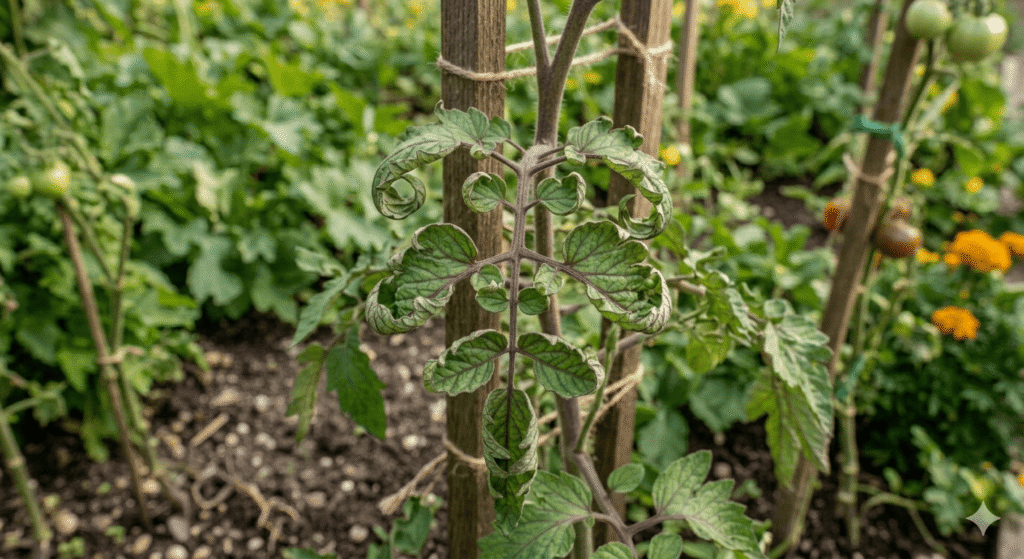
Once you have resolved the immediate issue, here are some tips to keep your tomato plants healthy going forward:
- Water consistently and deeply rather than lightly and frequently
- Mulch around plants to regulate soil temperature and moisture
- Choose disease-resistant tomato varieties suited to your region
- Inspect plants weekly for signs of pests or disease
- Avoid using herbicides near your vegetable garden
- Provide afternoon shade in very hot climates
How to Fix Wrinkling Snake Plant Leaves
Frequently Asked Questions
Q1: Is tomato leaf curl always a sign of disease?
No, not at all. In many cases, tomato leaves curling is a natural physiological response to environmental stress like heat, drought, or heavy pruning. It becomes a concern when it is accompanied by discoloration, distortion, or pest activity.
Q2: Can tomato leaves curl from overwatering?
Yes. Overwatered tomato plants often develop downward curling leaves as the roots struggle to function properly. Always check your soil moisture before watering and ensure your containers or garden beds have good drainage.
Q3: Will my tomato plant recover from leaf curl?
In most cases, yes. If the cause is environmental (heat, water stress), the plant can bounce back quickly once conditions improve. Viral infections are the main exception as they have no cure, and affected plants may need to be removed.
Q4: How do I stop whiteflies from spreading tomato yellow leaf curl virus?
Use yellow sticky traps to monitor whitefly populations, apply neem oil or insecticidal soap regularly, and remove any heavily infested plants. Reflective mulch can also help deter whiteflies from landing on your plants.
Q5: Can I eat tomatoes from a plant with curling leaves?
If the curling is caused by environmental stress or physiological leaf roll, the fruit is perfectly safe to eat. If the plant has a confirmed viral infection, the fruit is still generally safe for consumption, though the plant’s productivity may be significantly reduced.
Best Pruning Shears for Home Gardeners: Top Picks & Buying Guide