How to Grow Lavender in Pots: A Complete Step-by-Step Guide
If you have ever walked past a lavender plant in full bloom and thought, I wish I could grow that at home, you absolutely can, even if you do not have a garden. Learning how to grow lavender in pots is one of the most rewarding things you can do as a home gardener.
Lavender is stunning, incredibly fragrant, drought-tolerant, and surprisingly easy to care for once you understand its basic needs. In this guide, you will learn everything from choosing the right pot and soil to watering, pruning, and overwintering your potted lavender plant so it thrives year after year.
Why Growing Lavender in Containers Is a Great Idea
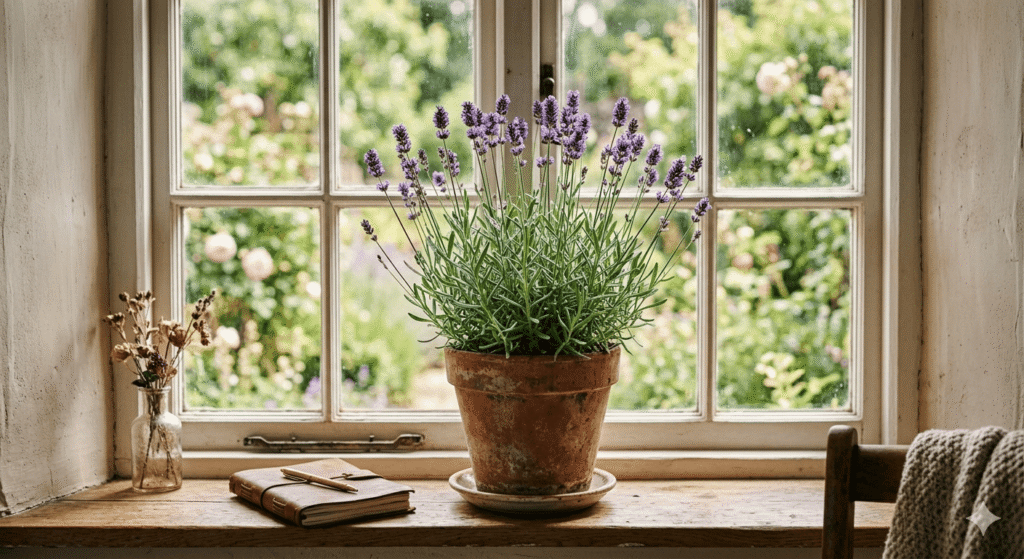
Growing lavender in containers gives you complete control over the growing conditions, which is actually a big advantage. In the ground, lavender can struggle with heavy clay soils or overly wet winters. In a pot, you control the soil mix, drainage, and placement. You can move it to the sunniest spot on your patio, balcony, or windowsill, and bring it indoors when temperatures drop too low.
Potted lavender plants also look absolutely beautiful as standalone features or grouped with other herbs. And the benefits do not stop at aesthetics. Lavender repels mosquitoes, attracts pollinators like bees and butterflies, and can even be harvested for cooking, essential oils, and homemade sachets.
Choosing the Right Lavender Variety for Pots
Not all lavender varieties perform equally well in pots. The two most popular choices are English lavender and French lavender, and they each have their strengths.
English Lavender vs French Lavender in Pots
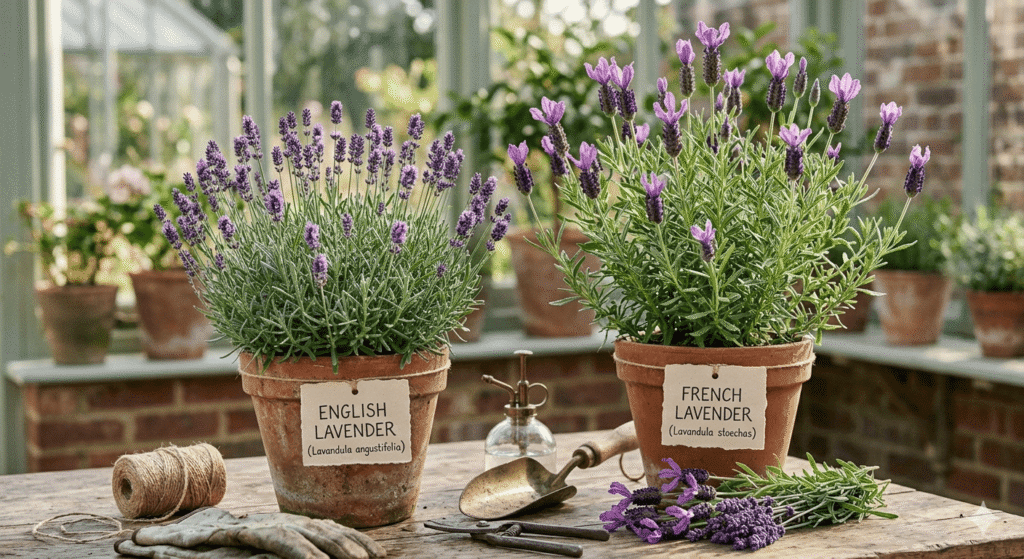
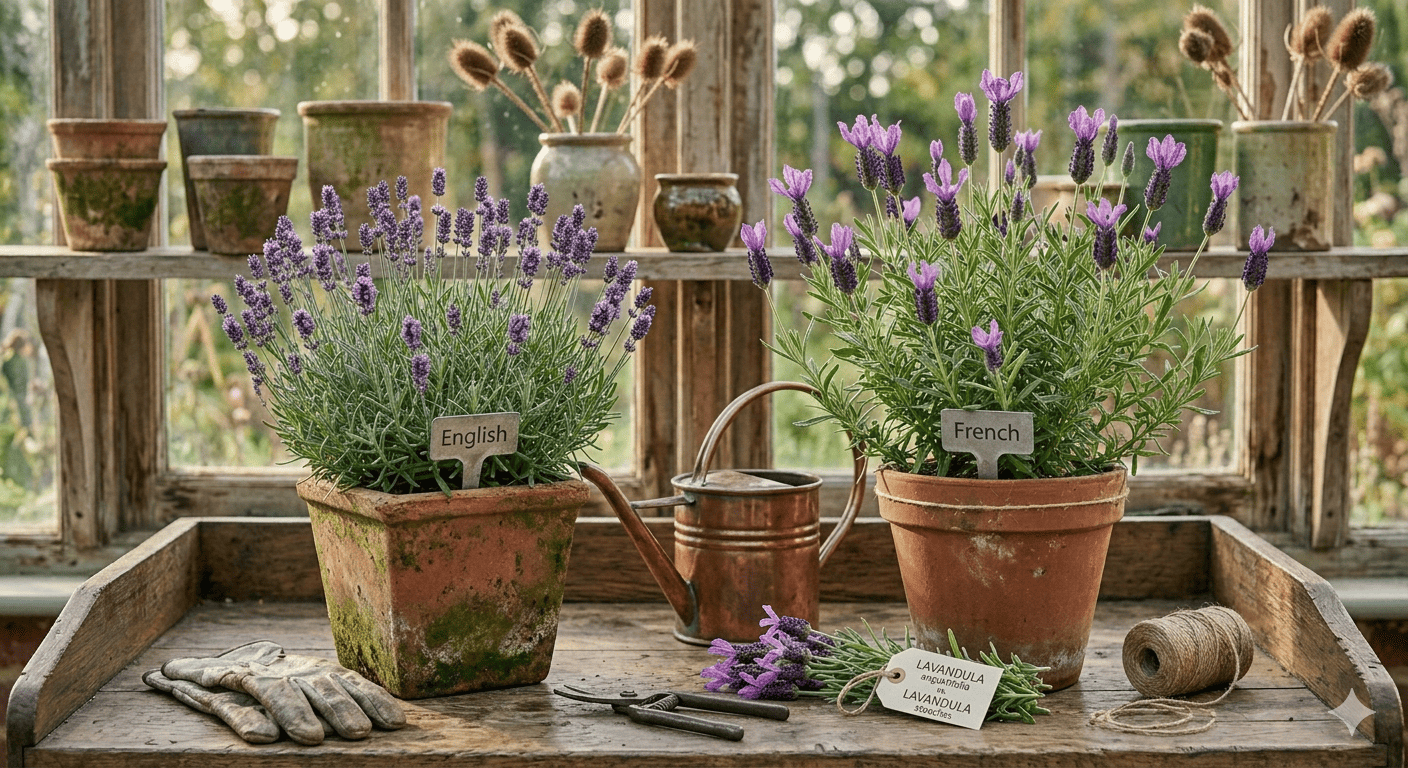
English lavender (Lavandula angustifolia) is the most cold-hardy option and tends to be longer-lived in containers. Varieties like Hidcote and Munstead are compact, making them ideal for smaller pots. French lavender (Lavandula stoechas) produces showier blooms with distinctive rabbit-ear petals and blooms for longer, but it is less tolerant of cold winters.
If you live in a colder climate, go with English lavender. If you are in a warmer, Mediterranean-type region, French lavender is a wonderful choice. Either way, both thrive beautifully when you know how to grow lavender in pots the right way.
How to Choose the Best Pot for Lavender
Getting the pot right is one of the most important steps. Lavender hates sitting in waterlogged soil, so drainage is your top priority.
- Pot size: Choose a pot that is at least 30 to 40 cm (12 to 16 inches) in diameter. Lavender likes room to breathe, but an oversized pot can retain too much moisture.
- Material: Terracotta pots are the best choice. They are porous, which allows excess moisture to evaporate and keeps the roots healthy. Avoid plastic pots if possible, as they retain water much longer.
- Drainage holes: Non-negotiable. Make sure your pot has at least one large drainage hole at the bottom. If it does not, drill one.
The Best Soil for Lavender in Pots
Lavender originates from the rocky, alkaline soils of the Mediterranean, so replicating that environment is key. The best soil for lavender in pots is one that is well-draining, slightly alkaline, and low in nutrients. Rich, nutrient-dense compost sounds like a good idea, but it actually encourages leafy growth at the expense of flowers.
A good mix is two-thirds good quality potting compost combined with one-third perlite or horticultural grit. This creates a light, fast-draining medium that mimics lavender’s natural habitat. You can also add a small handful of lime to the mix to raise the pH slightly if your compost tends to be acidic.
Terracotta Pots vs Plastic Pots: Which Is Best for Your Plants?
How to Grow Lavender in Pots: Step-by-Step Process
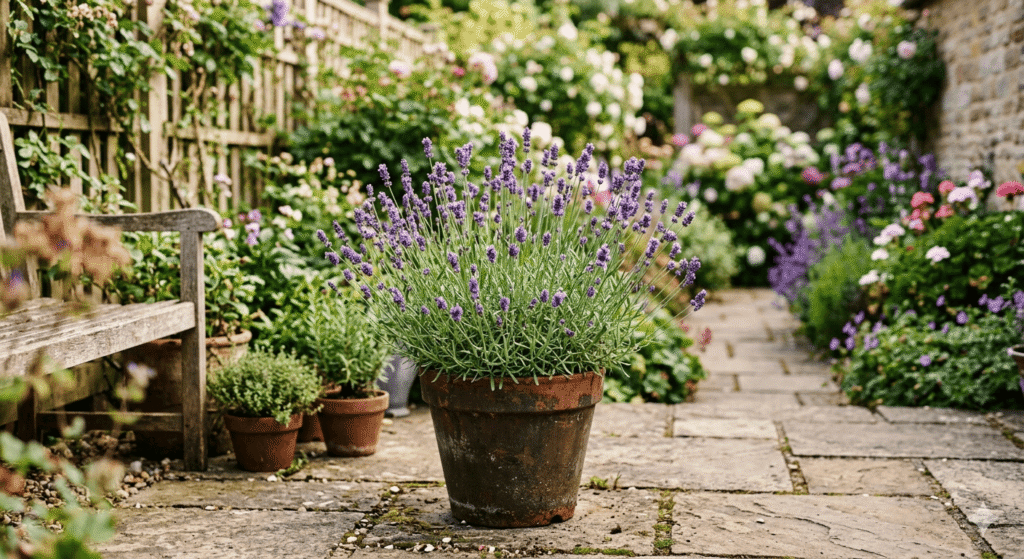
Now that you have the right pot and soil sorted, here is the full planting and care process from start to finish.
Step 1: Prepare Your Pot
Add a layer of crocks (broken terracotta pieces) or gravel at the bottom of your pot to aid drainage. Then fill it about two-thirds full with your prepared soil mix.
Step 2: Plant the Lavender
Remove the lavender from its nursery pot and gently loosen any tightly wound roots. Place it in the centre of your pot so that the crown of the plant sits about 2 to 3 cm below the rim. Backfill with your soil mix and firm it down gently.
Step 3: Watering Your Potted Lavender
This is where many people go wrong. Lavender is drought-tolerant, and the most common cause of failure is overwatering. After planting, water well to help the roots settle, then allow the top few centimetres of soil to dry out completely before watering again.
During summer, you may need to water every 7 to 10 days. In cooler months, reduce watering significantly. As a general rule, when in doubt, do not water. A good lavender watering guide is to feel the soil before reaching for the can.
Step 4: Sunlight Requirements
Lavender sunlight requirements are simple: full sun, all day long. Place your pot in a spot that receives at least 6 to 8 hours of direct sunlight daily. South-facing patios, windowsills, and balconies are ideal. Avoid shaded spots or areas under trees, as poor light leads to leggy growth and fewer blooms.
Step 5: Fertilising Your Lavender
Less is more when it comes to lavender fertilizer tips. Feed once in early spring with a low-nitrogen, high-potassium fertiliser to encourage flowering. Avoid feeding in autumn or winter. Overfeeding will give you a lush green plant with very few flowers, which defeats the entire purpose.
How To Propagate Succulents From Leaves And Stem Cuttings.
Pruning Lavender in Pots for Bushier Growth
Pruning is essential to keep your potted lavender looking full and producing plenty of blooms. Pruning lavender in pots should be done twice a year for best results.
- After flowering (late summer): Cut back by about one-third of the plant, removing spent flower stems and some of the green leafy growth. Do not cut into old woody stems as they rarely regrow.
- In early spring: Give a light trim to tidy the plant and encourage new bushy growth before the growing season kicks in.
How to Overwinter Lavender in Pots
One of the big questions gardeners have is whether lavender comes back every year in pots. The answer is yes, provided you protect it through winter. The key threats in winter are waterlogged soil and hard frosts, both of which can kill a potted lavender quite quickly.
Move pots to a sheltered spot, such as against a south-facing wall or inside an unheated greenhouse. Raise the pot off the ground using pot feet or bricks to improve drainage. In very cold regions, wrap the pot in horticultural fleece for extra insulation. Stop watering almost completely through winter and resume only when new growth appears in spring.
Best Gardening Gloves For Small Hands
When and How to Repot Lavender Plants
Lavender generally needs repotting every 2 to 3 years, or when you notice roots coming out of the drainage holes. The best time to repot is in spring. Move the plant to a pot that is one size larger, refresh the soil completely, and prune the roots slightly if they are very pot-bound. This process refreshes the growing medium, improves drainage, and gives the plant new room to grow.
20 Top Air-Purifying Plants That Remove Toxins from Indoor Air
Can You Grow Lavender Indoors?
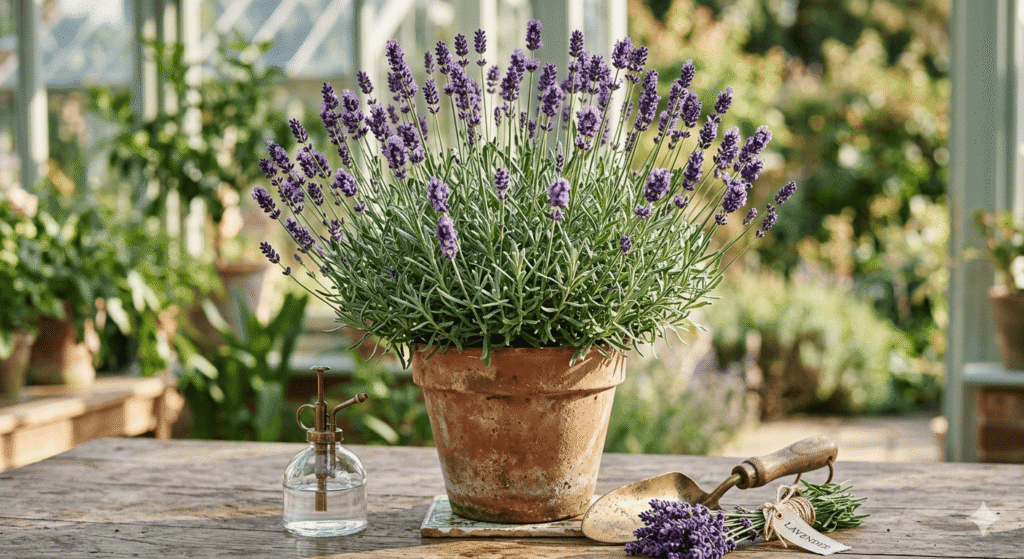
Indoor lavender plant care is trickier than outdoor growing, but it is possible. The biggest challenge indoors is providing enough light. Place your indoor lavender plant on the brightest windowsill you have, ideally south-facing. Rotate the pot every few days to ensure even light exposure. Avoid placing it near radiators or air conditioning vents, as dry air can stress the plant.
For indoor growing, ensure the pot has excellent drainage and be extra careful not to overwater. Good air circulation matters indoors too, so do not crowd the plant among other houseplants. A small fan nearby on low can help.
Can Succulents Survive In An Air Conditioned Room?
Common Problems with Potted Lavender and How to Fix Them
- Yellowing leaves: Usually caused by overwatering or poor drainage. Reduce watering and check that the drainage hole is not blocked.
- Leggy, sparse growth: Not enough sunlight. Move the pot to a sunnier spot immediately.
- No flowers: Could be over-fertilising with nitrogen, too much shade, or a plant that needs pruning. Assess all three factors.
- Grey mould (Botrytis): Caused by poor air circulation and damp conditions. Improve airflow and reduce watering.
Can English Ivy Grow in Water? (Complete Guide)
Frequently Asked Questions (FAQ)
How often should I water lavender in pots?
Water your potted lavender every 7 to 10 days during summer, allowing the top few centimetres of soil to dry out completely between waterings. In autumn and winter, reduce watering dramatically. Overwatering is the number one cause of lavender death in containers.
What is the best pot size for growing lavender?
A pot that is 30 to 40 cm (12 to 16 inches) in diameter is ideal for most lavender varieties. This gives roots enough room to grow without holding excessive moisture. Terracotta pots are highly recommended for their breathable, porous nature.
Does lavender come back every year in pots?
Yes, lavender is a perennial plant and will come back year after year in pots if properly cared for. The key is to protect it from waterlogging in winter, prune it regularly, and refresh the soil every couple of years by repotting.
Can lavender grow in pots indoors?
Lavender can grow indoors, but it needs a very bright spot, ideally a south-facing window with 6 or more hours of sunlight per day. Indoor lavender plant care requires excellent drainage, minimal watering, and good air circulation to prevent mould and disease.
Why is my potted lavender dying?
The most common reasons a potted lavender plant declines are overwatering, poor drainage, insufficient sunlight, or being planted in soil that is too rich in nutrients. Check these four factors first. In most cases, moving the plant to a sunnier spot and cutting back on watering will make a significant difference.