How Often Should You Repot Houseplants?
You water on schedule, you give your plant bright light, and yet it still looks tired. Before you blame yourself, check the pot. Plants outgrow their homes, and a cramped pot quietly starves roots of space, air, and nutrients. That is why understanding how often to repot houseplants is one of the most useful skills in good houseplant care.
In this guide, you will learn the general rule of thumb, the clear signs a plant needs a bigger pot, and a simple repotting schedule for popular plants like monsteras, succulents, and snake plants. We will cover the best season to repot, walk through the process step by step, explain how to pick the right pot size and soil, and flag the mistakes that cause transplant shock. By the time you finish, you will know exactly when to act and when to leave your plant alone.
How Often to Repot Houseplants: The General Rule
Most houseplants need a fresh pot every 12 to 24 months. Fast growers such as pothos and monstera may want a bigger home every year, while slow growers like snake plants and cacti can stay put for three years or more. Think of that range as a starting point, not a deadline. Light, watering habits, and pot size all change the answer, so watch your plant rather than the calendar.
Young plants fill their pots quickly. Mature plants that have reached their natural size often just need the top few inches of soil refreshed once a year. If a plant looks healthy and is growing well, there is no reason to disturb it.
Signs a Plant Needs Repotting
Knowing when to repot a plant is mostly about reading the clues. These are the most reliable ones.
Roots Coming Out of the Drainage Holes
Roots poking out of the bottom or circling the soil surface mean your plant has run out of room. Slide it out of the pot gently. If you see a dense mat of roots shaped like the pot with very little soil left, you have a root bound plant.
Water Runs Straight Through or the Soil Dries Too Fast
If water gushes out of the drainage holes the moment you pour, or you find yourself watering every two days, roots have taken over the space where soil should be. Less soil means less water storage, and your plant suffers.
Slow Growth, Tipping Over, or Crusty Soil
A plant that stops producing new leaves during its growing season, topples because it is top heavy, or shows a white mineral crust on the soil is asking for fresh potting mix and more room.
Plant Repotting Schedule by Plant Type
Use this plant repotting schedule as a baseline, then adjust based on what your plant is telling you.
| Plant type | Typical frequency | Notes |
|---|---|---|
| Monstera, pothos, philodendron | Every 12 to 18 months | Fast growers in bright light |
| Fiddle leaf fig | Every 1 to 2 years | Likes to be slightly snug |
| Succulents and cacti | Every 2 to 3 years | Use gritty, fast draining mix |
| Snake plant and ZZ plant | Every 2 to 4 years | Slow growers that like tight pots |
| Orchids | Every 1 to 2 years | Repot when the bark breaks down |
| Peace lily | Every 1 to 2 years | Droops fast when root bound |
How Often to Repot a Monstera
Monsteras grow fast in bright, indirect light, so check the roots about once a year. Young plants may need a bigger pot every 12 months, while large mature ones can wait 18 to 24 months.
How Often to Repot Succulents
Succulents prefer snug pots and gritty soil. Repot them every two to three years, or sooner if offsets crowd the container or the soil stays wet for too long.
Best Time to Repot Houseplants
The best time to repot houseplants is early spring through early summer, when plants wake up and start growing. Roots recover quickly and settle into new soil with little fuss. Early fall also works for most plants, but deep winter is best avoided because plants are resting and slow to recover.
The exception is an emergency. If your plant has root rot, a pest problem, or a broken pot, repot right away, whatever the season. Your climate matters too, so when to repot indoor plants can stretch longer in warm, bright homes.
How to Repot a Houseplant Step by Step
Repotting is simpler than it looks. Here is how to repot a houseplant without stressing it.
- Water the plant a day before, so the root ball slides out easily.
- Pick a pot with drainage holes that is only one to two inches wider than the current one.
- Add a layer of fresh mix to the bottom, then ease the plant out and loosen any circling roots with your fingers.
- Set the plant at the same depth it grew before, fill in around the sides, and press the soil down gently.
- Water thoroughly, let the excess drain, and keep the plant out of harsh direct sun for a week.
Choosing a Pot Size for Plants and the Right Soil
Choosing a pot size for plants matters more than most people realize. A pot that is too big holds a pool of wet soil that roots cannot use, which invites rot. Size up one step at a time.
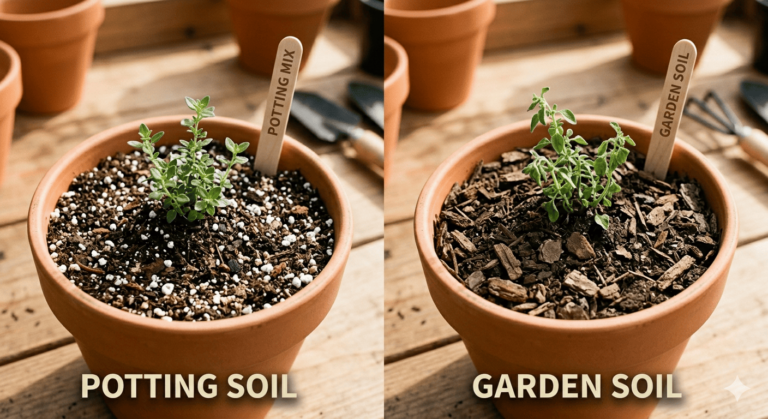
Soil matters just as much. Good potting soil for houseplants is light and drains well. A standard indoor mix suits most plants, cactus mix suits succulents, and orchid bark suits orchids. Avoid garden soil, which compacts in containers. When you repot indoor plants, always use fresh mix, since old soil loses structure and nutrients.
Common Repotting Mistakes to Avoid
Repotting houseplants goes wrong in a few predictable ways. Knowing how often to repot houseplants helps you avoid the biggest one, which is doing it too often. Plants need time to rebuild roots between moves. Other mistakes include choosing a pot without drainage, going up several sizes at once, packing the soil too tightly, and fertilizing right after repotting. Give your plant a few weeks to settle before feeding.
Frequently Asked Questions
Can you repot houseplants in winter?
You can, but it is not ideal. Plants grow slowly in winter, so they recover slowly too. Wait for spring unless the plant is in trouble.
Do you need to repot a plant you just bought?
Not right away. Let it adjust to your home for a few weeks first, then check the roots. Repot only if it is root bound or sitting in poor soil.
Do all houseplants need to be repotted?
Eventually, yes, though some need it far less often than others. Plants that like to be snug, such as snake plants, may go years without a move.
How much bigger should the new pot be?
Go up one to two inches in diameter. For small plants, one inch is plenty.
Why is my plant wilting after repotting?
A little drooping is normal transplant shock. Keep the soil lightly moist, avoid direct sun, and skip fertilizer. Most plants bounce back within one to two weeks.