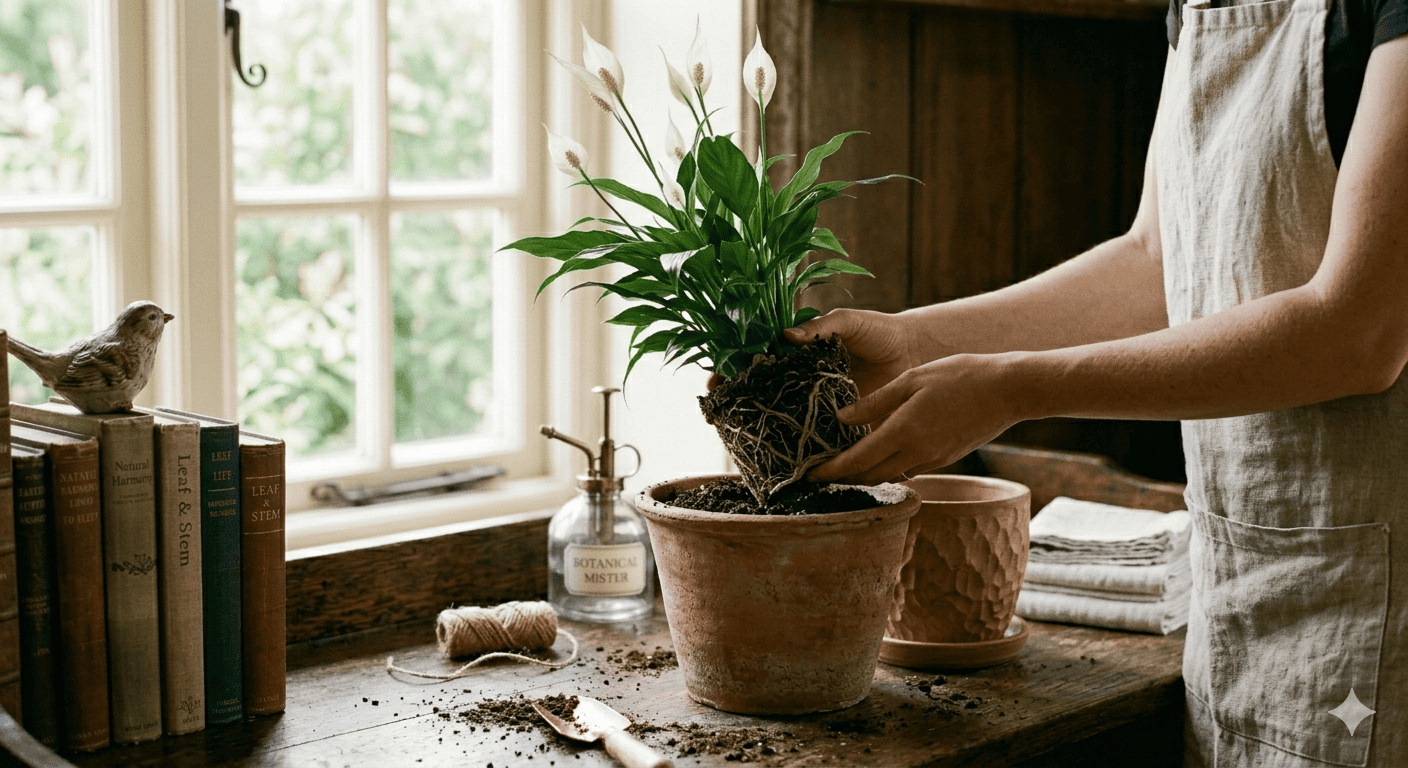
How to Repot a Peace Lily: Step-by-Step Guide
If your peace lily has started drooping more than usual, sending roots sneaking out of the drainage holes, or just looks a little too big for its pot, it is probably time for a new home. Repotting a peace lily sounds like a big task, but once you know what you are doing, it is actually one of the most rewarding things you can do for this beautiful plant. In this guide, you will learn exactly how to repot a peace lily the right way, including what soil to use, what pot size to choose, and how to help your plant bounce back quickly after the move.
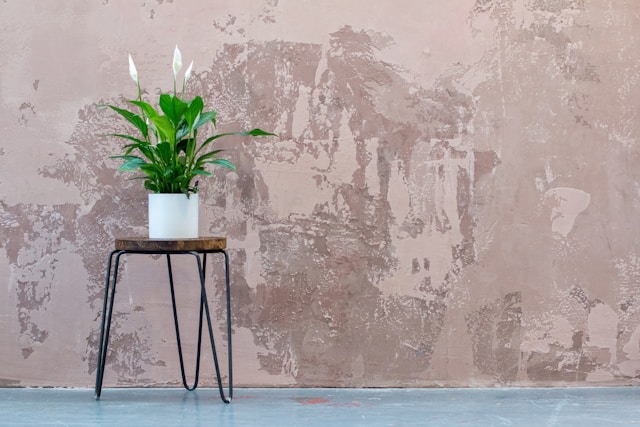
Why Repotting a Peace Lily Matters
Peace lilies are low-maintenance plants, but they do have limits. Over time, their roots fill up every inch of their current pot, leaving no room for fresh soil or proper water drainage. A root-bound peace lily cannot absorb nutrients efficiently, which leads to slow growth, yellowing leaves, and constant wilting even right after watering.
Repotting gives your peace lily a fresh start. It provides new nutrients through fresh potting mix, more space for roots to spread, and better drainage, all of which help your plant thrive and even encourage it to bloom.
When Should You Repot a Peace Lily?

Knowing when to repot your peace lily is just as important as knowing how. Here are the clearest signs that it is time:
- Roots are growing out of the drainage holes at the bottom of the pot
- The plant wilts frequently, even right after watering
- Growth has slowed significantly or stopped altogether
- The soil dries out extremely fast after each watering
- You can see roots circling or pushing against the sides of the pot
The best time to repot a peace lily is in spring or early summer, when the plant is in its active growing season. This gives it the best chance of recovering quickly and putting out new growth. That said, if your plant is clearly root-bound and struggling, do not wait for the perfect season. Repot it when it needs it.
What You Need Before You Start
Before you begin repotting, gather everything you need so the process goes smoothly:
- A new pot that is 1 to 2 inches larger in diameter than the current one
- Fresh potting mix suitable for peace lilies (more on this below)
- A pair of clean gardening gloves
- A trowel or small shovel
- A watering can
- Old newspaper or a drop cloth to protect your work surface
One important tip: make sure your new pot has drainage holes. Peace lilies hate sitting in soggy soil, and without drainage, you risk root rot no matter how good your potting mix is.
Best Soil for a Peace Lily
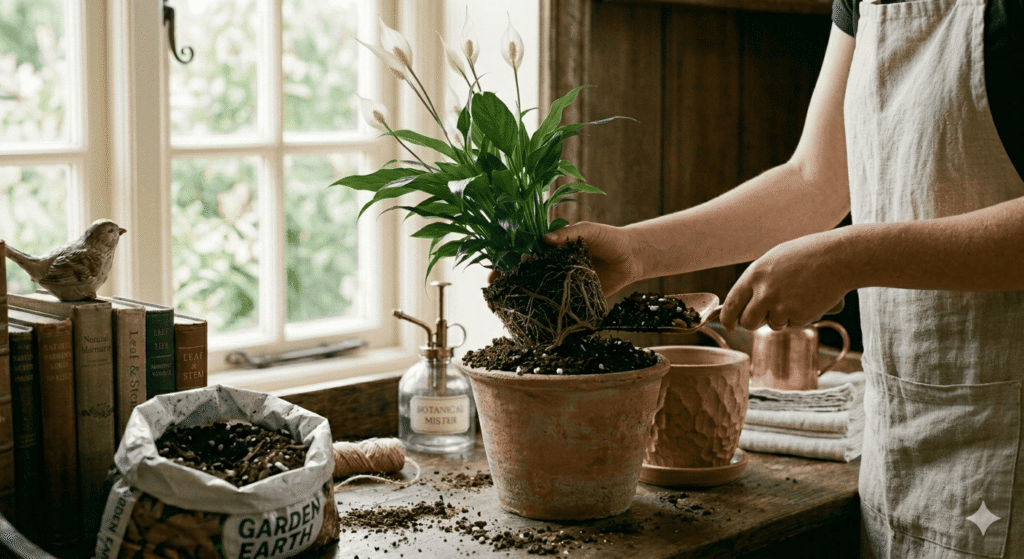
Choosing the right potting mix is one of the most critical parts of repotting a peace lily. The best soil for a peace lily is a well-draining, moisture-retentive mix that does not compact easily. Peace lilies prefer slightly acidic soil with a pH between 5.8 and 6.5.
You have two options:
Option 1: Use a Quality All-Purpose Potting Mix
A good-quality all-purpose potting mix works well for peace lilies, as long as it is not too heavy or dense. Look for a mix that contains perlite or bark to improve aeration and drainage. Avoid garden soil or topsoil, as they compact too easily and can suffocate the roots.
Option 2: Make Your Own Peace Lily Soil Mix
For even better results, mix your own peace lily potting mix at home:
- 50% high-quality potting soil
- 25% perlite (for drainage and aeration)
- 25% orchid bark or coco coir (for moisture retention without waterlogging)
This combination keeps the soil loose, moist, and well-aerated, which is exactly what peace lily roots love. It also greatly reduces the risk of overwatering, which is the number one cause of peace lily problems.
How to Repot a Peace Lily: Step-by-Step
Now for the main event. Follow these steps carefully and your peace lily will settle into its new home with minimal stress.
Step 1: Water Your Plant a Day Before
Give your peace lily a good drink of water the day before you plan to repot it. Moist roots are more flexible and less likely to be damaged during the process. Dry roots are brittle and break more easily.
Step 2: Prepare the New Pot
Add a layer of fresh potting mix to the bottom of the new pot, about 2 to 3 inches deep. This gives the roots something to settle into right away.
Step 3: Remove the Peace Lily from Its Current Pot
Gently tip the pot sideways and slide the plant out. If it is stuck, try squeezing the sides of a plastic pot or running a knife or trowel around the edges to loosen it. Never yank the plant by its stems, as this can cause serious damage.
Step 4: Loosen the Root Ball and Remove Old Soil
Once the plant is out, gently shake or tease apart the root ball with your fingers to remove as much of the old soil as possible. Inspect the roots as you go. Healthy roots are white or light tan. Trim away any roots that are dark, mushy, or smell bad, as these are signs of root rot.
Step 5: Place the Plant in the New Pot
Set the plant in the center of the new pot, making sure it sits at the same depth it was in the old pot. The top of the root ball should sit about an inch below the rim of the pot to allow room for watering.
Step 6: Fill in with Fresh Potting Mix
Fill in the gaps around the root ball with fresh potting mix. Press it down gently to remove any large air pockets, but do not pack it too tightly. The soil should be firm but still loose enough for water to pass through easily.
Step 7: Water Thoroughly
Give your peace lily a thorough watering immediately after repotting, until water drains freely from the bottom of the pot. This helps settle the soil around the roots and eliminates remaining air pockets.
Bottom Watering Plants: The Complete Guide
Peace Lily Care After Repotting
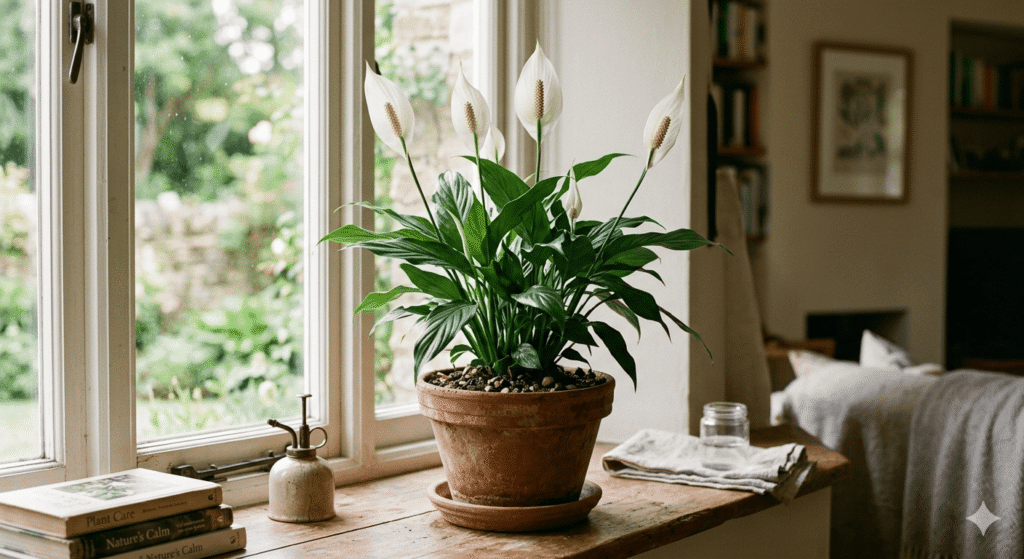
Do not be alarmed if your peace lily droops or looks a little sad right after repotting. This is completely normal and is called transplant shock. Here is how to support your plant through the recovery period:
- Place the plant in bright, indirect light. Avoid direct sunlight, which can stress a freshly repotted plant.
- Keep the soil consistently moist but not waterlogged for the first two weeks.
- Hold off on fertilizing for at least 4 to 6 weeks. Fresh potting mix already contains nutrients, and feeding too soon can burn the roots.
- Avoid moving the plant around during recovery. Let it settle in one spot.
Most peace lilies bounce back within one to two weeks and start showing new growth shortly after. If your plant is still drooping after two weeks, check the soil moisture and drainage before assuming something is seriously wrong.
Frequently Asked Questions
How often should you repot a peace lily?
Most peace lilies need repotting every 1 to 2 years, depending on how fast they grow. If you notice roots escaping from the drainage holes or the plant wilting more than usual, those are your clearest signals that it is time to move up to a larger pot.
Can you repot a peace lily when it is blooming?
It is generally best to wait until after the blooms have faded before repotting. Repotting during flowering can cause the plant to drop its blooms early due to the stress of the move. If the plant is severely root-bound and struggling, go ahead and repot it, but do so as gently as possible.
Why is my peace lily drooping after repotting?
Some wilting right after repotting is completely normal. This is called transplant shock and usually resolves within one to two weeks. Make sure the plant has moist (not soggy) soil, is placed in bright indirect light, and is not being moved around. If drooping continues beyond two weeks, check the roots for signs of rot.
What size pot does a peace lily need?
Choose a new pot that is only 1 to 2 inches larger in diameter than the current one. Going too big can lead to overwatering issues because the excess soil holds more moisture than the roots can absorb, which increases the risk of root rot.
Can I use regular garden soil for a peace lily?
No, regular garden soil is not suitable for peace lilies. It is too dense, compacts easily in pots, and does not drain well enough. Always use a well-draining indoor potting mix, or make your own blend using potting soil, perlite, and orchid bark for the best results.