Few houseplants are as dramatic as the nerve plant. One day it stands tall with gorgeous, veined leaves, and the next it has collapsed as if it has given up on life. If that sounds familiar, relax, because nerve plant care is much simpler than its reputation suggests.
In this guide, you will learn nerve plant care tips, from the right light and watering routine to humidity, soil, feeding and pruning. We will also cover propagation, fixes for drooping and brown leaves, and pet safety, then answer the most common questions at the end.
Meet the Fittonia Plant (Fittonia Albivenis)
The Fittonia plant is a small, creeping tropical native of South American rainforests. Its botanical name is Fittonia albivenis, and it is also called the mosaic plant, so mosaic plant care and Fittonia care are the same thing.
The leaves are covered in bright veins, which is how it earned the name nerve plant. Because it grows on the shady forest floor, it loves warmth, moisture and gentle light, and almost every tip below simply copies those conditions.
Popular Nerve Plant Types and Varieties
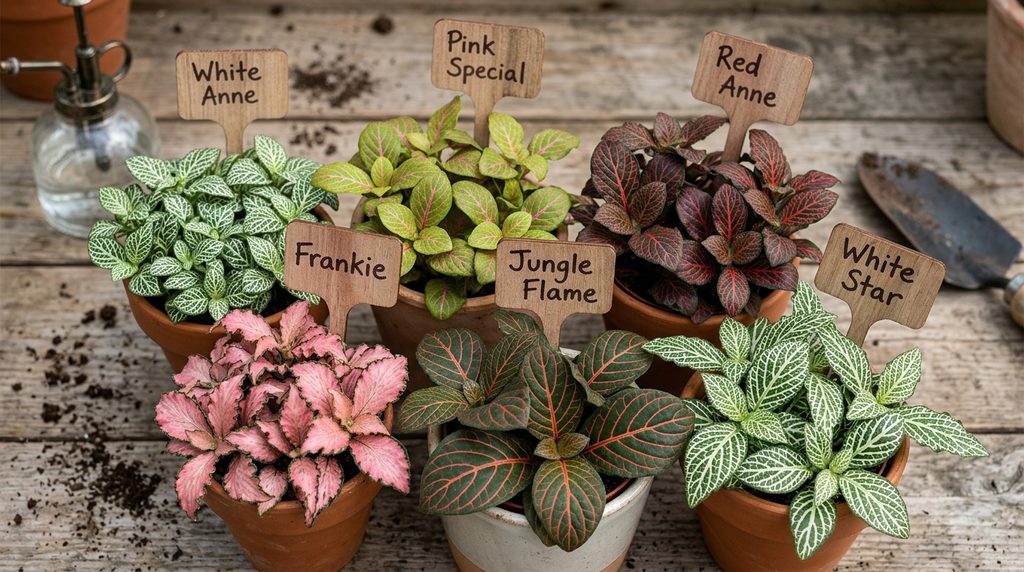
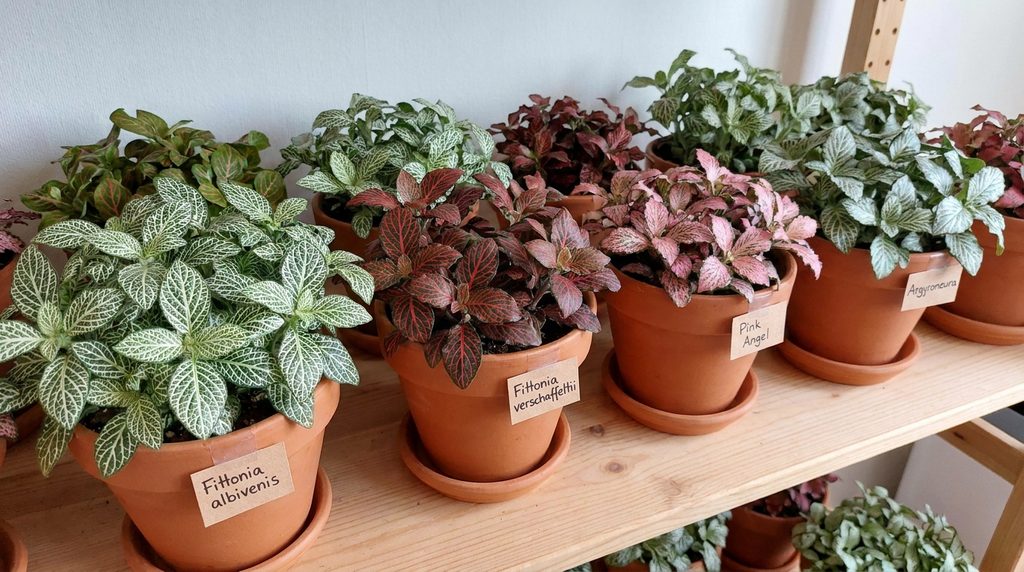
There are many nerve plant types, and they all share the same basic needs. Red veined varieties look dramatic, pink ones such as “Pink Star” feel softer, and white veined types look crisp. Mini varieties stay tiny, which suits desks and glass containers.
Nerve Plant Light Requirements
Light is the foundation of nerve plant care. Fittonia wants bright, indirect light, such as a spot a few feet back from an east facing window. Direct afternoon sun scorches the leaves, so a sheer curtain helps. Knowing the nerve plant light requirements early saves you trouble later.
Can Nerve Plants Live in Low Light?
They tolerate it, but they will not love it. In a dim corner the plant turns leggy and the colors look dull. A simple LED grow light above the plant for 10 to 12 hours a day keeps the leaves compact and colorful.
How Often to Water a Nerve Plant
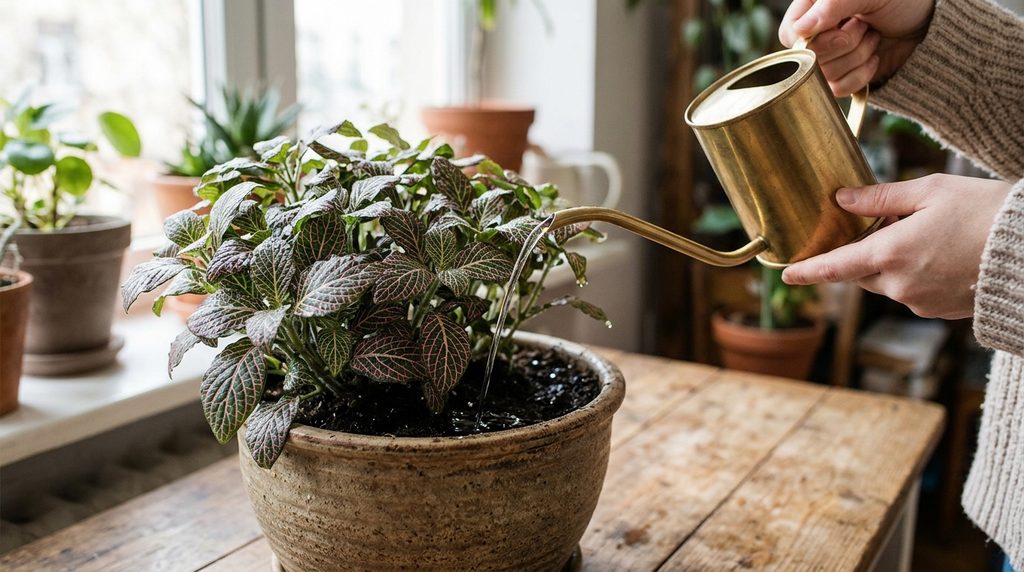
Consistent watering is the heart of nerve plant care. Aim for soil that stays lightly and evenly moist, never soggy and never bone dry. Water when the top half inch of soil feels dry, which usually means about once a week, and a little more often in hot weather.
Nerve plant watering works best when you empty the saucer afterwards, because sitting in water causes root rot. Fittonia is also sensitive to salts and chlorine, so rainwater or filtered water is ideal.
Why Is My Nerve Plant Drooping?
Dramatic drooping is almost always a cry for water. Give the plant a good drink and it usually perks up within an hour or two. If it droops even though the soil is wet, overwatering and rotting roots are the likely cause. Slide the plant out of its pot, trim any mushy brown roots and repot it in fresh, airy soil.
Nerve Plant Humidity and Temperature
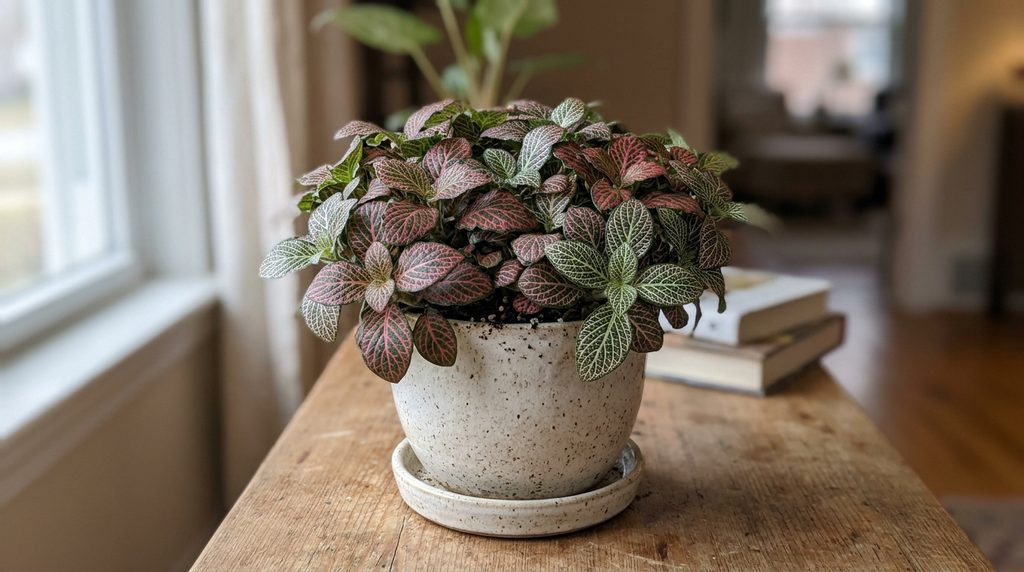
Remember the rainforest floor? Nerve plant humidity matters as much as watering. Aim for humidity above 50 percent and a nerve plant temperature between 65 and 80°F (18 to 27°C). Keep the plant away from cold drafts, air conditioners and heaters, which cause leaf drop and crispy edges.
How to Increase Humidity for a Nerve Plant
A few easy tricks help:
- Group your plants together so they share moisture.
- Set the pot on a tray of pebbles with water just below the top of the pebbles.
- Run a small humidifier nearby, which is the most reliable option.
Misting only helps briefly, so treat it as a bonus. A bright bathroom also suits a nerve plant, thanks to the steam from showers.
Growing a Nerve Plant Terrarium
If your home is dry, a nerve plant terrarium is an easy solution. The enclosed glass traps moisture and gives Fittonia the jungle air it adores. Choose a container with some ventilation, keep it out of direct sun and open the lid now and then to prevent mold.
How To Identify Root Rot In Succulents
Best Soil Mix for a Nerve Plant and Fertilizer Tips
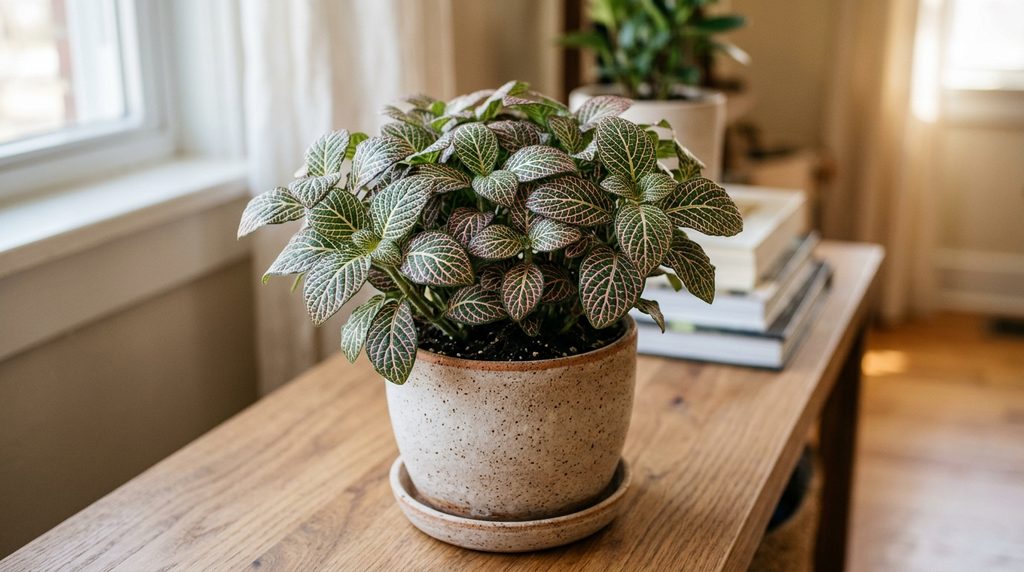
A light, well draining mix that holds some moisture works best. Nerve plant soil can be two parts potting mix, one part perlite and a handful of coco coir. Choose a pot with drainage holes, because Fittonia roots are shallow and hate standing water.
When it comes to nerve plant fertilizer, less is more. Feed with a balanced liquid fertilizer at half strength every two to four weeks in spring and summer, skip winter, and flush the soil with plain water every few months to prevent brown leaf tips.
How to Prune a Leggy Nerve Plant and When to Repot
Pinch back the growing tips every few weeks for bushy growth, cutting just above a pair of leaves. Remove the tiny flower spikes, since they take energy from the foliage. Repot every one to two years in spring, going up only one pot size.
Nerve Plant Propagation From Cuttings
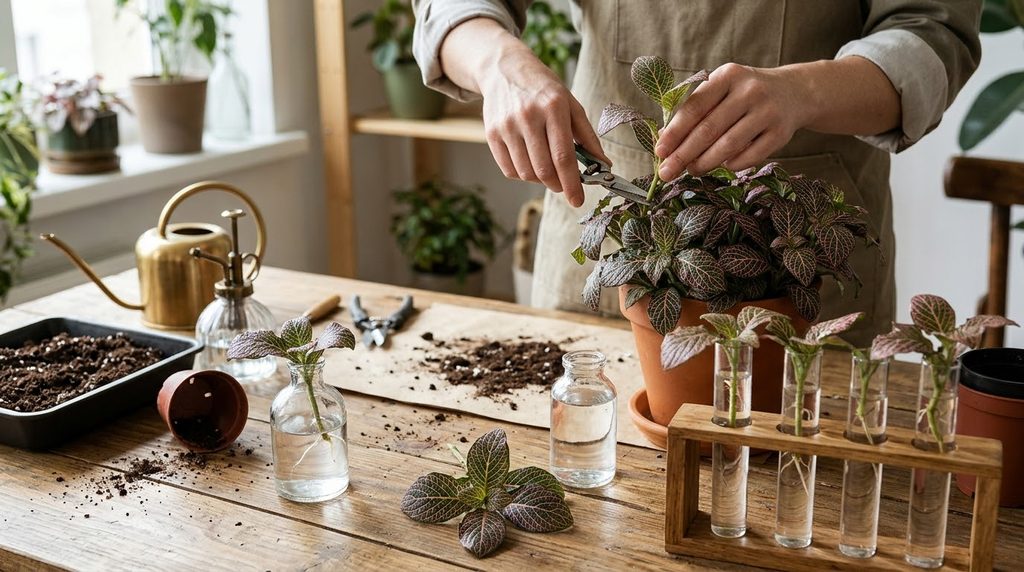
Nerve plant propagation is easy and it is the best way to refresh a leggy plant. Cut a stem 2 to 3 inches long with at least two pairs of leaves, remove the lowest leaves and place the cutting in water or moist potting mix. Keep it warm and humid, and roots usually appear in two to three weeks. Yes, you can propagate a nerve plant in water, then move it to soil once the roots are about an inch long.
Best Watering Cans for Indoor Plants
Common Nerve Plant Problems and Easy Fixes
Why Are My Nerve Plant Leaves Turning Brown?
Brown, crispy edges usually mean low humidity, underwatering or too much direct sun. Yellow leaves typically point to overwatering, so check that the pot drains well.
How to Get Rid of Pests on a Nerve Plant
Watch for mealybugs, spider mites and fungus gnats. Wipe the leaves, treat with insecticidal soap or neem oil, and let the top layer of soil dry slightly between waterings.
Is a Nerve Plant Safe for Cats and Dogs?
Good news for pet owners: Fittonia is listed as non-toxic to cats and dogs by the ASPCA. Still, discourage chewing, since eating any plant can upset a pet’s stomach.
What Plants to Avoid Using Neem Oil On
Frequently Asked Questions
How often should I water my Fittonia?
About once a week, or whenever the top half inch of soil feels dry. Adjust for heat, light and pot size, and never let the plant sit in water.
Is a nerve plant good for beginners?
Yes, as long as you keep the soil evenly moist and the air humid. It bounces back quickly from a missed watering, which makes it a great starter plant.
Can I revive a nerve plant that has collapsed?
Often, yes. Water it thoroughly and move it out of direct sun. If the soil was already wet, check for root rot and repot into fresh soil.
Should I let my nerve plant flower?
It is better not to. The small flowers are plain, and removing them helps the plant put its energy into colorful leaves.
How big does a nerve plant get?
Most grow 3 to 6 inches tall and spread up to a foot wide, while mini varieties stay even smaller.