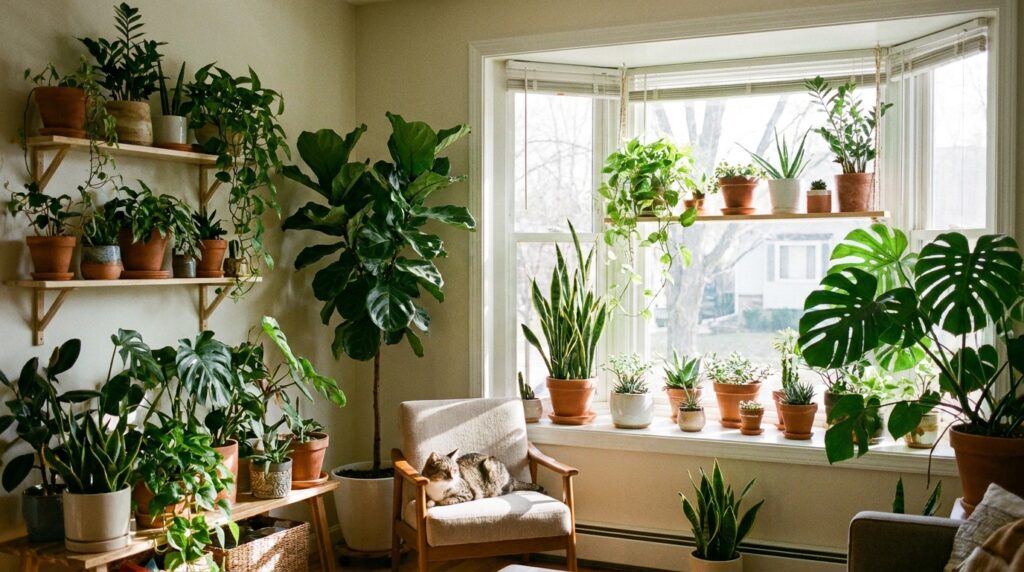
Do you live in an apartment with tiny windows, a north-facing room, or a bedroom that never catches the sun? Good news: you can still have a leafy home. The right low light houseplants can turn the dullest corner into a calm, green retreat, and most are forgiving enough for first-timers.
In this guide, you will meet ten tough, good-looking plants that handle dim conditions with ease, learn which ones are safe around cats and dogs, and find out how to judge the light in your own space. We will also cover the best spots for each plant, from bedrooms to bathrooms to office desks, plus simple care habits that keep them healthy for years. Ready to give your dark corners a makeover?
7 Flower Pairs That Thrive in Hanging Baskets
How Much Light Do Low Light Plants Really Need?
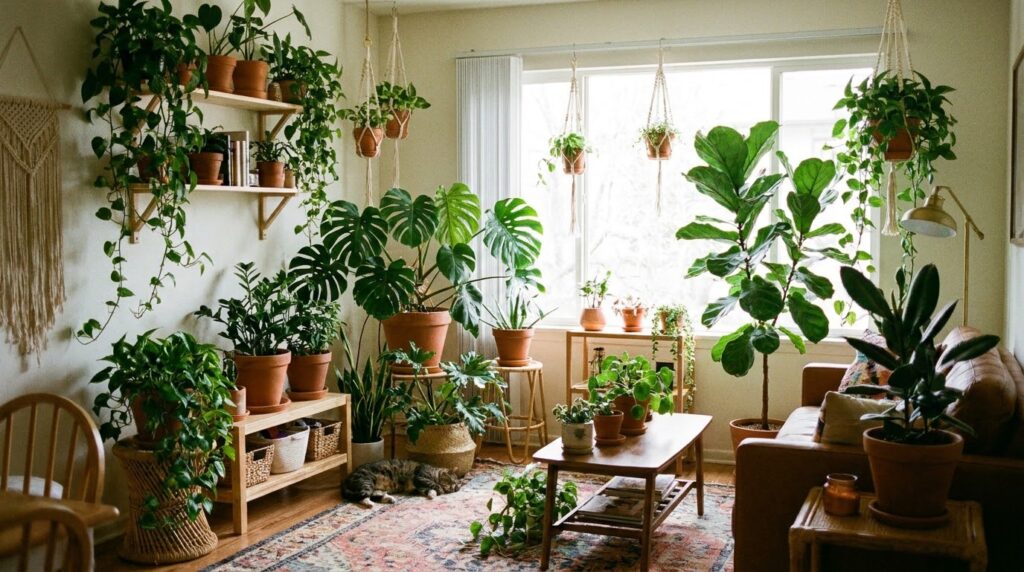
First, a quick reality check. Low light does not mean no light. Plenty of people search for plants that don’t need sunlight, but no plant can live on darkness alone. These plants simply cope with the weaker, indirect light found in north-facing rooms, hallways, and spots a few steps back from a window.
A simple test: if you can read a book comfortably during the day without a lamp, there is enough light for indoor plants for low light conditions. For houseplants for dark rooms with no windows at all, you will need a grow light.
20 Best Indoor Plants for Low Light Apartments
10 Best Low Light Houseplants for Your Home
These are the best low light plants for beginners and busy plant owners alike. Each of these easy indoor plants is simple to find at a local nursery, and every one is a shade-tolerant indoor plant that will not sulk in a dim spot.
1. Snake Plant
The snake plant is the classic choice. Its stiff, sword-shaped leaves shrug off dim corners and long gaps between waterings. Water only when the soil is completely dry, usually every two to three weeks. It is mildly toxic to pets.
2. ZZ Plant
With glossy, dark green leaves, the ZZ plant looks fancier than its care routine suggests. It stores water in thick underground stems, so it forgives missed waterings. It is toxic if eaten, so keep it away from pets and children.
3. Pothos
Pothos is a favorite among trailing houseplants for low light. Its heart-shaped leaves cascade from shelves and hanging baskets. The golden variegation may fade in weaker light, but the plant stays healthy. Let the top inch of soil dry between waterings, and keep it away from pets.
4. Peace Lily
Want flowers in a shady spot? The peace lily produces elegant white blooms and glossy leaves, and it droops when thirsty, so it tells you exactly what it needs. It flowers less in very dim rooms and is toxic to cats and dogs.
5. Cast Iron Plant
The name says it all. The cast iron plant tolerates deep shade, irregular watering, and temperature swings. It grows slowly, but rewards you with tall, dark green leaves. It is also considered non-toxic to cats and dogs.
6. Chinese Evergreen
Chinese evergreen adds color with leaves splashed in silver, pink, or red. For low light, choose darker green varieties, since brightly colored types need more light to keep their patterns. Let it dry out slightly between waterings. It is toxic if eaten.
7. Heartleaf Philodendron
This vining plant is an easy way to add greenery to a dim room. Its soft, heart-shaped leaves trail down bookshelves or climb a small moss pole. Water sparingly and trim leggy stems to keep it full. It is toxic to pets if chewed.
8. Parlor Palm
For a soft tropical look, the parlor palm is hard to beat. Its feathery fronds add height and texture without a bright window. It is non-toxic to cats and dogs and likes evenly moist soil, never soggy.
9. Spider Plant
Spider plants are cheerful, fast growers with arching green and white leaves. They tolerate low light and produce baby plants you can pot up and share. If the tips turn brown, try filtered water, since minerals in tap water can be the cause.
10. Dracaena
Need something tall? Dracaena is one of the best large low light indoor plants for filling empty floor space. Varieties like Janet Craig handle dim rooms well. Water only when the top few inches of soil are dry. It is toxic to pets.
Best Indoor Plant Stands for Small Spaces
Low Light Plant Care Made Simple
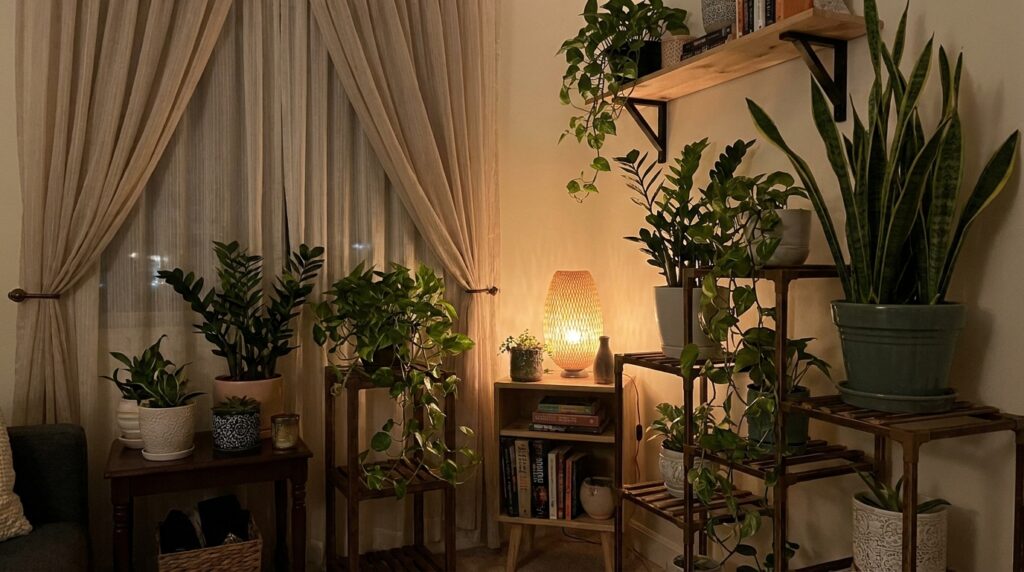
Learning how to care for plants in low light is mostly about doing less. Less light means slower growth and lower needs. Luckily, low maintenance houseplants like these ask for very little. Keep three habits in mind and your low light houseplants will reward you.
Water Less Often
Plants in dim rooms use water slowly, so soggy soil is the biggest risk. Push a finger two inches into the soil and water only if it feels dry. Always use a pot with drainage holes.
Keep Leaves Clean and Rotate Your Plants
Dust blocks the little light your plants receive, so wipe the leaves with a damp cloth every few weeks. Give each pot a quarter turn when you water so the plant grows evenly.
Factors to consider when choosing a grow light
Feed Lightly and Add a Grow Light if Needed
Feed with a balanced fertilizer at half strength in spring and summer, and skip it in winter. In a very dark space, an inexpensive LED grow light on a timer for 8 to 10 hours a day keeps plants thriving.
Pet-Safe Picks and the Best Spots for Each Room
If you share your home with pets, start with the cast iron plant, parlor palm, and spider plant. They are widely listed as non-toxic to cats and dogs. Always check any plant against the ASPCA’s toxic and non-toxic plant list before bringing it home.
Low Light Plants for Bedroom
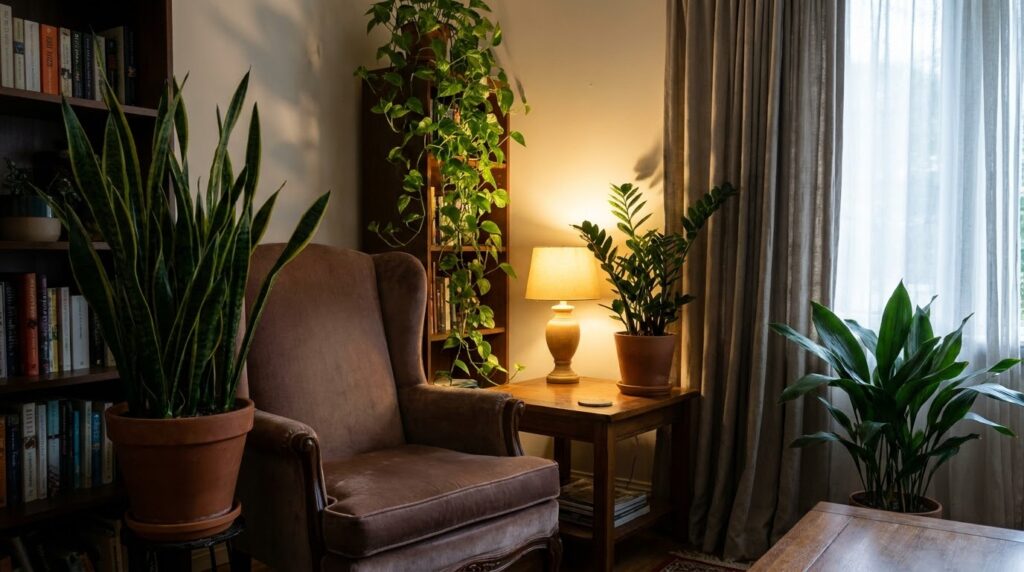
Snake plants and ZZ plants are tidy and need almost no attention, which suits a restful space.
Low Light Plants for Bathroom
With even a frosted window, pothos and peace lilies enjoy the humidity. A windowless bathroom needs a grow light.
Low Light Plants for Office Desk
A small ZZ plant, spider plant, or snake plant fits neatly on a desk and copes well with steady office lighting.
Can English Ivy Grow in Water?
Frequently Asked Questions
Can plants survive with no natural light?
Not for long. All plants need light to make food. In a windowless room, a full spectrum LED grow light running 8 to 10 hours a day can replace natural light.
What is the easiest low light plant for beginners?
The ZZ plant, snake plant, and cast iron plant are the most forgiving of dim light and irregular watering.
Are these plants safe for cats and dogs?
Some are. The cast iron plant, parlor palm, and spider plant are listed as non-toxic by the ASPCA. The others can cause mouth irritation or an upset stomach if chewed, so keep them out of reach.
Why are my plants turning yellow or growing leggy?
Yellow leaves usually mean overwatering, so let the soil dry out more between drinks. Long, stretched stems mean the plant wants more light, so move it closer to a window.