Best Grow Bags for Vegetables: Fabric vs Plastic Compared
Whether you have a sprawling backyard or a tiny apartment balcony, grow bags have quietly become one of the most popular ways to grow vegetables. They’re affordable, portable, and incredibly effective. But here’s the question every gardener eventually asks: which are the best grow bags for vegetables, fabric or plastic?
The answer isn’t as straightforward as you might think. Both have genuine advantages depending on your growing goals, your climate, and the types of vegetables you want to harvest.
In this guide, we’ll break down the real differences between fabric and plastic grow bags, and help you decide which is the right pick for your garden.
How To Stop Plants From Growing Back
Why Use Grow Bags for Vegetables at All?
Before we get into the fabric vs plastic debate, it helps to understand why grow bags have become so popular in the first place. Traditional plastic pots can restrict root growth, retain too much heat, and often lead to overwatering. Grow bags solve many of these problems simply by being more breathable and flexible.
One of the biggest advantages of grow bags is a process called air pruning. When a plant’s roots reach the edge of a fabric bag, they encounter air and dry out naturally. This signals the plant to stop growing in that direction and produce new, healthier side roots instead. The result is a dense, fibrous root system that absorbs water and nutrients far more efficiently. That translates directly into bigger yields and stronger plants.
Grow bags are also ideal for container gardening in small spaces, balconies, patios, and rooftops. They’re lightweight when empty, easy to store in winter, and can be moved around to follow the sun or avoid harsh weather.
The Best Cheap LED Grow Lights For Growing Vegetables
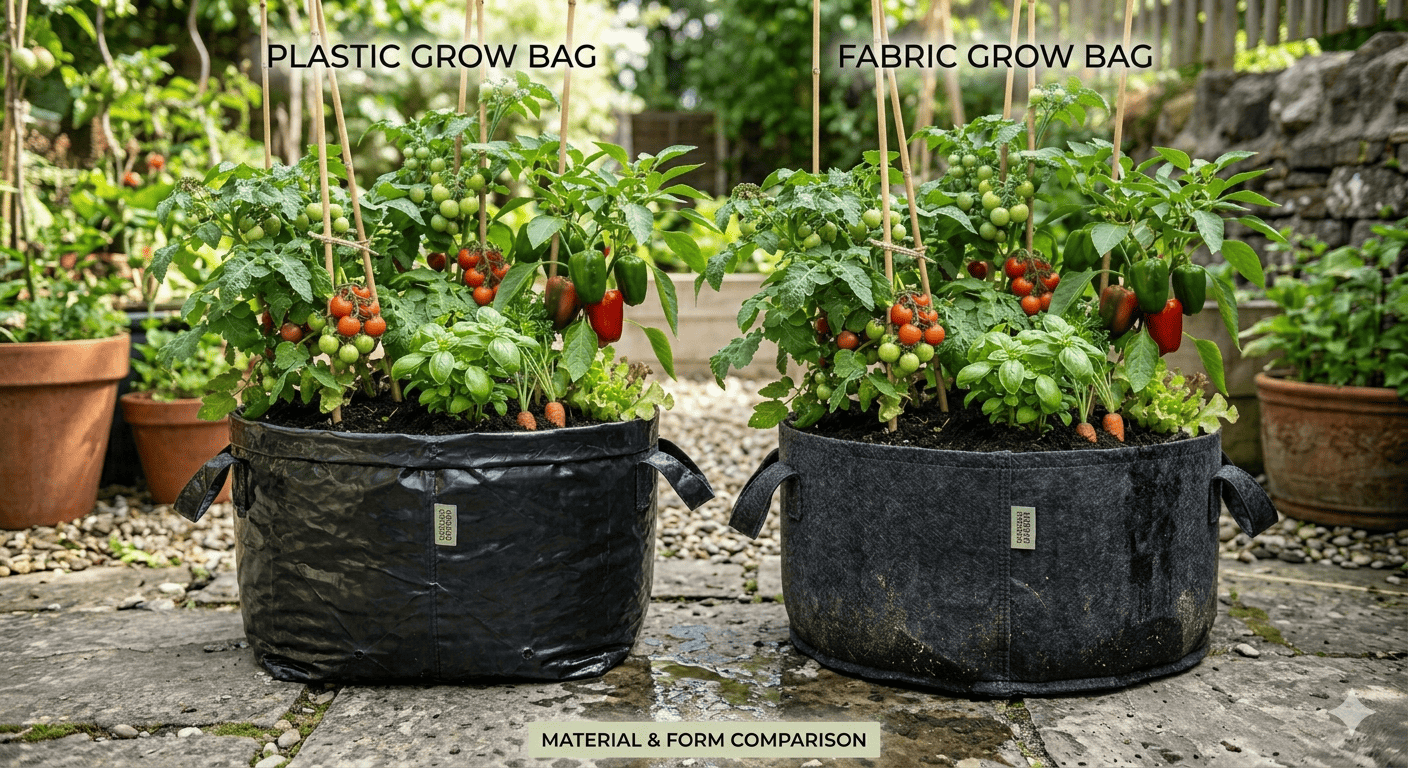
Fabric Grow Bags vs Plastic Grow Bags: Key Differences
Fabric Grow Bags
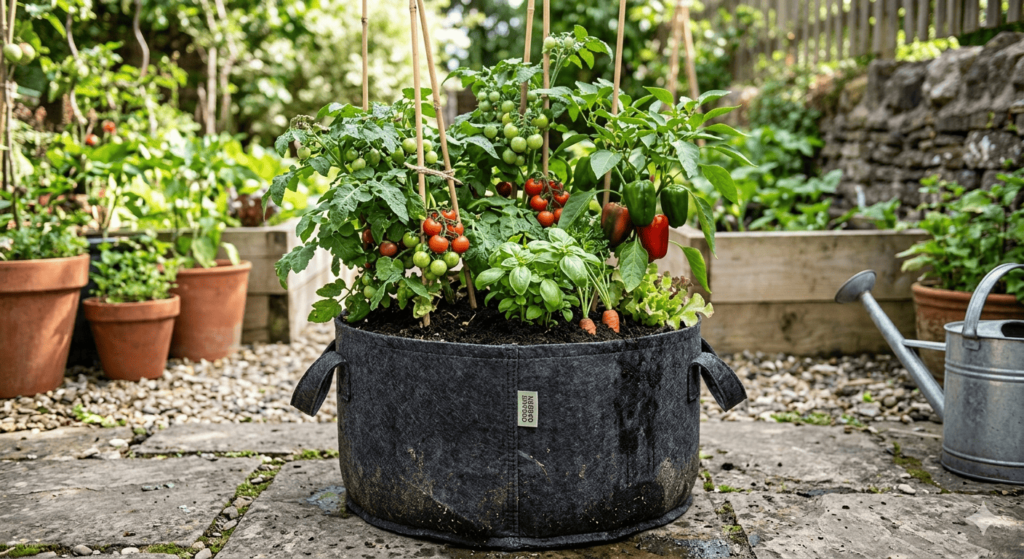
These bags are typically made from nonwoven polypropylene felt. They’re breathable, BPA-free, and food-safe, making them an excellent choice for growing vegetables you plan to eat. Here’s a quick look at the pros and cons:
- Superior air circulation and drainage
- Promotes air pruning for healthier root systems
- Regulates soil temperature better in hot and cold weather
- Reusable and washable, lasting 3 to 7 years with proper care
- Folds flat for easy storage in the off-season
On the downside, fabric bags dry out faster, which means you’ll need to water more frequently, especially in hot climates.
Plastic Grow Bags
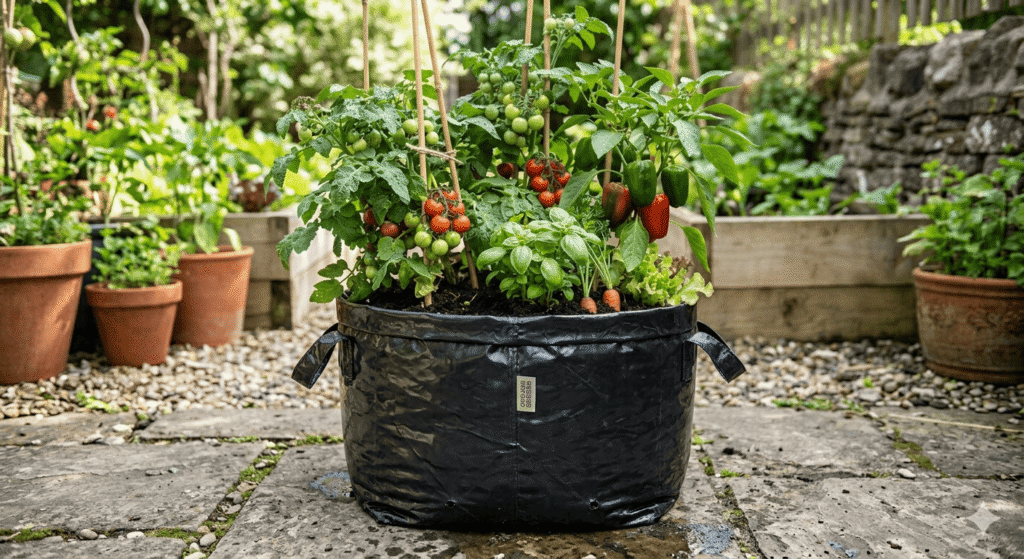
Plastic grow bags, usually made from PE (polyethylene) film, are the more budget-friendly option. They’ve been used in commercial horticulture for decades, particularly for growing tomatoes, cucumbers, and peppers in greenhouses.
- Cheaper upfront cost, great for large-scale planting
- Retains moisture longer, reducing watering frequency
- Works well in cooler climates where soil warmth matters
- Available in black and white options for heat management
The main downsides are that plastic bags trap heat in summer, can lead to root circling without drainage holes, and most are single-use, adding to plastic waste.
7 Easy Tips For Growing Plants Indoors
Best Grow Bags for Vegetables on Amazon (Our Top Picks)
1. VIVOSUN 5-Pack 5 Gallon Nonwoven Fabric Grow Bags (Best Overall)
If you want one reliable bag that works for almost any vegetable, the VIVOSUN 5-Pack is hard to beat. Made from 300G thickened nonwoven fabric, these bags offer excellent breathability and drainage without sacrificing durability. They come with sturdy strap handles and multi-purpose rings, making them easy to move around your garden or balcony.
They’re ideal for tomatoes, peppers, herbs, and leafy greens. At 5 gallons, they provide plenty of root space for most vegetable crops, and they fold flat for compact off-season storage.
View on Amazon: VIVOSUN 5-Pack 5 Gallon Grow Bags
2. Gardzen 20-Pack 5 Gallon Fabric Grow Bags (Best Value for Bulk Buying)
For gardeners who want to grow a lot without spending a fortune, Gardzen’s 20-pack is one of the best deals you’ll find. These aeration fabric pots come with handles and are built from heavy-duty nonwoven material. They’re breathable, reusable, and can be washed between growing seasons.
Perfect for a patio veggie garden or if you’re setting up a series of grow bags for tomatoes, potatoes, or beans. The sheer number of bags in the pack makes this a great choice for community gardeners or anyone running a larger container operation.
View on Amazon: Gardzen 20-Pack 5 Gallon Grow Bags
3. JERIA 12-Pack 5 Gallon Aeration Fabric Pots (Best for Beginners)
The JERIA 12-pack is a fantastic starter set for new gardeners. Each bag is made from breathable nonwoven fabric that promotes healthy drainage and reduces the risk of overwatering. They come with convenient handles and even include plant labels so you can keep track of what’s growing where.
These bags are great for vegetables like lettuce, spinach, kale, and herbs. Their affordability and multi-pack size make them ideal for experimenting with container gardening without a big initial investment.
View on Amazon: JERIA 12-Pack 5 Gallon Fabric Pots
4. SPONDWILD 7-Pack 20 Gallon PE Plastic Grow Bags (Best Plastic Option)
If you prefer plastic grow bags or need to retain moisture in a dry or windy climate, the SPONDWILD 20-gallon PE bags are a solid choice. They feature branch-binding holes, bottom drainage holes, and are designed specifically for vegetables. The large 20-gallon size gives root vegetables and climbing plants like squash and cucumbers the space they need to thrive.
View on Amazon: SPONDWILD 7-Pack 20 Gallon PE Grow Bags
5. Cavisoo 5-Pack 10 Gallon Potato Grow Bags (Best for Root Vegetables)
Potatoes and other root vegetables need deep, loose soil with excellent drainage. The Cavisoo 10-gallon bags tick every box. Made from reinforced thickened nonwoven fabric, each bag comes with sturdy handles that hold up even when full of heavy soil. They’re wide enough to give potatoes, carrots, and beets plenty of lateral room to develop.
View on Amazon: Cavisoo 5-Pack 10 Gallon Potato Grow Bags
Fabric or Plastic: Which Grow Bag Should You Choose?
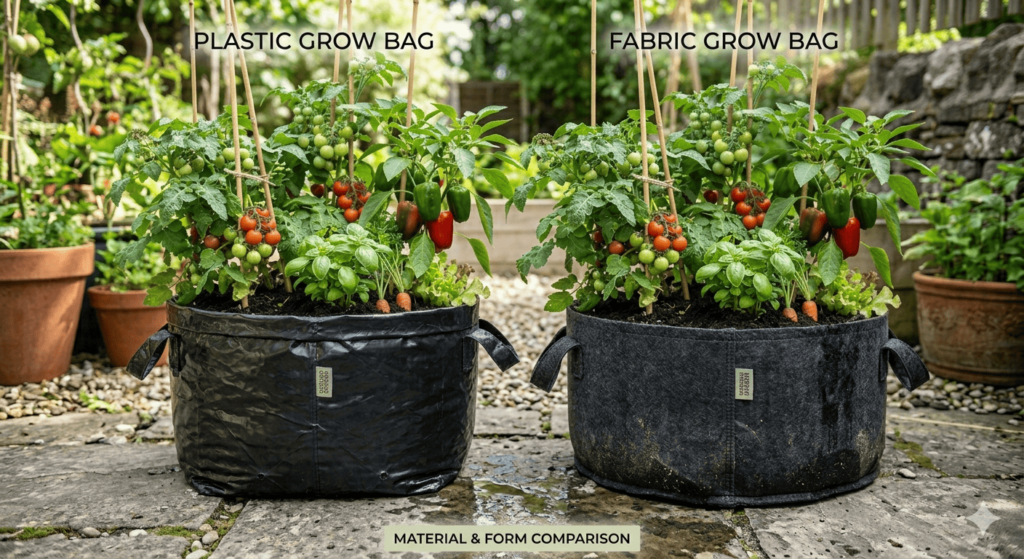
For most home vegetable gardeners, fabric grow bags are the clear winner. They promote healthier root systems through air pruning, regulate temperature better in warm climates, and last multiple seasons when cared for properly. If you’re growing tomatoes, peppers, herbs, leafy greens, or potatoes, a good quality fabric bag will serve you well.
Plastic grow bags have their place too, particularly for gardeners in cooler climates who need soil to warm up faster, or for large-scale commercial growers who prioritize moisture retention and cost per unit. If you’re growing in a greenhouse or very dry environment and want to water less frequently, plastic bags can be a practical alternative.
Best Potting Mix for Indoor Plants
Tips for Getting the Most Out of Your Grow Bags
- Choose the right size: Use 3 to 5 gallon bags for herbs and small vegetables, 7 to 10 gallon bags for tomatoes and peppers, and 15 to 20 gallons or more for potatoes and squash.
- Use quality potting mix: Regular garden soil compacts too much. Use a loose, well-draining potting mix or a blend with perlite.
- Water more often: Fabric bags dry out faster than plastic pots. Check soil moisture daily in hot weather.
- Feed your plants: Since you’ll be watering frequently, nutrients leach out faster. Use a slow-release fertilizer at planting and supplement with liquid feed throughout the season.
- Clean and store your bags: At the end of the season, empty, wash, dry, and fold your fabric bags flat. Store them indoors to extend their lifespan.
What to Plant in a Vegetable Garden in Spring
Frequently Asked Questions
Are fabric grow bags better than plastic for vegetables?
In most cases, yes. Fabric grow bags promote air pruning, better drainage, and healthier root growth. They also regulate temperature more effectively in warm climates. Plastic bags retain moisture longer, which can be an advantage in drier or cooler environments.
What size grow bag do I need for tomatoes and peppers?
A 5 to 10 gallon grow bag works well for most tomato and pepper varieties. Larger indeterminate tomato varieties benefit from a 10-gallon or bigger bag to allow full root development and support heavy fruiting.
How long do fabric grow bags last?
High-quality fabric grow bags typically last 3 to 5 years with regular use. With proper care, such as washing and dry storage in the off-season, some gardeners report getting 7 or more years out of them.
Are plastic grow bags safe for growing food?
Food-grade polyethylene plastic bags are generally considered safe for growing vegetables. However, always check that the bags you buy are labeled BPA-free and food-safe. For maximum peace of mind, nonwoven polypropylene fabric bags are widely regarded as the safest choice for growing edible crops.
Can I use grow bags on a balcony or patio?
Absolutely. Grow bags are one of the best options for balcony and patio vegetable gardening. They’re lightweight when empty, flexible in shape, and can be arranged wherever you have sufficient sunlight. Just make sure to place them on a surface that can handle drainage, or use a saucer underneath.
15 Best Indoor Plants for Cold Temperatures
10 Best Herbs to Grow in Pots at Home (Even If You Have Zero Garden Space)