Best Vegetables to Grow in Grow Bags (and How to Get a Bumper Harvest)
If you have ever wanted to grow your own food but felt held back by limited garden space, no backyard, or poor soil, grow bag gardening might just be the game-changer you have been looking for.
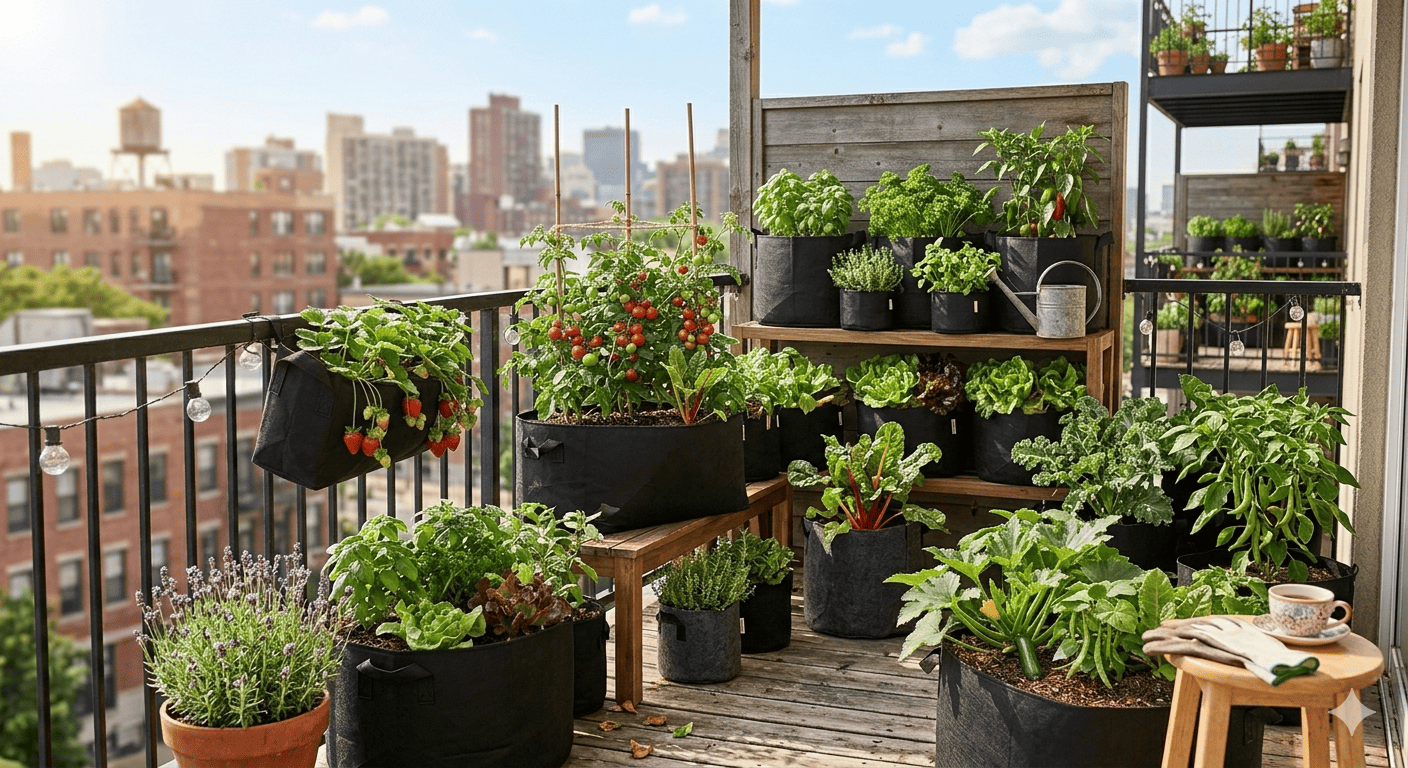
The best vegetables to grow in grow bags are surprisingly easy to manage, incredibly productive, and perfectly suited for balconies, patios, driveways, or even sunny windowsills.
In this guide, you will learn exactly which vegetables thrive in fabric pots, what grow bag sizes work best for each crop, and practical tips to help you get the most out of your container vegetable garden, whether you are a complete beginner or a seasoned home grower.
What Are Grow Bags and Why Use Them?
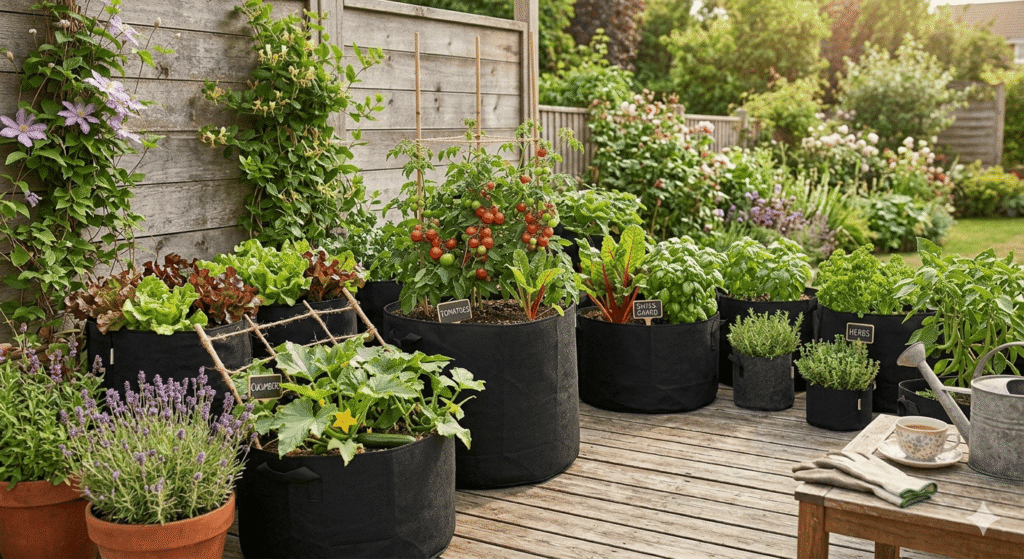
Grow bags are flexible containers, typically made from fabric or heavy-duty felt, that allow you to grow plants almost anywhere. Unlike traditional pots, fabric grow bags are breathable, which means they air-prune roots naturally and prevent the root rot that often plagues standard plastic containers. They drain well, warm up quickly in spring, and can be folded away for storage when not in use.
Here is why grow bag gardening is worth trying:
- Perfect for small spaces, balconies, and patios
- Better drainage and root health than standard pots
- Portable and easy to move around
- Affordable and available in multiple sizes
- Great option when in-ground soil is poor or contaminated
Best Pruning Shears for Home Gardeners
The Best Vegetables to Grow in Grow Bags
Not all vegetables are equally well-suited to container growing, but many actually perform better in grow bags than in open ground. Here are the top picks for your container vegetable garden.
1. Tomatoes
Tomatoes are arguably the most popular vegetable to grow in grow bags, and for good reason. They respond brilliantly to the warm, well-drained environment that fabric pots provide. Choose compact or bush varieties like Tumbling Tom or Gardener’s Delight for smaller bags, or go for larger indeterminate varieties if you have a 20-litre or bigger bag. Make sure to water consistently, as tomatoes are prone to blossom end rot when watering is irregular. A 10 to 15 litre grow bag works well for one tomato plant.
2. Potatoes
Grow bag gardening and potatoes are a match made in heaven. Fabric potato grow bags are specifically designed with a flap at the bottom so you can harvest without upending the whole bag. You can grow two to three seed potatoes in a standard 40-litre grow bag. As the shoots grow, keep topping up with compost (a process called earthing up) to encourage a bigger harvest. Early potato varieties like Charlotte or Swift are especially well-suited to container growing.
3. Peppers and Chillies
Both sweet peppers and chillies absolutely love the warmth that grow bags absorb from the sun. A 10-litre bag per plant is ideal, and they do particularly well on a sunny patio or south-facing balcony. Once established, they need relatively little fuss, just regular watering and a weekly feed with a high-potash fertiliser once flowering begins. Varieties like California Wonder (sweet) or Apache (chilli) are perfect for container vegetable gardening.
4. Salad Leaves and Lettuce
If you want fast results, salad leaves are among the fastest growing vegetables in grow bags. You can be harvesting cut-and-come-again varieties like loose-leaf lettuce, rocket, and spinach within three to four weeks of sowing. A shallow grow bag (around 20 to 25 cm deep) is perfectly sufficient. They do well in partial shade too, making them ideal if your space does not get full sun all day.
5. Cucumbers
Can you grow cucumbers in grow bags? Absolutely. Cucumbers are vigorous growers and thrive in large fabric pots of 20 litres or more. They need a support structure like a trellis or cane frame, but in return they produce abundantly. Bush or compact varieties such as Spacemaster or Bush Champion are the best choices when growing cucumbers in grow bags, as they take up less horizontal space.
6. Courgettes (Zucchini)
Courgettes are hungry, thirsty plants that actually do very well in large grow bags of 30 to 40 litres. They grow fast, fruit prolifically, and look impressive on a patio. Plant one courgette per bag, water daily during warm weather, and feed weekly once fruiting begins. Compact varieties like Patio Star or Astia were bred specifically with container gardening in mind.
7. Beans (French and Runner)
French beans are particularly well-suited to grow bag gardening as dwarf varieties do not need staking. A 20-litre bag can comfortably house four to six plants. Runner beans can also be grown in large fabric pots, though they will need support as they climb. Both types are heavy croppers and reward you with harvests over several weeks if you pick them regularly.
Potting Soil vs Garden Soil: Which One Should You Buy?
Grow Bag Size Guide for Vegetables
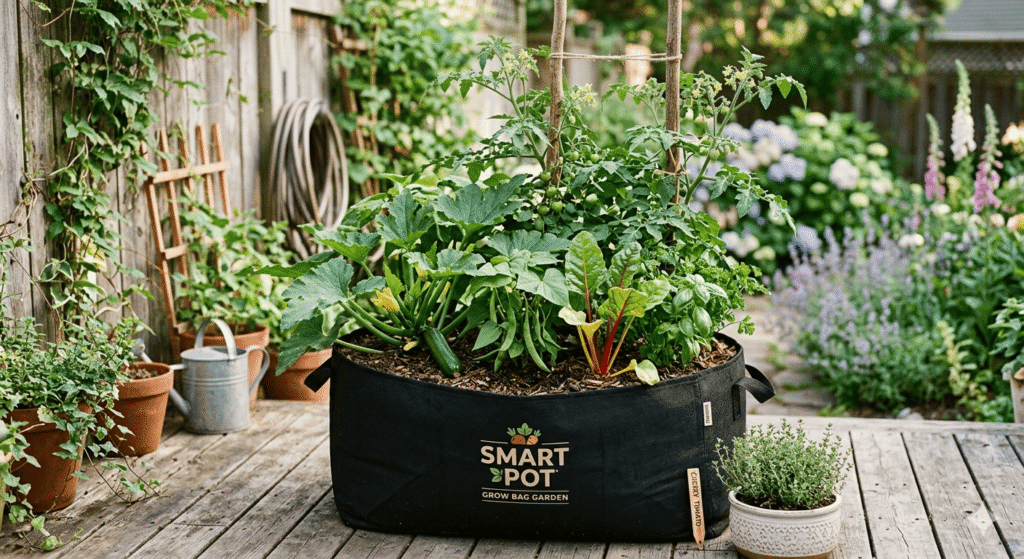
Choosing the right grow bag size is one of the most important decisions you will make. Too small, and the plant becomes root-bound and struggles. Too large, and you risk waterlogging and wasted compost. Here is a quick reference guide:
- 7 to 10 litres: Herbs, salad leaves, chillies, single pepper plants
- 10 to 15 litres: Tomatoes, bush cucumbers, single courgette (compact variety)
- 20 to 25 litres: Larger tomato varieties, cucumbers, French beans
- 30 to 40 litres: Potatoes, courgettes, runner beans
Top Grow Bag Gardening Tips for Better Results
Water More Frequently Than You Think
Fabric grow bags dry out faster than traditional pots, especially in warm weather. Check the compost daily by pushing your finger an inch into the surface. If it feels dry, water it. During peak summer, you may need to water twice a day for larger plants like tomatoes and courgettes.
Feed Regularly
Because grow bags have a limited volume of compost, nutrients get depleted faster. Start feeding with a balanced liquid fertiliser about four weeks after planting, then switch to a high-potash feed (like tomato feed) once plants begin to flower.
Use Quality Compost
Avoid using garden soil in your fabric pot garden as it compacts easily and drains poorly. Instead, use a good-quality peat-free multi-purpose compost, or mix in some perlite to improve drainage and aeration.
Position for Maximum Sunlight
One of the biggest advantages of a vegetable grow bag garden on a balcony or patio is that you can move your bags around to chase the sun. Most fruiting vegetables like tomatoes, peppers, and cucumbers need at least six to eight hours of direct sunlight daily for the best yields.
Grow Bags vs Raised Beds: Which Is Better?
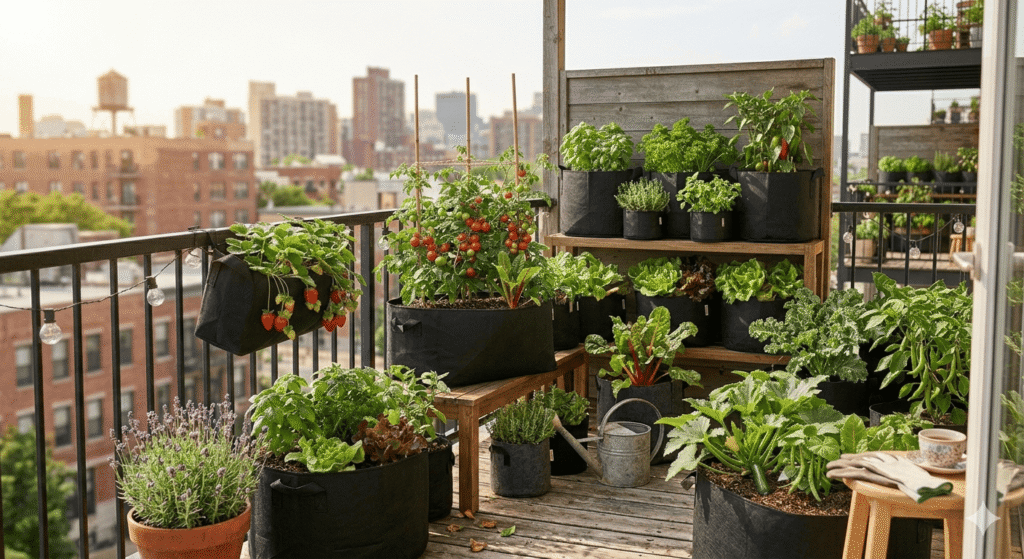
When considering grow bags vs raised beds for vegetables, the answer depends on your situation. Raised beds offer more volume, better moisture retention, and a more permanent planting solution. However, grow bags win on portability, affordability, and accessibility. They are ideal for renters, those with limited space, or anyone who wants to start small without a large upfront investment. Many experienced gardeners use both, relying on raised beds for their main crops and grow bags for overflow, experimenting with new varieties, or gardening on a balcony.
The Best Cheap LED Grow Lights For Growing Vegetables
Frequently Asked Questions
What are the best vegetables to grow in grow bags for beginners?
For beginners, salad leaves, French beans, and cherry tomatoes are the easiest and most rewarding to start with. They grow quickly, require minimal experience, and are very forgiving of beginner mistakes.
How many plants can I put in one grow bag?
It depends on the size of the bag and the plant. A 10-litre bag typically fits one tomato or pepper plant. A 20-litre bag can hold four to six French bean plants or two to three salad plants. Always check the spacing recommendations on your seed packet.
Can you reuse grow bags from year to year?
Yes, fabric grow bags can be reused for several seasons. After each growing season, wash them out, allow them to dry completely, and fold them for storage. Replace the compost each year to avoid a build-up of pests and diseases.
How often should I water vegetables in grow bags?
In warm weather, most vegetables in grow bags need watering at least once a day. Large, thirsty plants like tomatoes and courgettes may need watering twice daily during hot spells. Using a saucer underneath the bag can help retain some moisture.
What size grow bag do I need for potatoes?
For potatoes, you need at least a 30 to 40-litre grow bag. This gives the tubers enough room to develop properly. Dedicated potato grow bags often come in this size range and feature a handy inspection flap at the side for easy harvesting without disturbing the whole plant.