How to Care for a Prayer Plant (Maranta): Complete Growing Guide
If you’ve ever walked past a Maranta leuconeura in the evening and caught its leaves folding upward like tiny hands closing in prayer, you already understand why this plant has such a devoted fan base. But prayer plant care isn’t always intuitive, especially for beginners who are used to more forgiving houseplants. Between its love of humidity, its sensitivity to tap water, and its dramatic way of telling you something is wrong (curled edges, faded color, crispy tips), the prayer plant has a reputation for being a bit fussy.
The good news is that once you understand what this plant actually wants, it becomes far less mysterious and far more rewarding to grow. In this guide, we’ll walk through everything you need to know about prayer plant care, including light requirements, watering schedules, humidity needs, soil choices, propagation methods, and how to troubleshoot the most common problems, so your Maranta can thrive indoors year-round.
What Is a Prayer Plant?
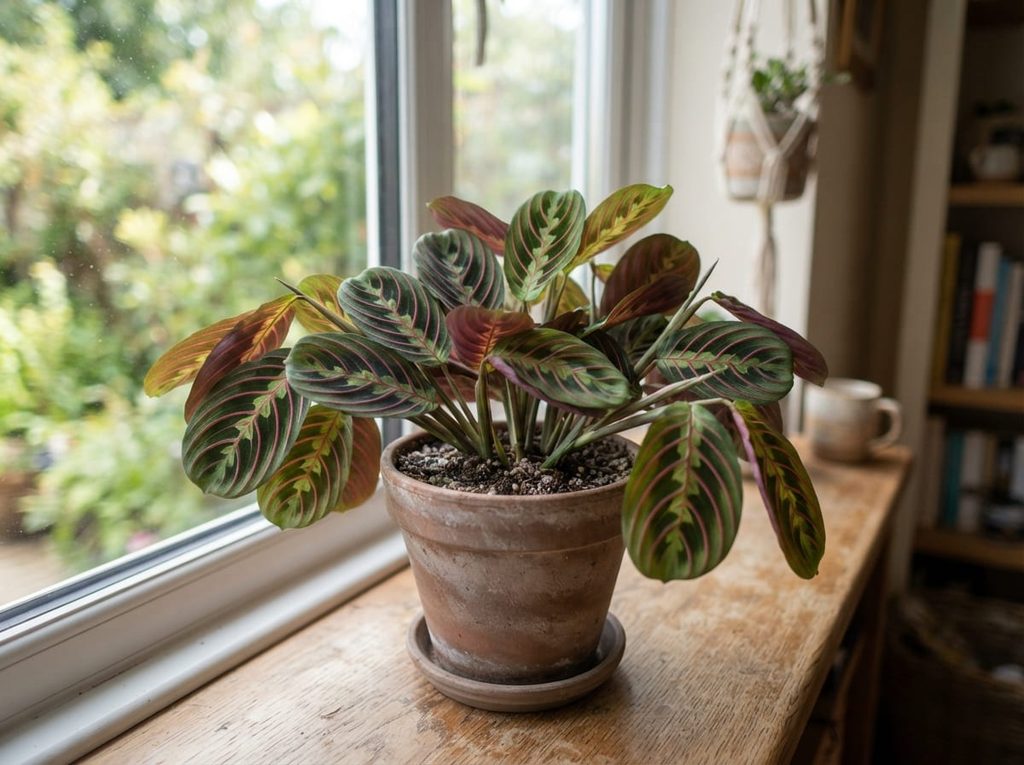
The prayer plant, scientifically known as Maranta leuconeura, is a tropical perennial native to the rainforests of Brazil. It’s prized for its patterned, oval-shaped leaves that display bold veining in shades of green, cream, and deep red, depending on the variety. Popular cultivars include the Fascinator Tricolor and the Red Prayer Plant, both known for their striking foliage.
Unlike flowering houseplants grown for blooms, the prayer plant is grown almost entirely for its leaves, and for the unique nyctinastic movement that gives it its name: at night, the leaves fold upward, and during the day, they relax flat again to soak up light.
Prayer Plant Care
Prayer Plant Light Requirements
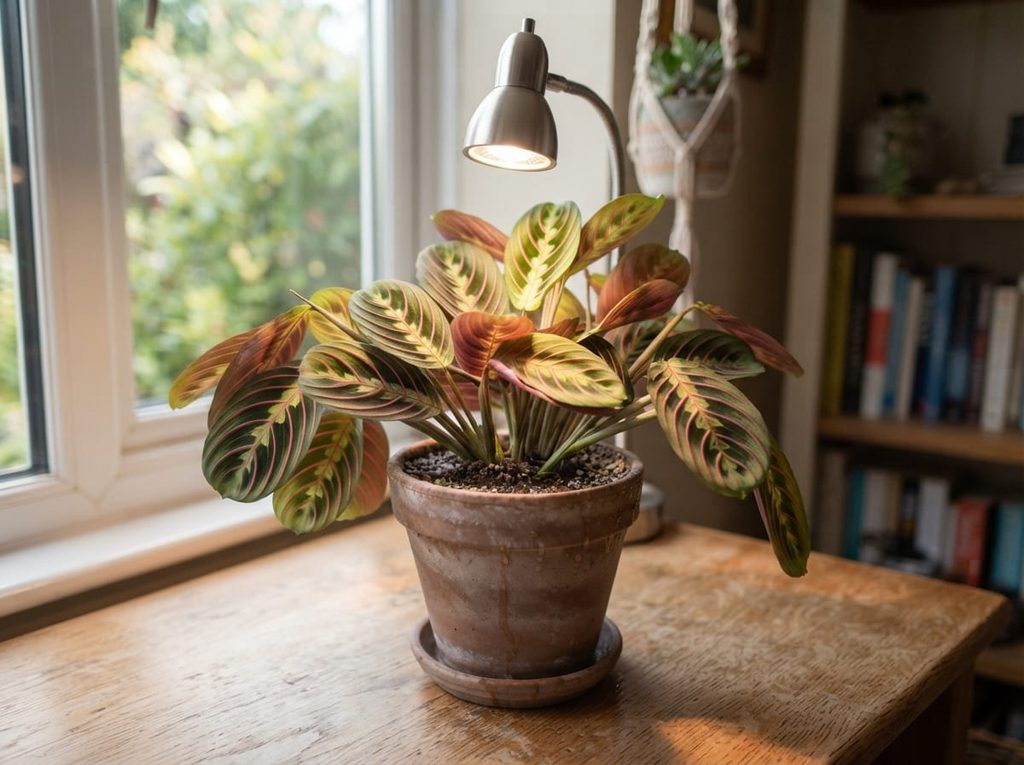
Getting the light right is one of the first steps to successful prayer plant care. In their natural rainforest habitat, Maranta plants grow beneath a canopy of taller trees, which means they’re used to filtered, dappled sunlight rather than harsh, direct rays. Indoors, this translates to bright, indirect light being the sweet spot. A spot near an east-facing window, or a few feet back from a south- or west-facing one, usually works well.
Direct sunlight can scorch the leaves and cause the vivid patterning to fade, while too little light leads to leggy growth and dull color. If you only have a low-light room available, your prayer plant can still survive there, but its growth will slow down and the colors may not be as vibrant. A north-facing window or a spot a bit further from natural light, supplemented with a grow light, is a solid workaround for low-light homes.
How Often to Water a Prayer Plant
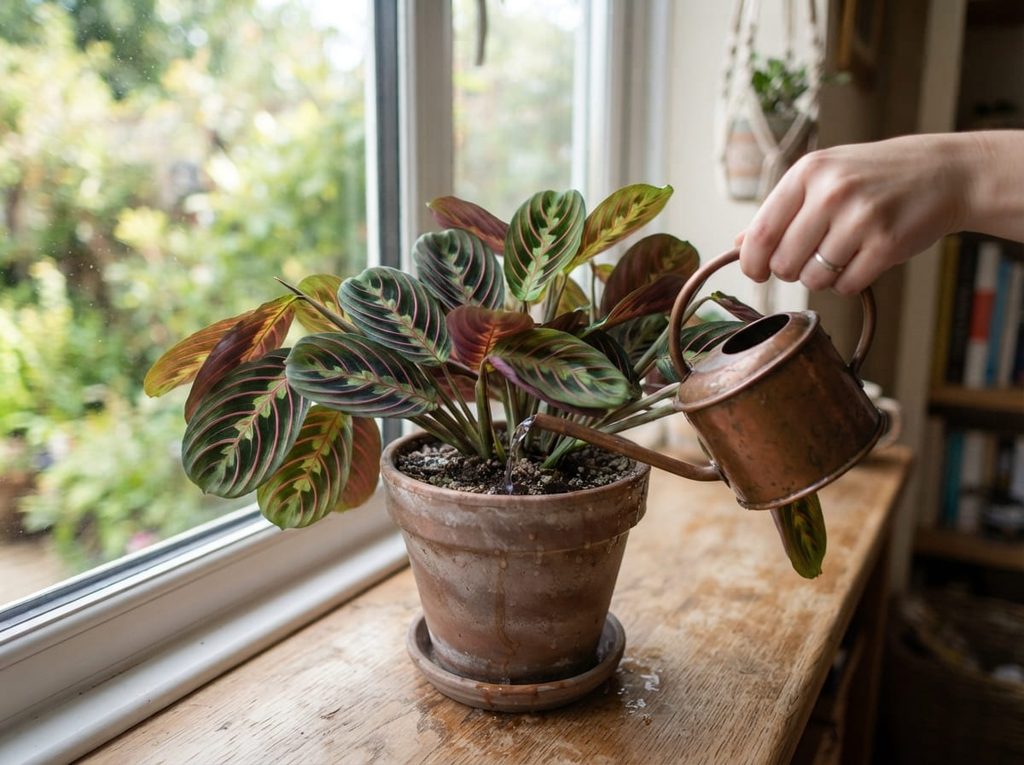
Watering is where most people run into trouble with prayer plant care, largely because Maranta likes consistently moist soil, but hates sitting in water. The general rule is to water once the top inch of soil feels dry to the touch, which usually works out to about once a week, though this varies depending on your home’s temperature and humidity levels.
Water Quality Matters
Prayer plants are notably sensitive to the chlorine, fluoride, and salts found in most tap water, which can cause brown, crispy leaf tips over time. Whenever possible, use filtered water, rainwater, or tap water that’s been left to sit out uncovered for 24 hours so the chlorine can dissipate.
Avoid Overwatering
Soggy soil is one of the fastest ways to invite root rot. Always make sure your pot has drainage holes, and never let the plant sit in a saucer full of standing water.
Humidity and Temperature Needs
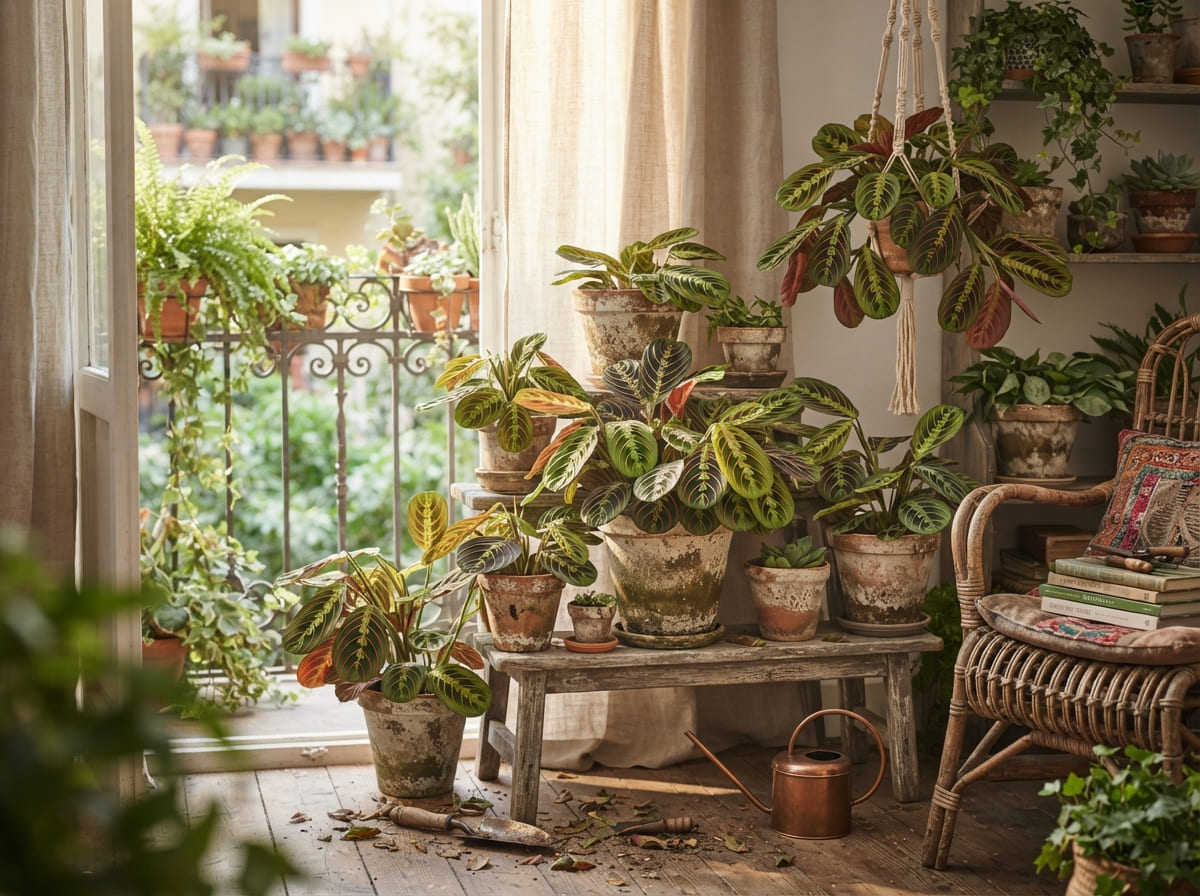
As a native of humid tropical forests, the prayer plant thrives when humidity levels sit between 50 and 60 percent. Dry indoor air, especially during winter months when heating systems are running, can cause the leaf edges to curl and brown. If your home tends to run dry, consider running a small humidifier nearby, grouping it with other houseplants to create a naturally humid microclimate, or setting the pot on a pebble tray filled with water.
Temperature-wise, aim for a range between 65 and 80 degrees Fahrenheit. Prayer plants are not cold-hardy, so keep them away from drafty windows, air conditioning vents, and doors that let in cold air during colder months.
20 Top Air-Purifying Plants That Remove Toxins from Indoor Air
Best Soil Mix for Prayer Plants
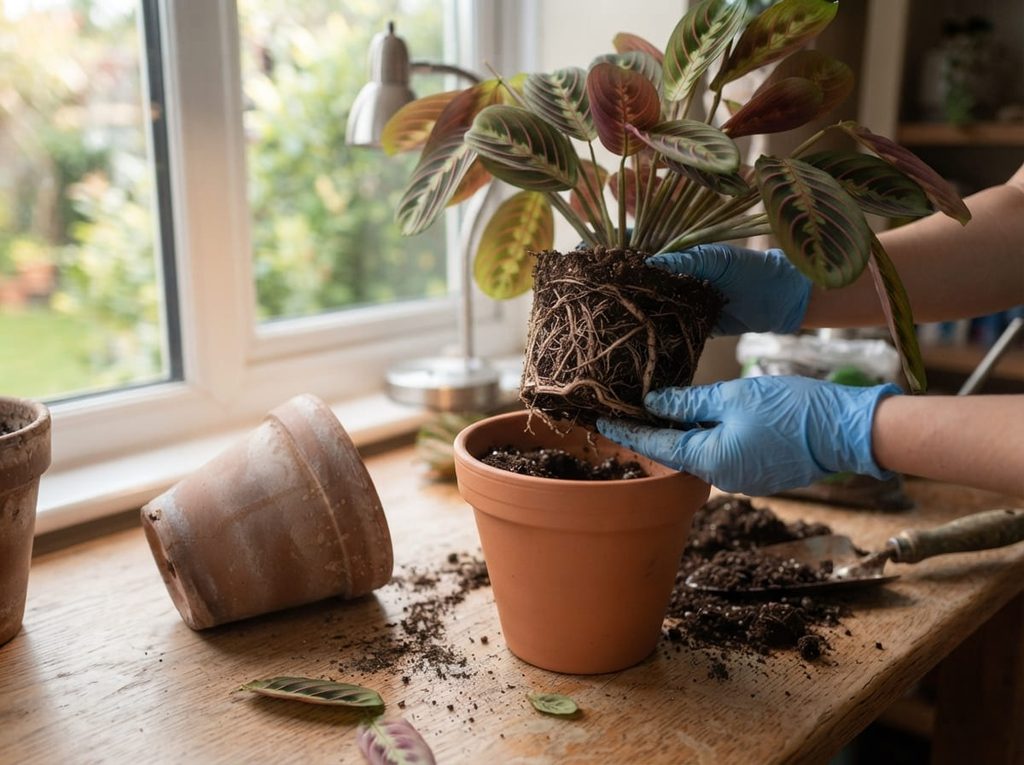
A well-draining, moisture-retentive soil mix is key to healthy roots. A standard indoor potting mix amended with perlite and a bit of peat moss or coco coir usually strikes the right balance, holding onto enough moisture to keep the plant happy without becoming waterlogged. Many growers also add a handful of orchid bark to improve airflow around the roots.
When it comes to repotting, prayer plants generally need it every one to two years, ideally in spring when the plant is entering its active growing season. Choose a pot only one size up from the current one, since prayer plants don’t need excessive room to grow.
What Causes Brown Tips on Houseplant Leaves?
How to Propagate a Prayer Plant
Propagating a Maranta is a simple and satisfying way to expand your plant collection or share cuttings with friends. The easiest method is stem cutting propagation in water:
1. Locate a healthy stem with at least one node (the small bump where leaves emerge).
2. Using clean, sharp scissors, snip just below the node.
3. Place the cutting in a small glass of water, making sure the node is submerged but the leaves stay dry.
4. Set the glass somewhere with bright, indirect light and change the water every few days.
5. Once roots reach about an inch or two long, usually within three to four weeks, transplant the cutting into moist potting soil.
Division is another reliable option, especially for mature plants. Simply remove the plant from its pot and gently separate the root ball into sections, each with its own stems and roots, then pot each section individually.
5 Best Gardening light meter For Plant Care
Common Prayer Plant Problems and How to Fix Them
Even with attentive care, prayer plants can occasionally show signs of stress. Here’s how to read the most common warning signals.
Prayer Plant Leaves Curling
Curling leaves are almost always a sign of low humidity or underwatering. Check that the soil isn’t drying out too quickly and consider raising the humidity around the plant.
Yellowing Leaves
Yellow leaves typically point to overwatering or a pot without adequate drainage. Let the soil dry out slightly more between waterings and check the roots for signs of rot.
Brown, Crispy Leaf Tips
This is usually caused by low humidity or mineral buildup from tap water. Switching to filtered water and boosting humidity often resolves it within a few weeks.
Prayer Plant Not Folding at Night
If your plant has stopped its signature nightly leaf movement, it’s often a sign of insufficient light during the day or general stress from inconsistent watering. Reassess its light exposure and watering routine first.
Pests
Spider mites and mealybugs are the most common pests to watch for, particularly in dry indoor air. Wipe leaves down regularly and treat infestations early with insecticidal soap or a neem oil solution.
Frequently Asked Questions
How often should I water my prayer plant?
Water whenever the top inch of soil feels dry, which is usually about once a week. Adjust based on your home’s temperature and humidity, watering less frequently in winter.
Why is my prayer plant losing its color?
Faded color usually means the plant is getting too much direct sunlight or not enough light at all. Move it to a spot with bright, indirect light to help restore its natural patterning.
Is a prayer plant the same as a Calathea?
No. Prayer plant and Calathea are closely related and share similar care needs and leaf movement, but they belong to different genera. Marantas tend to be slightly more forgiving and easier for beginners.
Can prayer plants live in low light?
They can tolerate lower light conditions, but growth will slow and leaf color may become less vibrant. For the healthiest plant, aim for bright, indirect light whenever possible.
How do I make my prayer plant bushier?
Regularly pinch back leggy stems and propagate the cuttings to fill out the pot. Consistent light and feeding with a diluted liquid fertilizer during the growing season also encourages fuller growth.