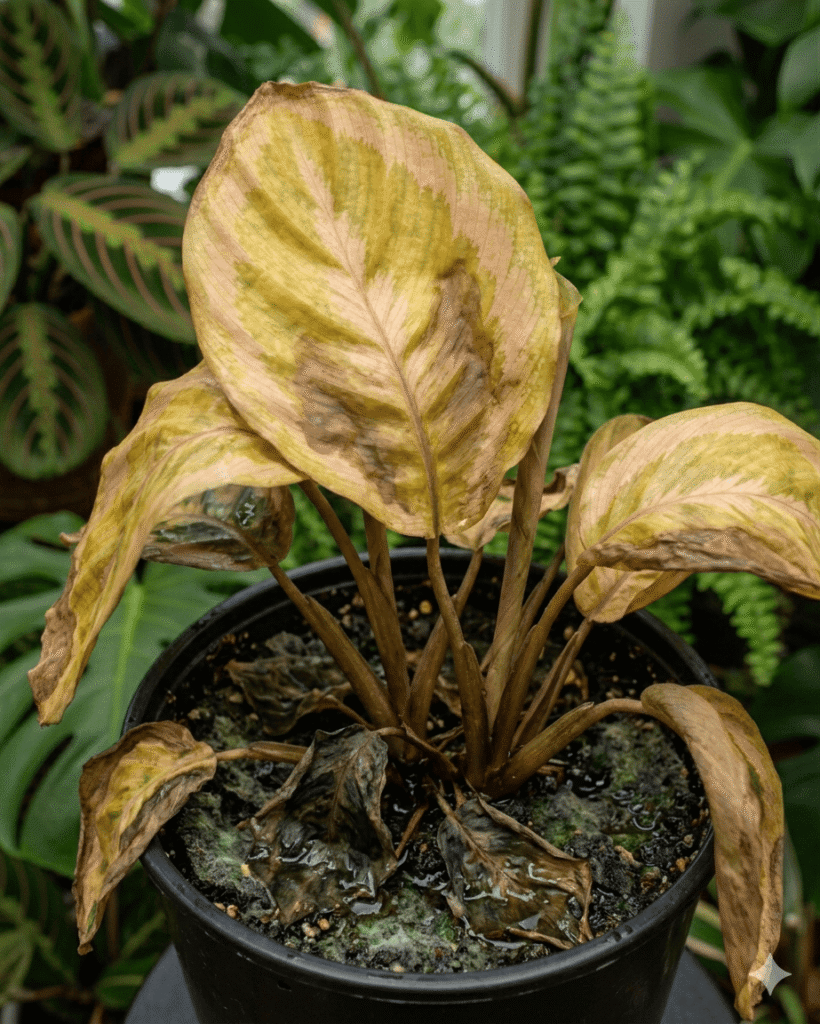
Have you noticed the tips of your calathea turning brown and crispy, or your fern shedding leaves for no obvious reason? Your plant is probably not thirsty at the roots. It is gasping for moisture in the air. Tropical plants evolved under rainforest canopies where the air stays warm and damp all day, while our homes, especially with heaters or air conditioners running, feel like a desert to them. Getting the right humidity for tropical houseplants is often the biggest difference between a plant that barely survives and one that keeps pushing out glossy new leaves.
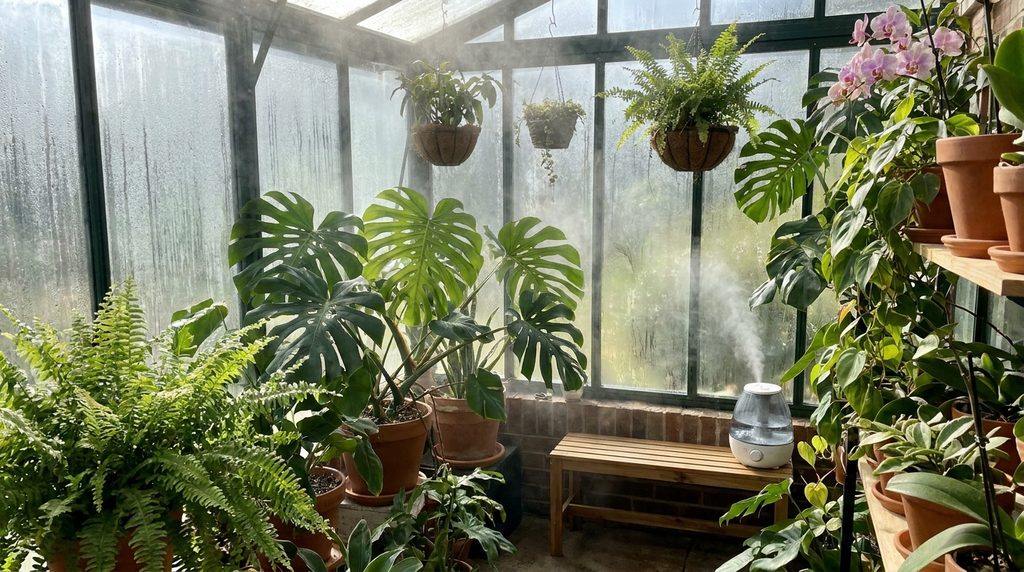
In this guide, you will learn how to spot the warning signs, what ideal houseplant humidity looks like, and how to measure it with a hygrometer for plants. Then we will walk through the best ways to increase humidity for houseplants, from humidifiers and pebble trays to grouping plants and mini terrariums, and we will be honest about which popular tricks really work.
Signs Your Houseplant Needs More Humidity
Before you buy anything, let your plant tell you what it needs. Watch for these common signals:
- Brown, crispy leaf tips and edges, the classic reason a tropical plant’s leaf tips start turning brown
- Leaves that curl inward or droop even though you water regularly
- Slow growth, or new leaves that stay small or struggle to unfurl
- Flower buds that dry up before they open
- Spider mites, tiny pests that thrive in dry air and leave fine webbing
Keep in mind that brown tips can also come from overwatering, fertilizer buildup, or minerals in tap water, so review your whole care routine alongside the air.
What Is the Ideal Humidity for Tropical Houseplants?
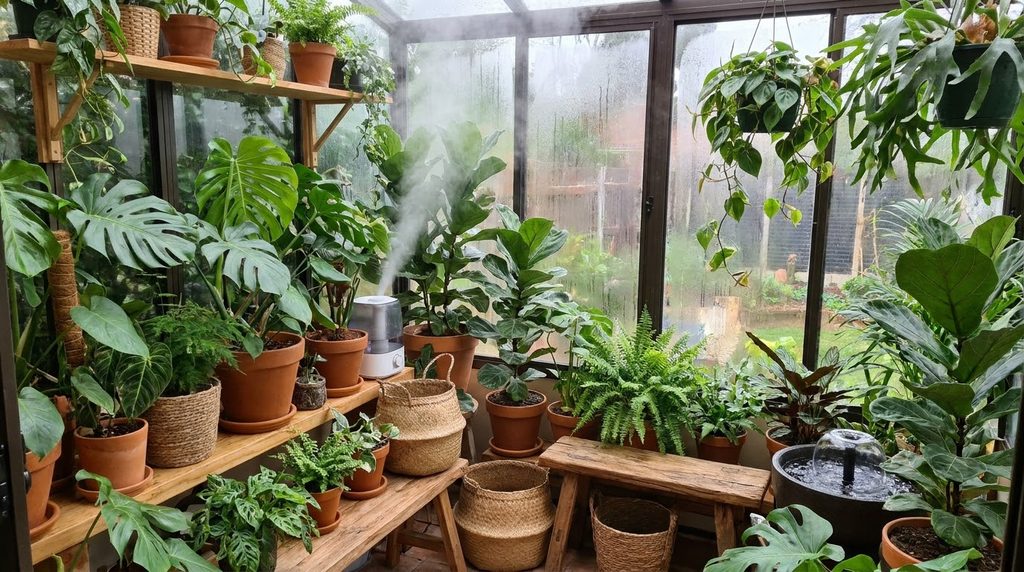
Most tropical plants are happiest at around 50 to 60 percent relative humidity. The average home sits closer to 30 or 40 percent, and it can drop even lower in winter or in air-conditioned rooms.
Tougher species like pothos, monstera, and philodendron cope with ordinary indoor air, but fussier humidity-loving plants such as calatheas, ferns, and orchids want the upper end of that range. That gap explains why so many plant owners struggle in dry apartments.
What Causes Brown Tips on Houseplant Leaves?
How to Measure Plant Humidity Levels
An inexpensive digital hygrometer takes the guesswork out. Place it at leaf level near your plants, not across the room, because indoor plant humidity can vary a lot from one spot to another. Check it morning and evening for a few days to learn your home’s pattern, then use the readings to judge whether your fixes are working.
Best Humidifiers for Tropical Houseplants
How to Raise Humidity for Plants
Use a Humidifier for the Fastest Results
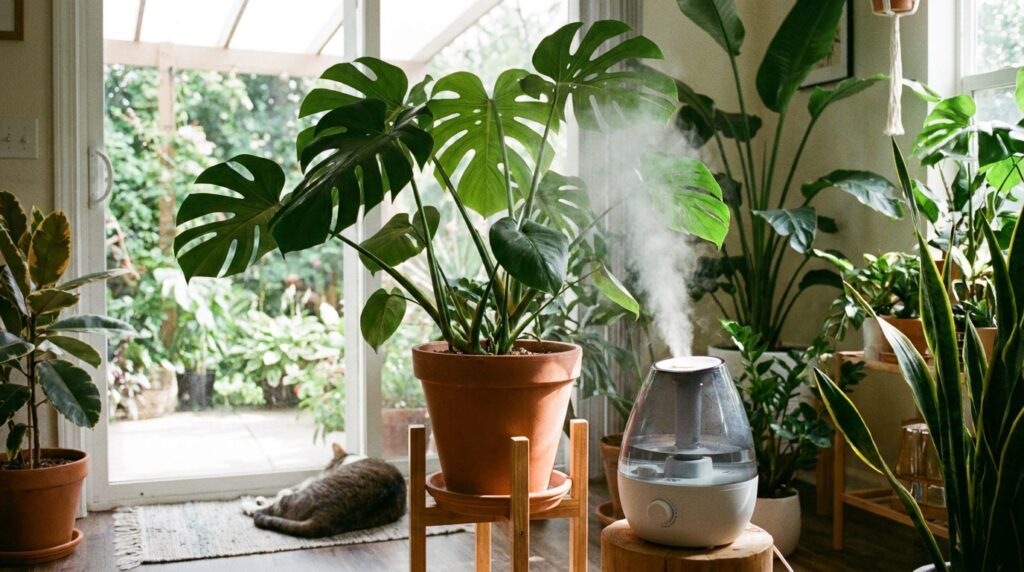
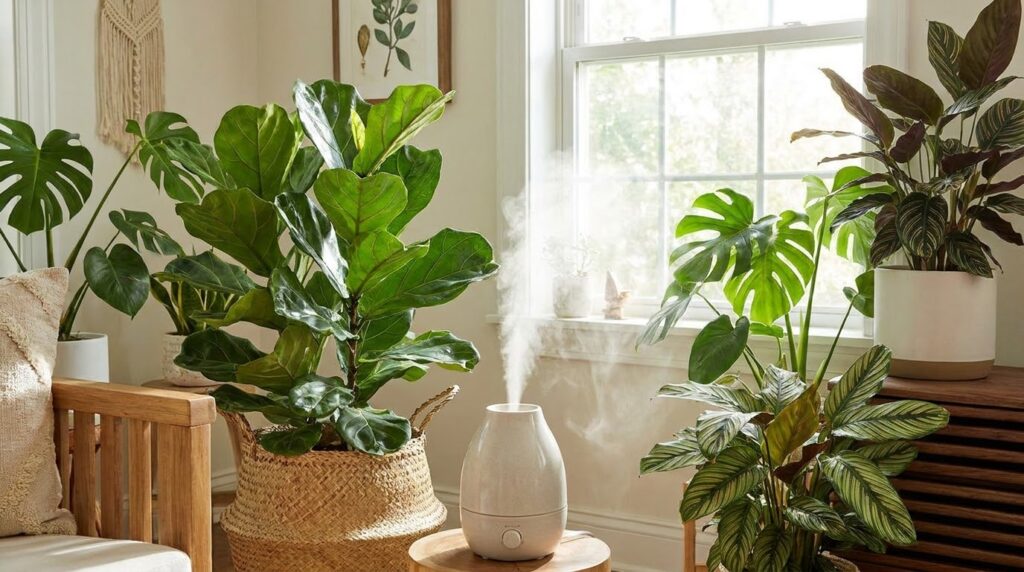
If you want the most reliable fix, a humidifier wins. The best humidifier for plants is usually a cool mist model with a built-in humidistat, which you can set to about 55 percent. Wondering whether you can put a humidifier next to your plants? Yes, just keep it a metre or so away so the leaves are not constantly soaked. Use filtered or distilled water in ultrasonic models to avoid white mineral dust on foliage, and clean the tank weekly to prevent mold.
Try Grouping Plants for Humidity
Plants release water vapor through their leaves, and a crowd of them creates a small, moister microclimate. Grouping plants for humidity costs nothing and looks great too. Cluster at least three plants with leaves close but not crammed, so air can still move and pests do not spread easily. The effect is modest, so pair it with another method.
Build a DIY Humidity Tray for Plants
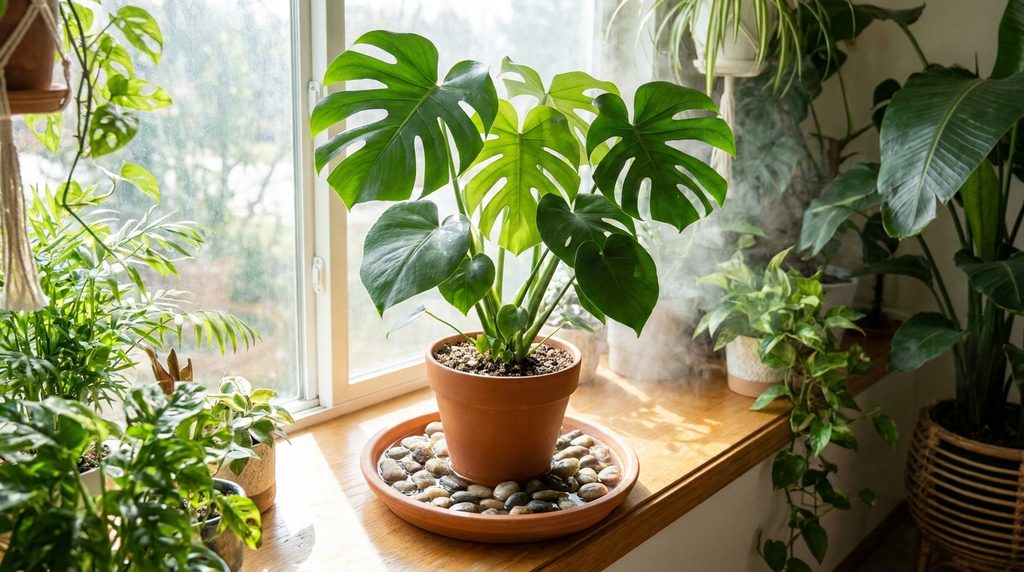
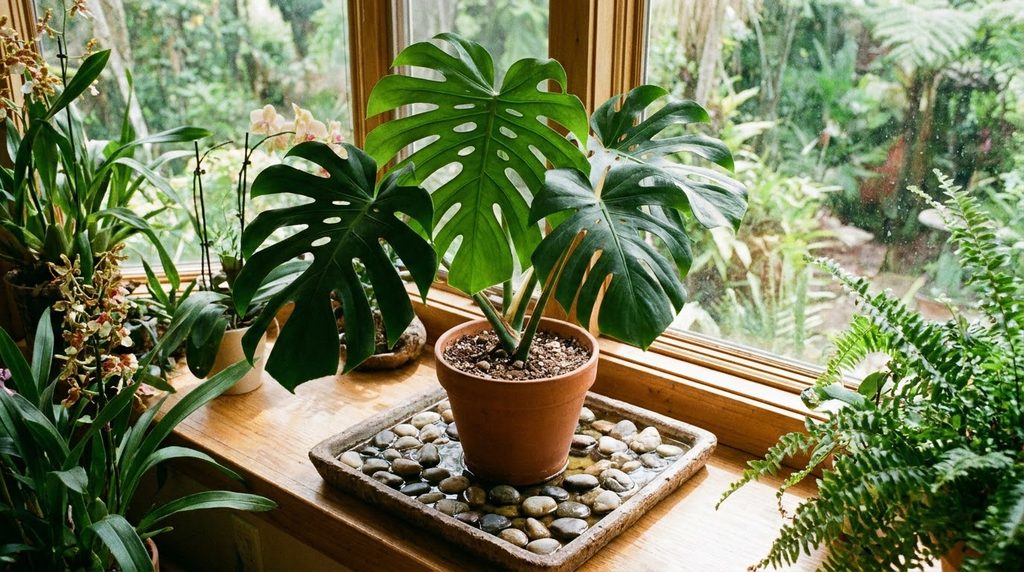
A pebble tray for plants is one of the easiest projects you can do in ten minutes. Here is how to make one:
- Choose a shallow tray that is wider than your pot.
- Fill it with a layer of pebbles or gravel.
- Add water until it sits just below the top of the pebbles.
- Set the pot on the pebbles so the roots never sit in water.
As the water evaporates, it creates a pocket of moist air around the leaves. To be honest, a humidity tray for plants gives only a small, local boost, so think of it as a helper rather than a complete solution.
10 Houseplants That Thrive in Low Light
Make a Mini Greenhouse With a Cloche or Terrarium
Small, fussy plants thrive under a glass cloche, inside a terrarium, or in a clear storage box with a lid. These enclosed spaces trap moisture and can push humidity well above 70 percent. Open them for a little while every few days to let fresh air in, which keeps mold and fungus away.
Pick the Right Spot: Bathrooms and Kitchens
Is a bathroom a good place for tropical plants? It can be, as long as there is a bright window, since steam from showers adds welcome moisture. A kitchen sink area works well too. Avoid windowless bathrooms, and keep plants away from heaters, vents, and cold drafts. If you need to boost humidity in a room with air conditioning, move plants out of the direct airflow and add a humidifier nearby.
How to Create a Pebble Tray for Your Houseplants
Does Misting Really Work?
Misting plants feels productive, but the boost lasts only a few minutes before the water evaporates. Constantly wet leaves can also invite fungal spots, especially on fuzzy-leaved plants. If you enjoy the ritual, mist in the morning so leaves dry quickly, but rely on a humidifier or tray for lasting results.
Best Way to Increase Humidity for Plants in Winter
Heating dries indoor air faster than almost anything else, so winter is when the right humidity for tropical houseplants matters most. Combine methods: run a humidifier, group your plants, and keep them away from radiators. Check your hygrometer often, because winter readings can fall below 30 percent.
Humidity Tips for Popular Tropical Plants
Calatheas and Marantas
These dramatic beauties prefer 60 percent humidity or more. A humidifier and filtered water help keep their patterned leaves from crisping at the edges.
Ferns
Boston and maidenhair ferns dry out quickly. Group them with other plants, use a tray, and keep the soil lightly moist at all times.
Monstera and Philodendron
These tolerate average air, but they produce bigger, healthier leaves when humidity stays above 50 percent. A moss pole also holds moisture for their aerial roots.
If your home is simply too dry and you want less work, choose low humidity houseplants such as snake plants, ZZ plants, and succulents, and save the thirsty tropicals for a humid corner.
Frequently Asked Questions
How do I raise humidity around plants without a humidifier?
Group your plants together, set pots on a pebble tray, move them to a bright bathroom or kitchen, or use a cloche. These low-cost options can raise the humidity around your plants noticeably.
Does grouping plants together increase humidity?
Yes, modestly. Plants release moisture through their leaves, so a cluster builds a slightly damper pocket of air. It works best alongside a tray or humidifier.
What humidity do tropical houseplants need?
Most do well at roughly 50 to 60 percent relative humidity. Calatheas, ferns, and orchids often prefer the higher end of that range.
Will misting fix brown leaf tips?
No. Misting gives only a brief lift, and brown tips will not turn green again. Trim the damaged edges, then fix the cause with a humidifier or tray.
Can I put a humidifier next to my plants?
Yes. Place a cool mist humidifier about a metre away and avoid spraying leaves directly. Use filtered water and clean the tank often.