You’re watering your favorite potted plant when you notice tiny flies buzzing up from the soil. Sound familiar? If so, you’re likely dealing with fungus gnats in houseplants, one of the most common and frustrating problems for indoor gardeners. While these little pests might seem harmless at first glance, their larvae can quietly damage plant roots and stunt growth if left unchecked.
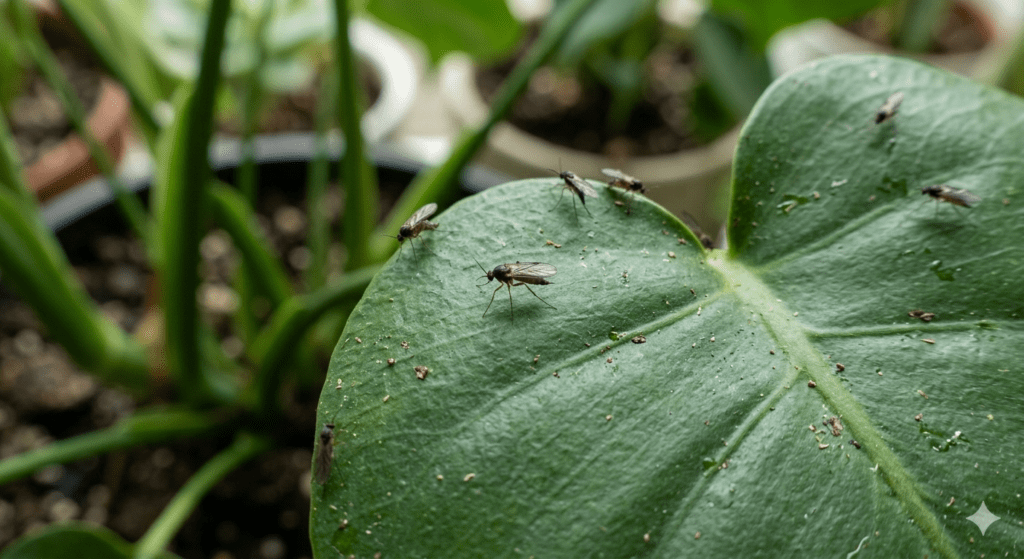
The good news is that getting rid of fungus gnats is absolutely doable, and you don’t need to be a gardening expert to do it. In this guide, you’ll learn exactly what causes fungus gnats, how to identify them, and the most effective methods to eliminate them from your indoor plants for good.
What Are Fungus Gnats?
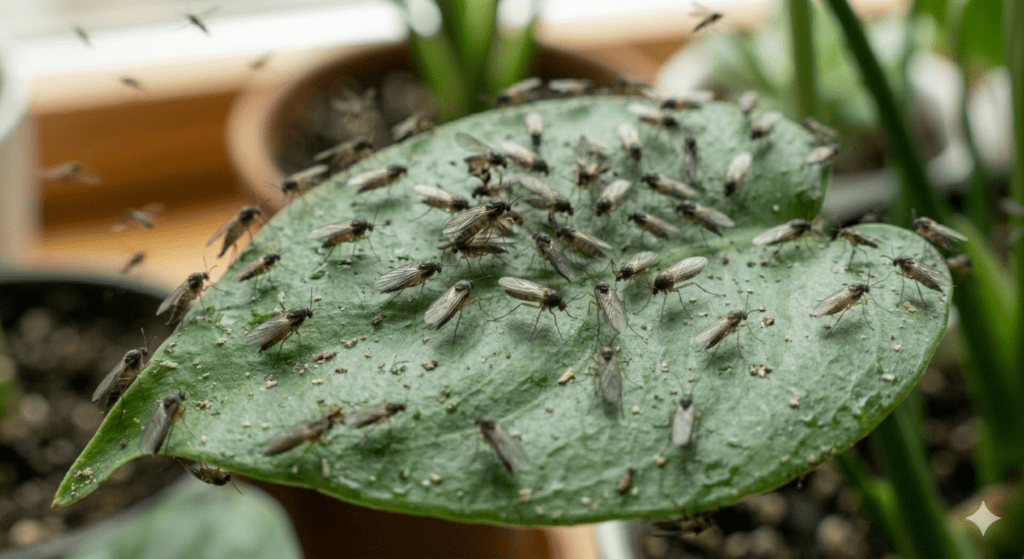
Fungus gnats are tiny, dark-colored flies that look similar to fruit flies but have a key difference: they live and breed in moist potting soil rather than around food. They’re drawn to damp conditions and organic matter, making overwatered houseplants the perfect breeding ground.
The adult gnats are mostly a nuisance, but the larvae are where the real damage happens. Fungus gnat larvae live in the top few inches of soil and feed on organic material, fungi, and plant roots. This feeding can weaken plants, cause yellowing leaves, and even lead to root rot if the infestation is severe.
How to Identify Fungus Gnats vs. Fruit Flies
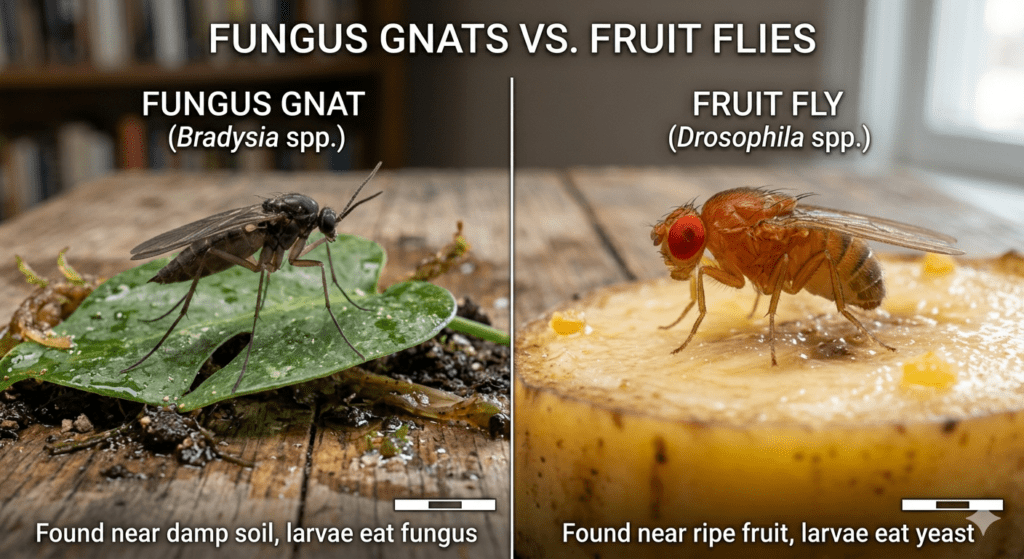
A lot of people confuse fungus gnats with fruit flies, but there’s an easy way to tell them apart. Fungus gnats hover around plant soil and tend to walk or crawl on the soil surface, while fruit flies are more interested in your kitchen and ripe fruit.
Signs you have fungus gnats:
- Tiny black flies (about 1/8 inch) buzzing near your plants
- Flies that seem to emerge from the soil when you water
- Yellowing or wilting leaves despite regular watering
- Slow or stunted plant growth
- Visible larvae (tiny white worms) in the top layer of soil
What Causes Fungus Gnats in Indoor Plants?
The number one cause of fungus gnats in houseplants is overwatering. When soil stays wet for too long, it creates the humid, fungus-rich environment that these pests thrive in. Other contributing factors include using poorly draining pots, choosing soil mixes that retain too much moisture, or bringing home a new plant that’s already infected.
How to Get Rid of Fungus Gnats in Houseplants
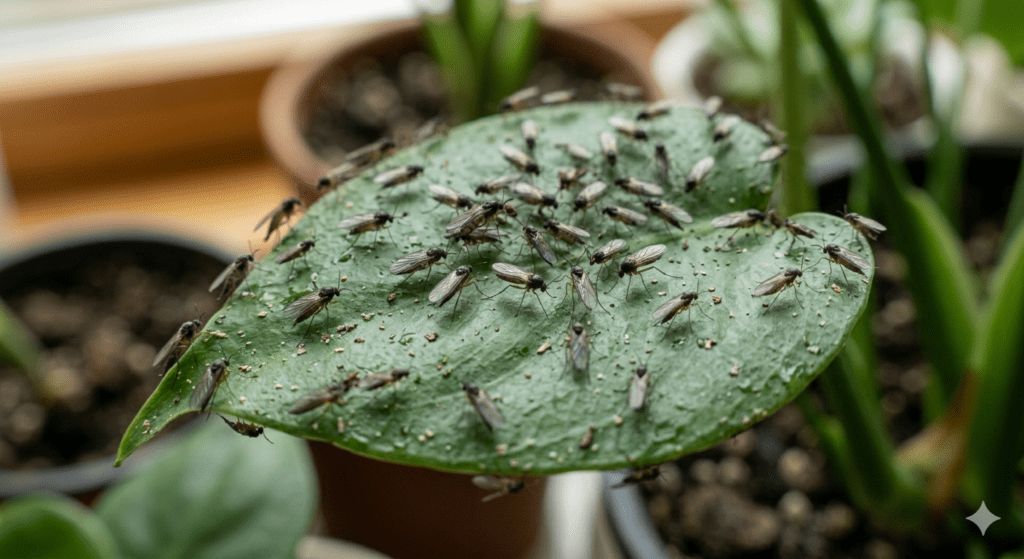
The most effective approach combines killing the existing adults with treating the soil to destroy larvae. Here are the best methods that actually work.
1. Let the Soil Dry Out Between Waterings
This is the simplest and most important step. Fungus gnat larvae cannot survive in dry soil, so allowing the top two inches of soil to dry out completely before watering again will naturally kill off the larvae and break the breeding cycle. It’s also a great habit to prevent future infestations.
2. Hydrogen Peroxide Solution for Fungus Gnat Larvae
One of the most popular and effective home remedies is a hydrogen peroxide soil drench. Mix one part 3% hydrogen peroxide with four parts water, then water your plant as usual. The solution kills larvae on contact without harming your plant. You may notice a fizzing reaction in the soil; that’s completely normal. Repeat this process every week until the gnats are gone.
How To Use Hydrogen Peroxide For Houseplants
3. Use Yellow Sticky Traps to Catch Adult Gnats
Yellow sticky traps are a great way to monitor and reduce the adult gnat population. Place them at soil level near your plants and they’ll catch the adults before they can lay more eggs. While sticky traps won’t eliminate the larvae in the soil, they’re a helpful part of a multi-pronged treatment plan.
4. Treat Fungus Gnats with Neem Oil
Neem oil is a natural pesticide that disrupts the life cycle of fungus gnats by affecting their ability to grow and reproduce. Dilute neem oil according to the product instructions and apply it as a soil drench. It’s safe for most houseplants and also helps treat fungal issues in the soil. Use it every 7 to 14 days for best results.
5. Apply Diatomaceous Earth to the Soil Surface
Food-grade diatomaceous earth is a powdery substance made from fossilized algae that kills insects by damaging their exoskeletons. Sprinkle a thin layer on top of your potting soil to kill larvae and deter adult gnats from laying eggs. It works best when the soil surface is kept dry.
6. Use Beneficial Nematodes for Severe Infestations
If you’re dealing with a stubborn or widespread infestation, beneficial nematodes can be a game-changer. These microscopic organisms are natural predators of fungus gnat larvae and can be applied as a soil drench. They’re completely safe for people, pets, and plants, and are available at most garden centers.
Can English Ivy Grow in Water?
How to Stop Fungus Gnats From Coming Back
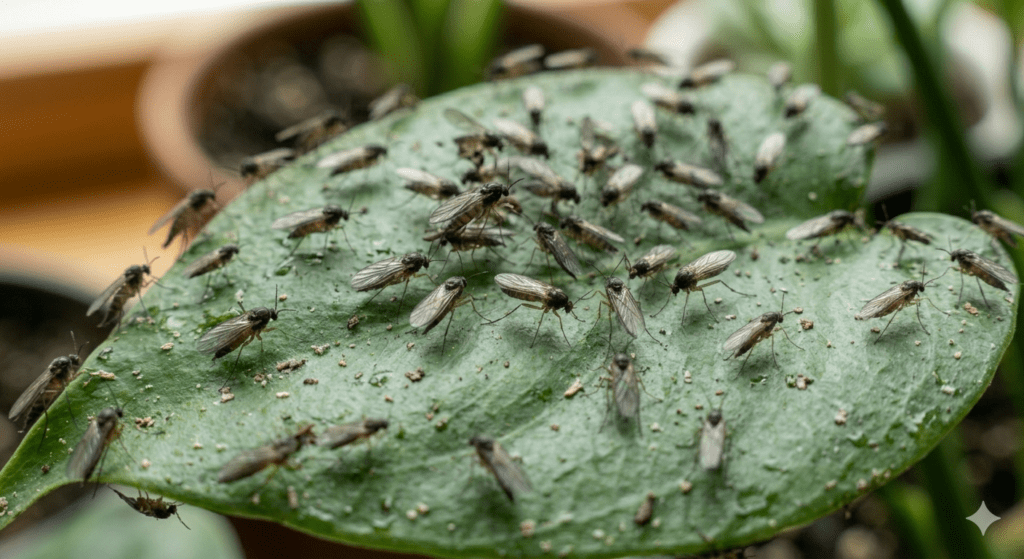
Once you’ve dealt with an infestation, the last thing you want is a repeat. Here are some preventive steps that make a big difference:
- Water less frequently and only when the top two inches of soil are dry
- Choose a well-draining potting mix to prevent waterlogging
- Use pots with drainage holes to avoid soggy roots
- Always inspect new plants before bringing them indoors
- Add a thin layer of sand or gravel on top of the soil to deter egg-laying
- Avoid using organic-rich compost on the soil surface
How to Identify and Treat the 10 Most Common Houseplant Pests
Frequently Asked Questions (FAQ)
How long does it take to get rid of fungus gnats in houseplants?
With consistent treatment, most fungus gnat infestations can be resolved within 2 to 4 weeks. The key is to break the life cycle by targeting both the larvae in the soil and the adults flying around. Repeating treatments every 7 days ensures that newly hatched larvae are also eliminated.
Are fungus gnats harmful to humans or pets?
Fungus gnats do not bite humans or pets and are not known to carry disease. They are primarily a plant pest. That said, a large infestation can be very annoying indoors, and the larvae can cause significant root damage to your houseplants if left untreated.
Can I use cinnamon to get rid of fungus gnats naturally?
Yes! Cinnamon has antifungal properties that can help disrupt the food source that fungus gnat larvae depend on. Sprinkling ground cinnamon on the soil surface is a natural and safe option, though it works best as a supplement to more targeted treatments like hydrogen peroxide or neem oil rather than a standalone solution.
Do fungus gnats come from overwatering?
Overwatering is the most common cause of fungus gnats in houseplants. Wet, soggy soil creates the perfect humid environment for gnats to breed and for the fungi they feed on to grow. Cutting back on watering is often the first and most impactful step in controlling an infestation.
Should I repot my plant to get rid of fungus gnats?
Repotting can help in severe cases, especially if the roots are already damaged. If you do repot, wash the roots gently, discard the old contaminated soil, and repot in fresh, well-draining potting mix. For mild to moderate infestations, treating the existing soil is usually sufficient and less stressful for the plant.